
Winter light, northern stories: 10 photo walks in Lancashire and Yorkshire, plus 10 family-archive projects for one weekend
by Northern Life
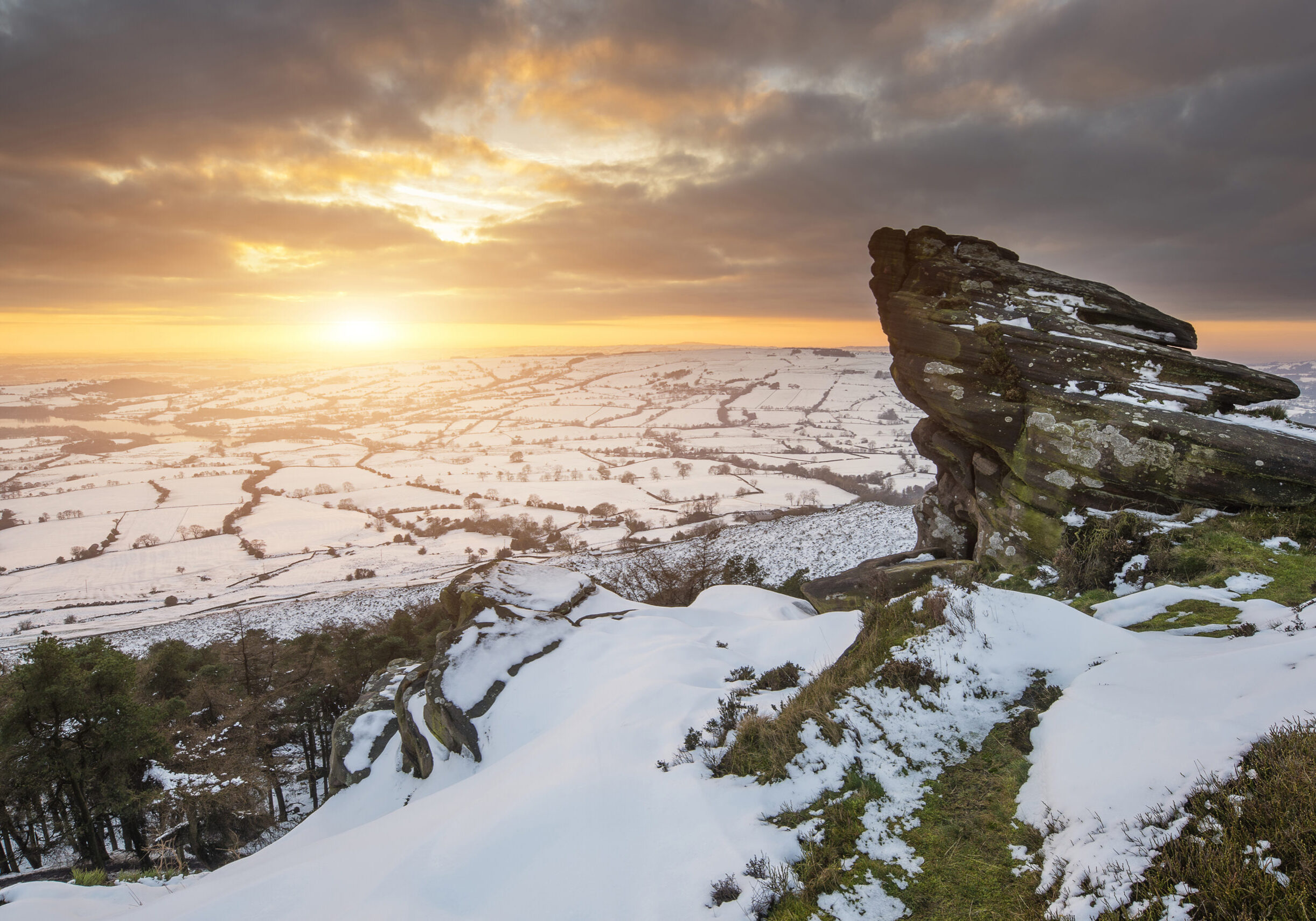
Winter in the North is not a compromise. It is the season when light turns slow and sculptural, when seas breathe steam at dawn and millstone grit catches low sun like copper. Add the local scene warming up around Photo North Festival and a steady revival of domestic archiving at home, and you have a perfect excuse to put hands and eyes to work. This feature brings two practical lists under one roof: ten winter photo walks where night mode and panoramas sing, and ten weekend-sized projects to scan, restore and tell your family stories with just a smartphone, a flatbed, and a plan.
Key point: The North’s winter gives you longer golden and blue hours, shorter walking days, and deep dark skies in parts of Yorkshire that are formally protected for stargazing.
Why this winter, why here
Leeds hosts Photo North, an energetic festival that has become a regular date in the northern photo calendar. Announcements for the 2025 edition flagged 11 to 13 April at the Carriageworks, with exhibitions, talks and reviews, followed by further programming in 2026. The mix tells you something about the region’s momentum and makes winter a timely field season for practice before spring exhibitions land.
Daylight is short but predictable. Around the December solstice you can plan for roughly eight hours of light in Leeds and Lancaster, with civil twilight doing generous overtime at both ends of the day. That is ideal for night-mode experiments and stitched panoramas without brutal wake-ups.
Key point: Short days mean compact schedules. Mark sunrise and sunset in your notes the night before and design one clean story per outing.
Part I. Top 10 winter photo walks where night mode and panoramas shine
Each location below comes with the feel of the place, the most reliable light, and one practical phone tip. Pack touch-friendly gloves, a power bank, and a microfibre cloth. In wind or sleet, slip the phone into a zip bag with a hand warmer to keep the battery charged.
- Ribblehead Viaduct, Yorkshire Dales
Stone arches catch snow and, if you are lucky, a passing train. Dawn to mid-morning gives raking light, while blue hour is perfect for headlamp traces along the track bed. Brace the phone on a dry-stone wall, use night mode, then sweep a careful panorama to include Ingleborough. The Dales sit in an International Dark Sky Reserve, so stay on if the sky clears for stars. - Malham Cove and the limestone pavement
Grid-like slabs lead the eye to a grey winter sky; after rain, tiny pools hold pastel reflections. One hour after sunrise is ideal, when dew has lifted yet the rock still glows. Set focus and exposure on a mid-tone slab and try a 2× crop to tidy the lines. - Aysgarth Falls, Wensleydale
Winter flow and tannin colour work well against bare trees. Overcast midday is fine here. Use a short, stabilised exposure or a Live Photo blend and avoid heavy fake blur that smears detail. - Ilkley Moor and the Cow and Calf
Gritstone and frost meet a skyline made for stitched sweeps. The last hour before sunset is the safe bet. For panoramas, lock exposure, keep elbows tucked, rotate from the hips, and you will avoid horizon banding. - Bolton Abbey and Strid Wood
River curves, mist after cold nights, and venerable stone. Aim for early morning if frost is likely. Take one wide frame to set the scene, then a tight texture study; the pair edits cleanly. - Whitby Abbey and the 199 Steps
Gothic lines above a harbour that burns at sunset. Golden hour into blue is best. Night mode is now strong enough for hand-held work; use a wall or railing to steady the shot. - Haworth and the Brontë Moors
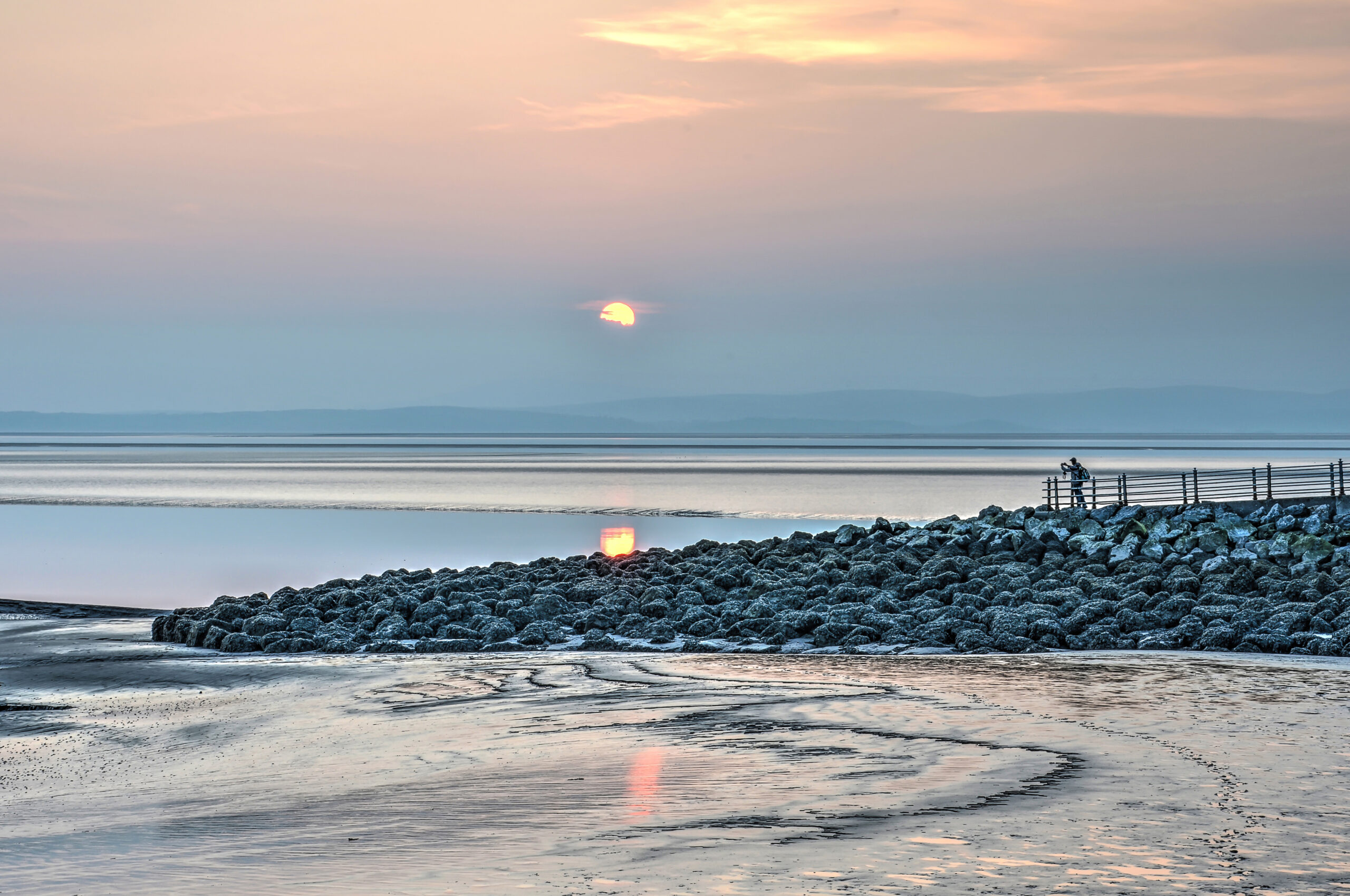
Open moorland and big skies that love layered panoramas. Go mid-afternoon when the sun grazes the heather. Meter for the sky, then lift shadows in the edit. - Morecambe Bay from Heysham Head, Lancashire
Sand patterns and Lake District fells across the water shine after storms. Time it for sunset at low tide to catch mirror pools. A three to five-frame pano often beats the ultra-wide for edge quality. - Pendle Hill
Wind, shifting cloud and ice-etched grass reward a simple route. First light on the summit and last light on descent are the payoffs. Keep the lens dry; a single drop ruins star fields in night mode. - Beacon Fell, Forest of Bowland
Conifers, open clearings and long views to the fells. Any hour works if the weather has texture. Portrait mode can misread branches, so use it lightly among trees.
Field tip: merge photo for quick storytelling
When the weather flips, shoot two frames from the same spot: one before a shower, one after. Later, merge photo to produce a neat before-and-after composite that pairs a wide panorama with a detail crop. It reads quickly, weighs less than two uploads, and lets you show scene and texture in one image.
How text photos helps on the trail
While editing, add short captions directly on your frames for fast sharing. Keep type small, high-contrast and factual: place name, time, a one-line note such as “east wind, sleet, 1°C”. This is a practical way to text photos for navigation and memory. If you post a four-frame story, text photos again to label the sequence 1 to 4 so readers swipe in order. For a stitched panorama, text photos a discreet compass arrow in the corner and future you will know which way you were facing.
Timing note
In deep winter around Leeds and Lancaster, expect sunrise near 08:20 and sunset around 15:45 in mid-December. Plan one sunrise and one sunset location, not three.
Part II. Ten weekend projects for your family archives
The home archive is thriving. Families are digitising film, tidying phone libraries and recording voices before details fade. These ten projects fit into a weekend, each with a simple outcome you can keep or share.
Scan a shoebox, tell one decade
Sort by decade, then by person, and scan prints at 600 dpi. You end the weekend with a clean decade folder, sensible filenames and a one-page index. The narrow scope keeps you fresh and focused.
- Gran’s album, rescued and re-bound
Photograph each page in diffuse daylight, export a lightweight PDF, then re-house the originals in an acid-free binder. Add a title page that lists who, where and when so the story survives another generation. - Three portraits, three generations
Place three scans side by side and merge photo into a borderless A4. One frame with a single caption strip looks elegant on a mantel and shares neatly in the family chat. - Map the migration
Plot each move on a simple map with a short line of text per step. The result is a clear visual timeline that works on WhatsApp and prints cleanly at A4. Keep the captions factual and short. - The wedding dress detail
Make close-ups of fabric, buttons and stitching. Curate a nine-tile grid for social and a higher-resolution composite for print. Shoot, select, then merge photo pairs of a detail with a label card so the context is never lost. - Tape to timeline
Digitise a single cassette or MiniDisc and cut a ten-minute highlights reel with markers. Do not fear noise; people prize the voices more than technical polish. - Recipe revival
Scan handwritten cards and set a short, readable type block beside each scan. Export a two-page spread per recipe, then assemble a slim family PDF. Add live text so everything is searchable. - Before and after restore
Scan a damaged print, make a gentle clean-up, then merge photo the original and the retouch into one comparison. Aim for care, not gloss. Keep the grain; over-smoothing erases time. - Caption the unknowns
Export a dozen mystery faces with a blank strip underneath and ask relatives to annotate. You will recover names and unlock stories. Write for future cousins, not just the immediate family. - The mantelpiece book
Build a 24-page softcover with one image and one caption per page. Layout in any editor you like. If you need fast, tidy templates, Adobe Express can repurpose the same assets across sizes without a designer. - That’s the lot: crisp directions you can run as is, with the same information density, no bullets, and a tone built for a magazine page.
How “text photos” lifts archive projects
When you publish a contact sheet for feedback, text photos to add names directly under faces before you export. When you post an appeal in the family group, text photos a short “Who is this?” banner so relatives know what to answer rather than send twelve heart emojis. When you print the mantelpiece book, text photos one discrete credit and year on the back page so the object can travel without a separate note getting lost.
Mini checklist: scanning and file hygiene
- Keep master scans at 600 dpi, archival images in TIFF, and distribution copies in JPEG at 90 quality.
- Rename files with a stable pattern such as YYYY-MM-DD_person_place_sequence.
- Back up once locally, once in the cloud.
- Record provenance. Who gave you the album, when, and what you did to it.
Simple capture choices that matter
- Shoot prints on a table by a north-facing window to avoid harsh specular highlights.
- If your phone offers RAW, enable it for new portraits you add to the archive.
- For old gloss photos under glass, angle the frame slightly and correct perspective later.
Key point: None of this requires heavy tech. Accuracy and restraint beat filters. Your aim is a faithful, navigable record that future readers can build on.
Safety, comfort and lawful access
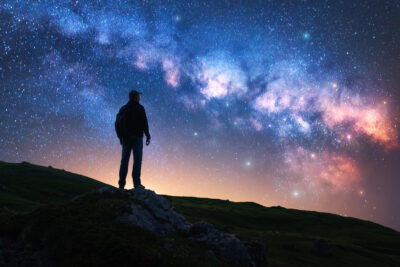
Winter walking means head torch, spare socks and an exit plan. Check tide times on the coast, stick to rights of way on farmland, and respect local closures in bad weather. Many northern nights are properly dark now that the Dales and North York Moors hold International Dark Sky Reserve designations. That is a gift for night mode, panoramas and, on the clearest nights, a few shy constellations peeking through.
Key point: The mix of short days, long twilights and protected dark skies is unusual at UK scale. It is a seasonal classroom for both seeing and editing.
In conclusion
One season, two complementary practices. The field list gets you into cold air with simple, repeatable habits for night mode and panoramas. The home list turns shoeboxes into shareable memory. If you keep your kit warm, your edits light, and your captions spare, you will come out of winter with a portfolio and a family record that mean something beyond likes.