
Will The REAL St. John Rivers Please Stand Up?
by Melissa Whitaker
Was Henry Martyn the inspiration behind John Rivers?
Many of us have read a book or two by the Brontë sisters, and within the pages, we have found our own favourite characters – people we choose to like, love, or even hate!

Melissa
But have you ever wondered where the inspiration for the characters actually came from?
Did the Brontës know people with similar character traits, or were the characters entirely fictional?
Over the years, many experts have identified the names of those they believe are the real people behind the fictional characters in novels, but it seems that even experts can sometimes get it wrong.
The character of the missionary, Mr. St. John Rivers, in Charlotte Brontë’s 1847 novel Jane Eyre, was thought by many to have been based on Reverend Henry Nussey, the brother of Ellen Nussey, a long-time friend of the Brontës.
While Henry had known Charlotte well enough to propose marriage to her by letter in a very business-like fashion, the offer was quickly turned down by her shortly after, in a letter dated March 5, 1839. Charlotte made it clear why she had declined the offer.
It was a tragic end for a man who sought to do good in the world.
She had known the Nusseys for many years and would have known that Mr. Nussey had sustained serious head injuries as a child after falling from a horse. He could suffer from mood swings as a result, which got progressively worse as he got older.
He did have hopes of becoming a missionary, but they were just that – ambitions and a wish to do good.
Yet, Henry Nussey did marry and was happy in a marriage that lasted for 15 years.
He married Emily Prescott by Special License at St. George’s Church, Everton, on the 22nd May 1845. Emily was the niece of Lewis Carroll, the famous author of ‘Alice in Wonderland’.
They were happy for a while, until Henry’s condition deteriorated and his behaviour became more violently unpredictable. He was admitted to the Arden House Asylum on the 20th January 1860. He had been there only seven months when he committed suicide on the 29th August 1860. Henry had clearly been let down by the very people who were meant to be looking after him. He was not given the care or supervision he so desperately needed. It was a tragic end for a man who sought to do good in the world.
While there are some similarities, there are not enough for him to be the inspiration for St. John Rivers.
So who was the REAL St. John Rivers?
Looking through the Cornish side of the Brontë family tree, I found a name I had heard mentioned many times when I was a child. I had always known he was a missionary, but that was about all I knew. I decided to do some research on him to see if I could find any further information. I uncovered diaries, love letters, and links to foreign lands and became fascinated by this enigmatic man.
My own research revealed a tragic love story that spanned continents, one that had definitely reached the ears of Charlotte Brontë.
Henry Martyn was born in Truro on the 18th February 1781. As a child, he was described as ‘sickly’ and did not have a strong constitution at all. His mother had died of TB when he was only one year old, and being only small, ill and weak, it was thought Henry might not survive childhood. However, he did, and although he was still only slightly built and not of a robust constitution, he possessed a brilliant mind and excelled in mathematics and the classics. From Truro Grammar School, he went to St. John’s College, Cambridge, and did very well there.
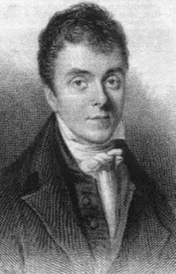
Henry Martyn
While at Cambridge, he persuaded his friend William Wilberforce to donate money to help another friend pay their university fees and all of their expenses. William was happy to help. This friend was to become the Reverend Patrick Brontë.
How different the Brontë story would be had the money not been forthcoming!
Not only were Henry Martyn and Patrick Brontë good friends at Cambridge, but their other close friends were aware that Henry suffered from heartache due to his own unrequited love.
Henry had been introduced to Lydia Grenfell at a church in Helston, Cornwall and by all accounts, it was love at first sight, for him anyway.
Lydia was worried the climate in India would not agree with her
Lydia had been in love with Samuel John, a solicitor from Penzance, who called off their engagement abruptly to marry someone else. Lydia was heartbroken. She had been so devoted to him that the idea of her eventually marrying someone else was unthinkable, and in some way, she felt it would be disloyal.
Henry loved Lydia – Lydia loved Samuel – Samuel loved his new wife – and no longer cared about Lydia’s feelings.
Henry was completely absorbed in all this. He eventually left Cornwall for India to work for the East India Company as a chaplain and to do missionary work. He worked hard and acquired a nice place to live, with a garden. He still wrote letters to Lydia proposing marriage to her and desperately wanting her to come to India, bringing all her family with her; if necessary, he would welcome them all as if they were his own, and there would be room for all of them.
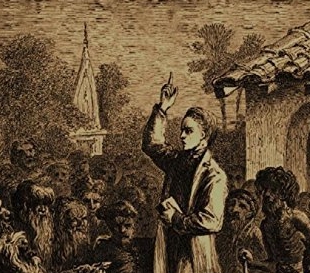
Henry Martyn spreading the word
He never gave up hope that one day she would change her mind and agree to marry him.
Lydia was worried the climate in India would not agree with her – little did she know, it did not agree with Henry, either. He was frequently ill with fevers, yet he told Lydia India was ‘idyllic’. The pleasant crossing he described to Lydia was not the crossing he experienced. He was seasick from the moment they left the port, and it took them months to reach India. By the time he arrived there, he was weak through sickness and fever and had lost yet more weight. On arriving at his friend’s house, they described him as being so ill he resembled a corpse.
Yet he recovered somehow and went on to translate the Bible into various languages, and also established schools in the poorest of places. In the face of absolute poverty, he helped provide shelter, food, clothing, and assistance to anyone who needed it. His name is still recognised in India and around the world for his missionary work.
By this point, he was so ill that he was slipping in and out of consciousness
He became so ill at one point that he was persuaded to go back home to Cornwall for a while to recover. He thought the sea air and being on home ground again might aid his recovery. He wanted to see Lydia, and perhaps this time she might return to India as a missionary’s wife.
He set off for Cornwall, but the trip was to prove too much for him. He was too weak and too dehydrated – he kept fainting in the blazing hot sunshine, and he was highly vulnerable.
The guides did not want to make the journey anyway, as part of it was across a desert in the hot sun.
They were forcing Henry to undertake the journey in long distances at a time so they could return home sooner. As most of the travel was on horseback, they had to keep stopping to feed and change the horses. Henry was not well enough to cope with such an ordeal. But he wanted to go home.
He never saw his homeland again
Henry eventually reached Tokat in Turkey. They stopped once more to change horses. Henry was being forced to travel on, even though his guides could see he was a very sick man and needed to rest. By this point, he was so ill that he was slipping in and out of consciousness, and he sat crouched in the shade of the post house doorway. People were walking past him, going in and out of the post house, taking no notice of the extremely frail man in his Indian clothes. After all the help and kindness he provided to anyone who met him, there was no help or compassion shown to him in his final moments.
It was here he quietly passed away, all alone.
He never saw his homeland again, or his beloved Lydia. Too weak to protect himself, he had been robbed of his few possessions while unconscious. No one was ever caught for their despicable crime.
Some months later, Lydia was told by a letter that Henry had died, while on his way back to Cornwall. Lydia was once again grief-stricken. She had the highest regard for Henry, and they had kept in touch as best they could while he was away – even though the letters took months to reach either recipient.
Charlotte Brontë was told this true story of love and loss by her father.
Lydia never married and never recovered from losing Henry. She was involved with the local church and school and donated money to help educate the local children. Just as Henry had, she devoted her life to serving God. Her journal entries changed, showing that she was not just writing her own thoughts, but as though she was now talking directly to Henry. She wished over and over that she had been there to help him, as he had helped so many other people when they were in great need. She wished she had been there at Tokat. If all was lost and she could not save him, then she would only be there to hold his hand as he passed away and to let him know he was not alone.
Lydia went to live with her sister, and after suffering from cancer for eight years, she passed away on 21st September 1829, aged 54.
Charlotte Brontë was told this true story of love and loss by her father. Many of St. John River’s character traits may be traced back to Henry Martyn and events in his life, more so than Henry Nussey. Maybe Charlotte was fascinated by Henry Martyn, just as I was many years later.
Henry Martyn accomplished a great deal in his life, yet he was only 31 years old when he passed away. Everything he set out to do, he achieved. Sadly, he did not live to see the greatest successes of his translated Bibles going to press and being sold worldwide, or the educational institutions that bear his name, even today.
He wanted to do some good in the world, and he achieved that. He was a truly unique man, known to people of all nationalities as the ‘Man of God’ in his real life, and to the readers of Charlotte Brontë’s Jane Eyre, he lives on as the fictional Mr St. John Rivers.
NorthernLife Sep/Oct/Nov 25