
The Secrets of Murano Glass Chandeliers and How to Choose the Best One for Your Home
by Northern Life
Murano glass chandeliers are not merely aesthetically pleasing lighting fixtures; they are stunning pieces of art. They represent the height of the Murano glass-making tradition and Italian artistry, and remain the most challenging pieces for glass masters to craft. Throughout the years, they have decorated palaces and homes of the nobility, but managed to stay popular over the centuries, and now often grace contemporary homes as well. This article will delve into their history and provide a guide on selecting the ideal chandelier for your home.
History of the Murano Chandelier
Pre-18th Century
Basic chandeliers date to the 14th century, but they were wooden crosses with spikes where candles would be mounted. They were mainly used in churches and abbeys.
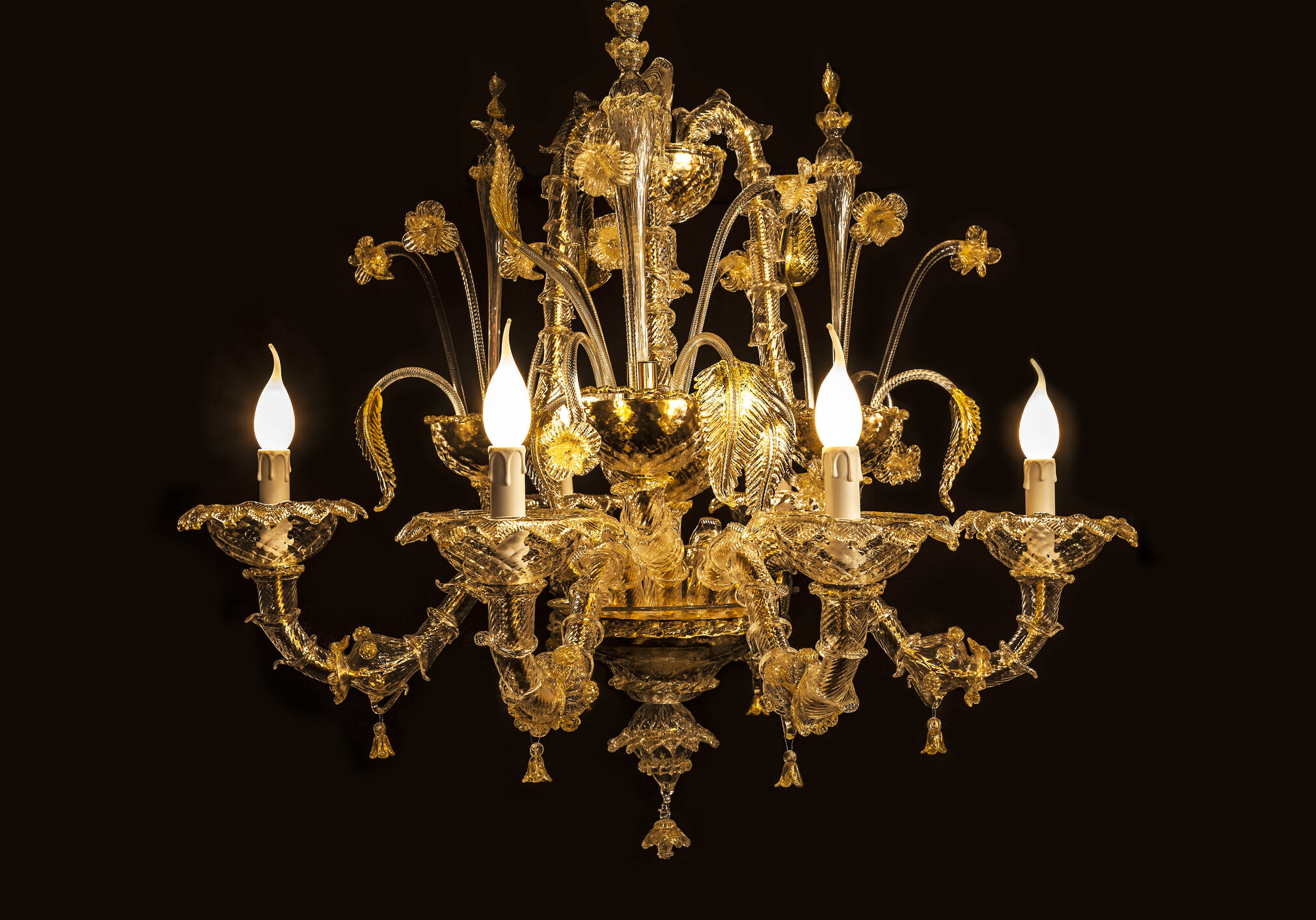
The history of chandeliers is long, but before the eighteenth century, chandeliers were primarily made from heavy iron and wood, and they appeared dark and bulky. However, fashion trends were evolving towards more elegant forms and materials, as well as beautiful, sparkly designs, so change was in the air. In Bohemia, glassmakers developed crystal glass and started creating spectacular chandeliers. They were impressive because the light from the candles reflected on the cut glass. Their popularity challenged Murano glass masters, who responded with the development of a new chandelier called ‘Ciocca’, which translates to ‘bouquet’ in Italian. Handcrafted floral blown-glass components were placed in the central metal base of the chandelier, resembling a bouquet of flowers. Rich colours were used, often with gold-leaf-lined glass branches.
18th Century Onwards
The first well-known Ciocca glass chandelier for royalty was created in 1709 for King Frederick IV of Denmark. This led to other members of European royalty and the nobility acquiring Murano chandeliers, making them a symbol of wealth and prestige throughout Europe.
Giuseppe Briati was one of the most famous chandelier manufacturers of the 18th century. In 1724, he created the Rezzonico chandelier, designed for the noble Venetian Rezzonico family. It was exhibited in their palazzo along the Grand Canal, now the famous Venetian museum, Ca’ Rezzonico.
The Rezzonico chandelier is composed of metal parts arranged in a tubular design, forming the centre. Arranged in tiers, the metal parts have holes where blown glass leaves, flowers, and scrolls are inserted.
The Rezzonico chandelier is the standard design for the classic Murano chandelier. However, there are now also some sleek, minimalist chandeliers on the market.
What Sets Murano Chandeliers Apart?
Colour and Clarity
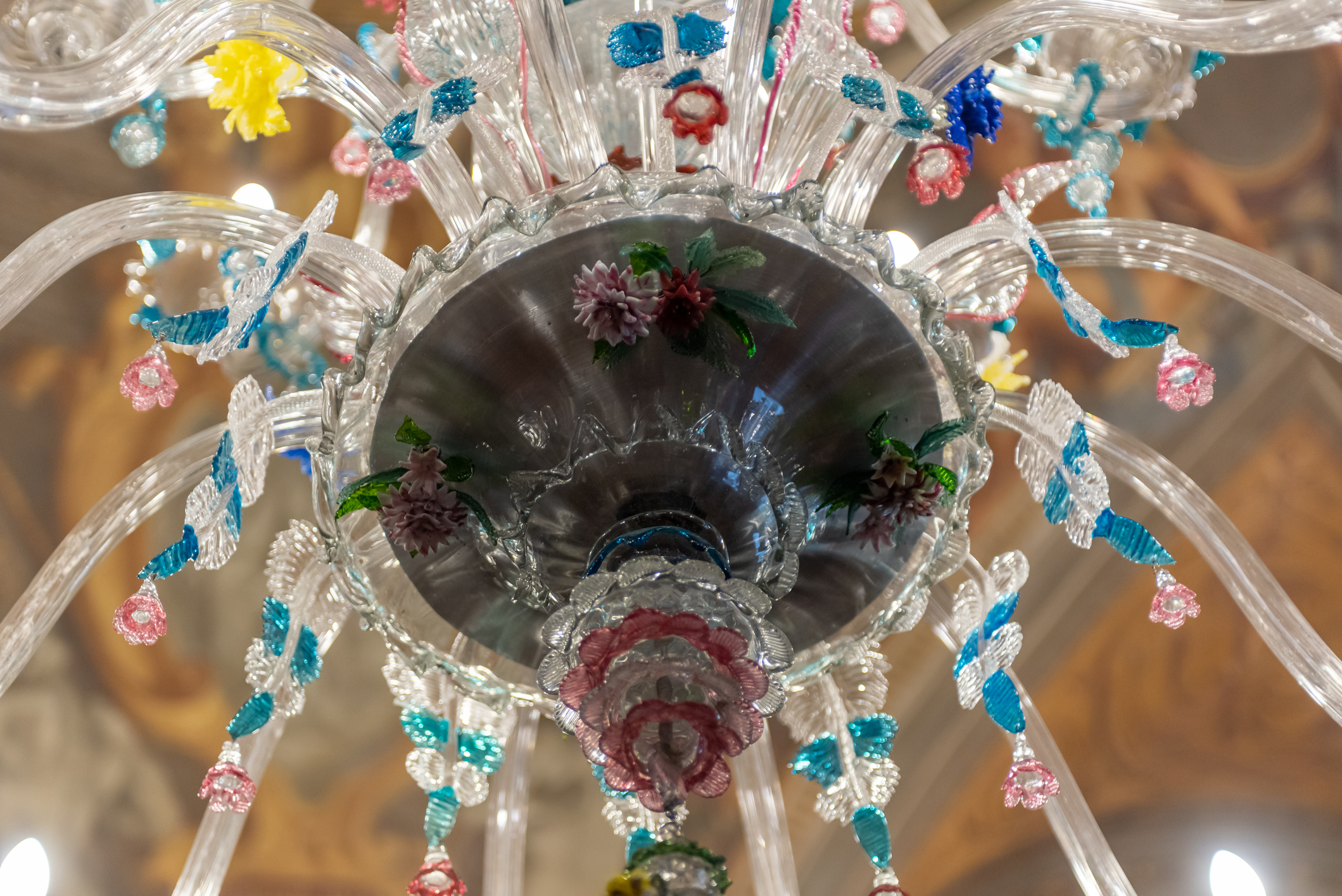
Many Murano glass chandeliers are renowned for rich colours, while others have exceptional transparency. Minerals and oxides are added to create azure blues, amber golds, and deep reds.
Additionally, the glass refracts light, creating a radiant glow in the room without being overpowering.
Sculptural Quality
Every piece of a Murano glass chandelier is handcrafted and then assembled into a stunning configuration. Traditional chandeliers feature botanical elements, while modern chandeliers can be geometric and minimalist.
Impressive Scale
Whether traditional or modern, Murano chandeliers are large. They can be as high as 48 inches (123 cm), even higher if used in commercial buildings such as hotels and stately homes. Because of this, they are the visual centrepieces of a room.
How Are Murano Chandeliers Made?
It is a long, intricate process to create Murano chandeliers. It involves multiple steps and requires several highly skilled artisans to create each chandelier.
It all begins in the furnace, where the raw materials are heated to high temperatures, typically between 1,400 and 1,600 °F, at which point the glass becomes molten. The molten glass is then gathered in long pipes and blown into shapes. The glass may then be shaped further and manipulated using tools and moulds. Each component is meticulously handcrafted, showcasing the skill of the artisans.
The individual pieces are then inserted into metal discs with holes to create the chandelier. It requires both artistic talent and technical precision to achieve this, as the artisans must ensure that the chandelier is perfectly balanced. Once this is done, the chandelier is annealed, which means it is gradually cooled to prevent cracking.
The glass is often coloured, and this is done by adding minerals to the molten glass. Cobalt oxide, for example, produces a dark blue colour, manganese is added for violet tones, and small quantities of metallic gold create rich red and amber hues. Gold and silver leaf are also sometimes added.
Popular Styles of Chandeliers
Classic Rezzonico Style
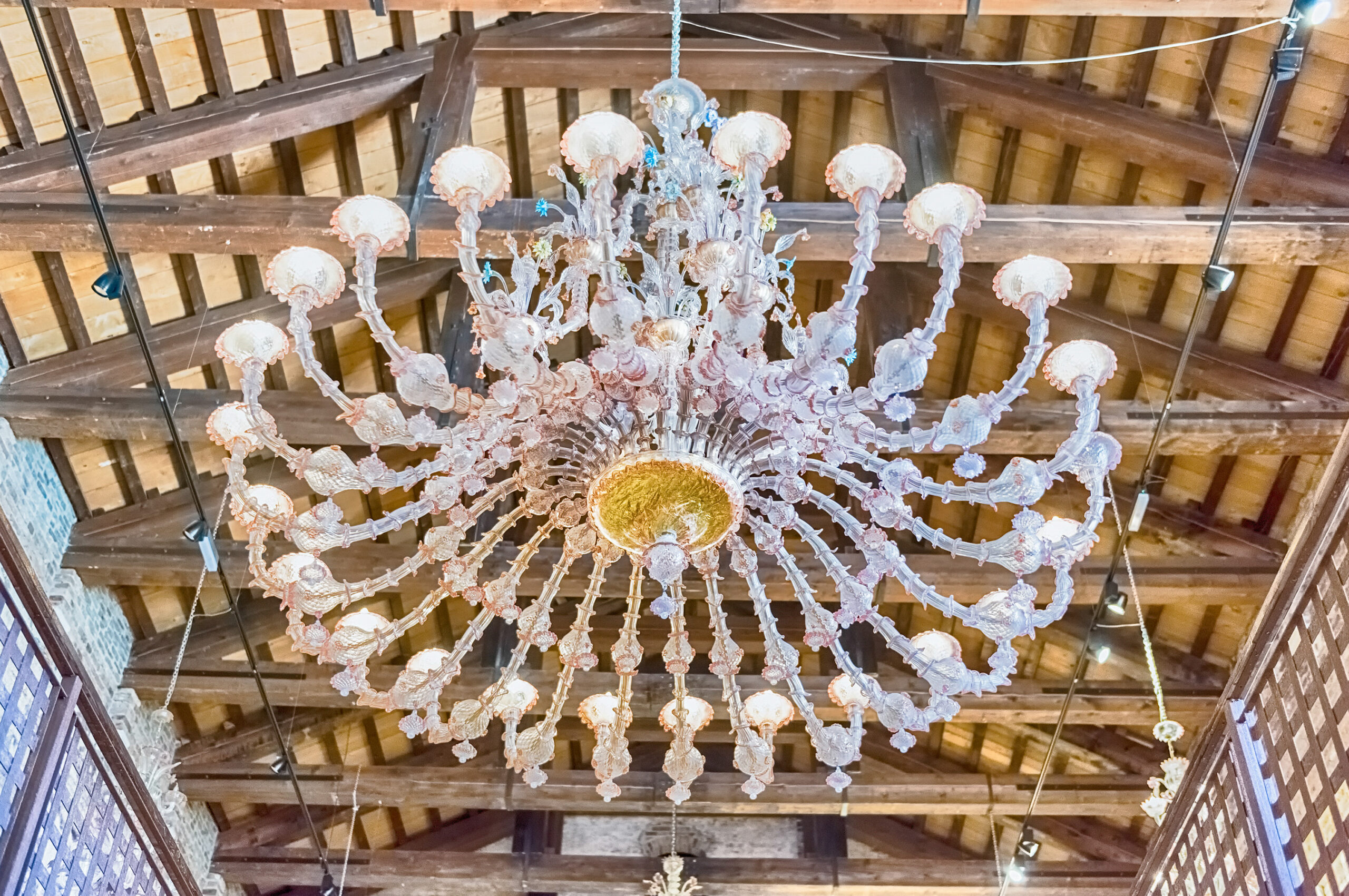
Rezzonico chandeliers have captivated art connoisseurs since their creation in the 18th century. They are a testament to the artistry and genius of the Murano glassmakers.
The size of Rezzonico chandeliers varies from small to large, and the number of lights ranges from a few to dozens. The one thing that they have in common is that they are elaborate and grand.
Single-tier Rezzonico chandeliers are the most traditional and are used to illuminate smaller rooms, complementing other lighting fixtures in the room, such as sconces. Multi-tier Rezzonico chandeliers are bolder and grander, and suit 2-floor entryways into large mansions, or ballrooms in stately homes and palaces, where the ceilings are high. Cascade Rezzonico chandeliers are a modern take on the traditional chandelier. They have numerous glass arms cascading down from the middle of the chandelier. They suit contemporary homes and other spaces, and vary in size from small to imposing.
Modern and Contemporary Styles
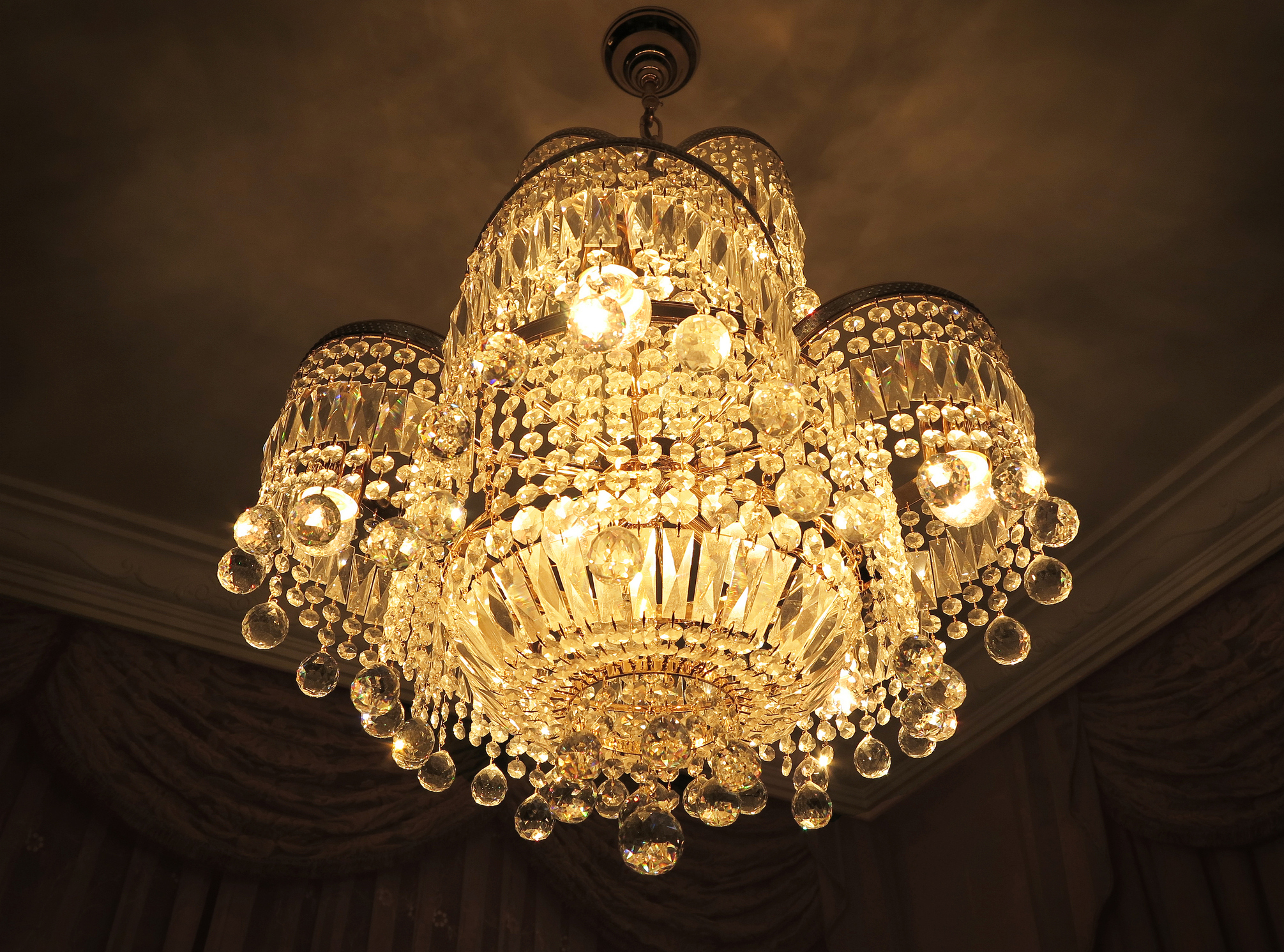
Modern Murano chandeliers combine traditional craftsmanship with contemporary aesthetics and interior design trends. They often feature more streamlined designs and appear less opulent, although many are still inspired by nature and incorporate elements reminiscent of flowers and leaves. The frames are generally sleek, and the colours can be either bold or monochromatic.
How to Choose the Perfect Chandelier for Your Home
Budget
Your budget is obviously an essential factor when choosing a chandelier. Ideally, you will want to have a beautiful and high-quality chandelier, but it must match your budget.
First, set your budget. Murano chandeliers vary in price depending on size and design. Compare prices across different stores to find the best value. This will likely be online, but you may also be fortunate enough to visit Murano. Remember to include extra costs, such as installation and maintenance. It is always better to have it installed professionally. Don’t always go for the cheapest chandelier because a high-quality chandelier may save you money in the long run.
It is essential to note that market factors, including online shopping trends, changes in material costs, and regulatory standards, can impact your budget.
Size of the Room
Selecting the right size of chandelier for your room is crucial. If it is too small, it will look lost in a large room, while one that is too big for the room will take over.
Before purchasing a chandelier, measure the length and width of your room. Add them together in feet. This total in inches will indicate the size of the chandelier you will need. For example, a room that is 14 feet long and 20 feet wide has a total length of 280 feet. This means you will need a chandelier with a diameter of approximately 34 inches.
Ceiling Height
The height of your ceiling is another critical consideration. The ceiling height in feet x 2.5 gives you the ideal chandelier diameter in inches. For example, if your ceiling is 10 feet high, it will be 10 x 2.5 = 25 inches.
If you are placing the chandelier above a dining table, the height between the table and the ceiling should be around 30 to 36 inches.
Style of the Room
When selecting the ideal chandelier for your home, it is essential to choose one that complements your decor. If you have a traditional house, a chandelier with classic designs, such as those featuring flowers and leaves, is a preferable choice. However, if your home design is contemporary, a modern chandelier with geometric shapes and a minimalist look would be perfect. Lately, however, transitional designs have gained popularity, blending both styles. With these, you have the elegance of traditional chandeliers, combined with the sleekness of modern pieces.
Chandeliers can be customised, allowing you to choose the design as well as other factors, such as the brightness of the lights.
Colour Scheme
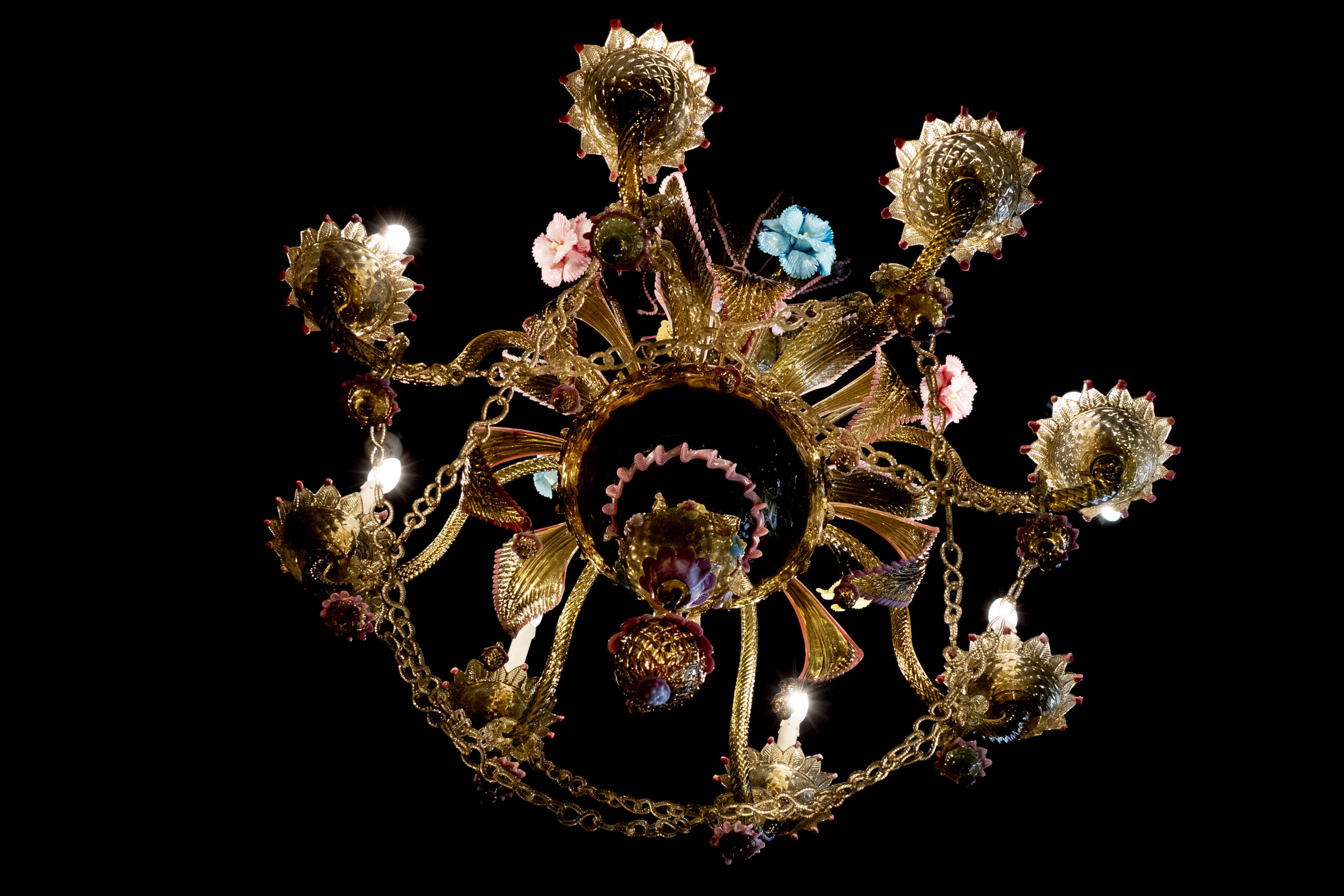
The colour of glass chandeliers is just as important as their style. The artisans of Murano create chandeliers in a variety of colours, from clear to bold. Pick a colour that suits your decor. Clear glass is versatile and will complement most colour schemes. Colored glass will give different effects. For example, gold or amber is ideal for sitting rooms and bedrooms because they are calming and mimic sunlight. Light blue is suitable for kitchens and bathrooms, as it helps you focus, for example, when reading recipes.
Lighting and Bulb Considerations
The primary function of a chandelier is to give light. Typically, a medium-sized room requires a chandelier with bulbs ranging from 200 to 400 watts.
Opt for LED bulbs, as they are energy-efficient and have a long lifespan. Choose warm white for a cosy feel, such as in a living room or bedroom, and cool white for a functional room like the kitchen.
Chandeliers that allow dimming are an excellent option as they can change the mood in a room. Keep them low for a cosy or romantic feel, and high for function.
Installation and Maintenance
It is a good idea to have your chandelier professionally installed, as it ensures that it is fitted correctly.
When it comes to cleaning your chandelier, dust it monthly. For a thorough clean, mix equal parts of white vinegar and water, and clean every glass chandelier part with this mixture carefully. Then dry off with a clean, lint-free towel. Avoid harsh chemicals or abrasive materials, as they can damage the glass. Never use a dishwasher to clean any parts of a Murano Glass chandelier.
Periodically, check the chandelier for damaged parts. To ensure the longevity of the chandelier, have any broken parts replaced immediately by contacting the seller to see if the parts can be re-created.
Don’t place your chandelier in direct sunlight, as this can cause the colours to fade and lead to discolouration.
Final Thoughts
Don’t rush into buying your Murano glass chandelier. Take in all the factors we have mentioned. Then you can be assured that it will elevate your decor and be a talking point with your guests. Remember that a Murano glass chandelier is not only a light, but a work of art.