

Spring Techniques for Healthy Hostas Plant Division
by Northern Life
What does spring have in store for the gardener, particularly the gardener of hostas? Splitting these shade plants promotes healthy growth and helps keep good-looking foliage. Learning how to do it right guarantees healthy, vigorous clumps for season after season! This guide provides sound strategies for splitting hosts in the spring.
Why Divide Hostas in Spring?
In nature, hosta plants in Spring propagate and, over time, become densely clustered clumps. If kept together all the time, they could fight for space and nutrients. Such an arrangement may lead to decreased vigour and smaller leaves. Spring is ideal for division since new shoots revive quickly and roots can establish before summer’s heat.
Recognising the Right Time
Division is best when temperatures are cooler, and the soil is still moist. If origin sprouting shows minor growth above the surface, other roots tend to remain undisturbed this far along as well, and foliage remains close together. Avoid waiting for the entire leaf to unfold, as manipulating this isotonic fluid can damage mature leaves.
Essential Tools and Preparation
Collect a loosening fork, an extract spade, and fresh-pick pruning scissors. They assist in lifting and parting roots without injury. Clean equipment reduces disease risk. Please ensure the area where you will be planting is cleared in advance and composted, or at the very least, loosen the soil and add compost. It helps one to recover quickly after a division.
Lifting the Plant Gently
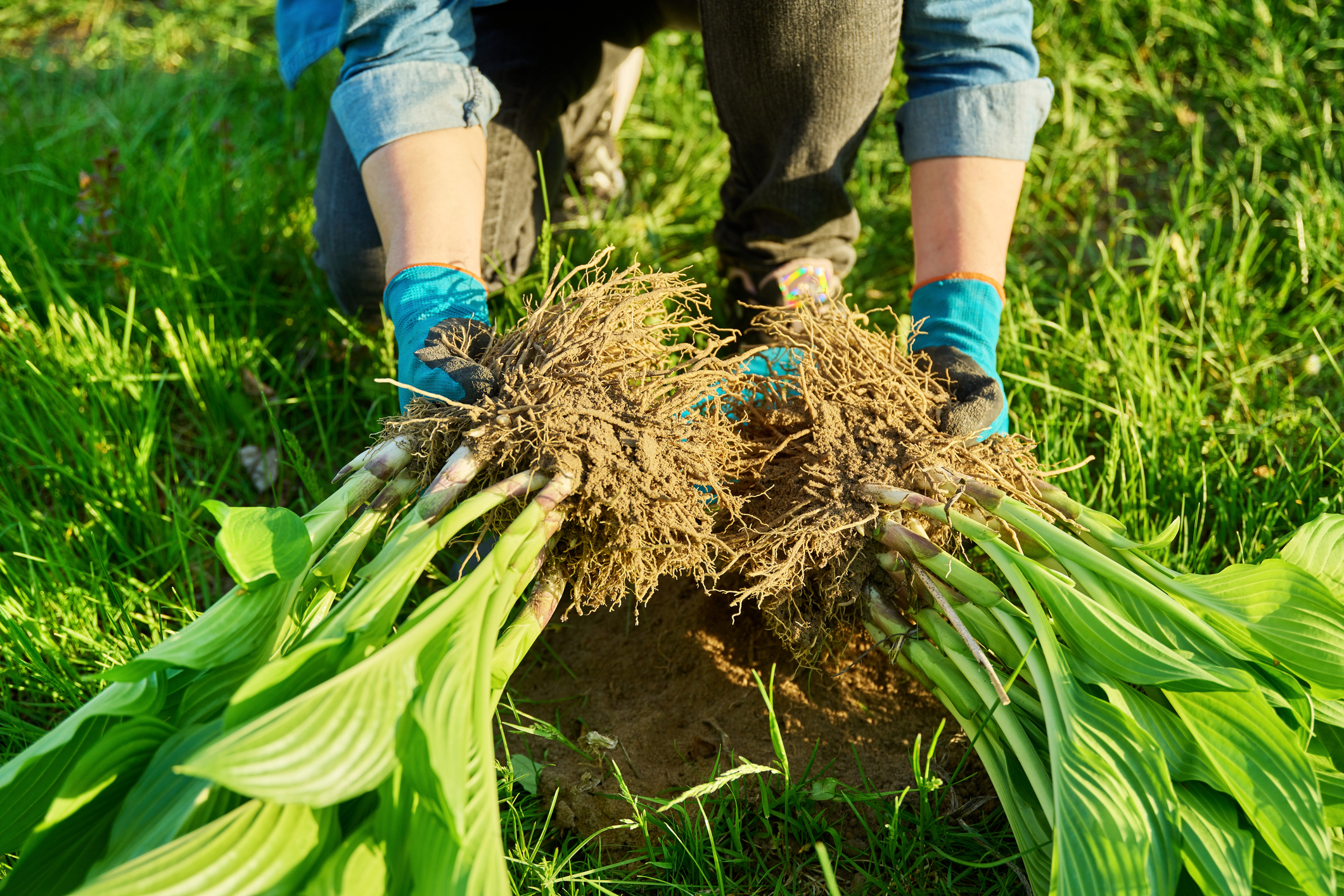
Probe the plant with the garden fork a few inches away from its base. Use a shovel to gently free the soil all around with a view to lifting as many roots as you can. When loosened, remove the whole clump with as little disruption as possible. Knock off a little bit of soil to see where each crown and root form.
Dividing the Root Clump
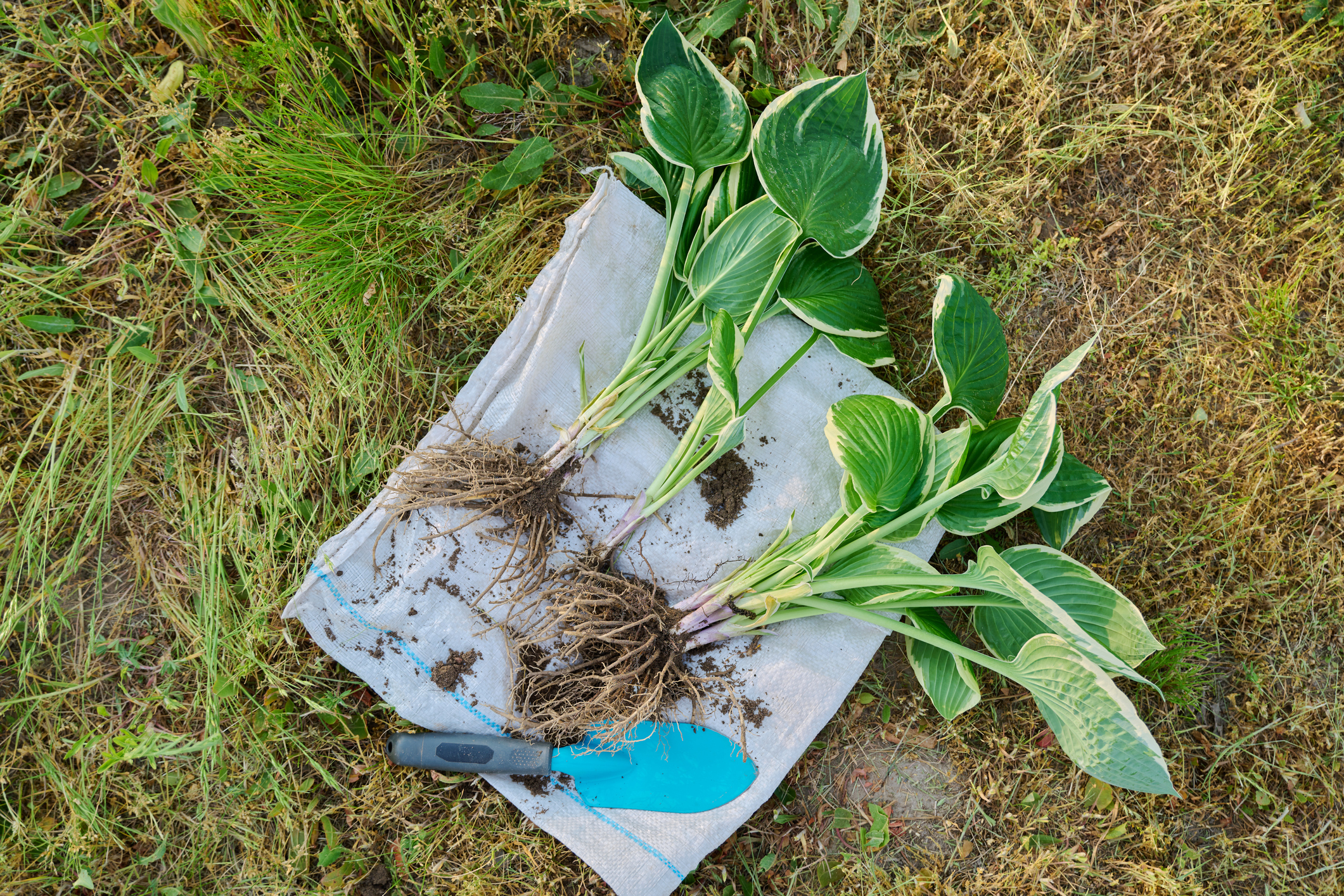
Look to see if the lifted clump naturally has divisions. In a healthy hosta, you’ll observe multiple crowns attached to extremely thick roots. Section off the clump, with each section containing at least one crown and some connected roots. If you get tough connections, use a very sharp spade or knife and make clean cuts so you do not damage healthy tissue.
Inspecting and Trimming Roots
According to expert florists, examine the roots of each new plant to make sure there are no damaged or decaying roots. Use clean scissors to snip off anything that looks unhealthy. Eliminating these organs reduces the likelihood of disease. Preserve as many healthy roots as possible, as they help with rapid establishment at the new location.
Planting Divided Sections
Space a few new divisions apart, and leave plenty of room to grow. Space each hole so that each root system can grow into it without crowding. Plant all divisions at the same depth as the parent plant was growing. Fill in with rich soil, tamp down lightly and water well to settle the roots.
Caring for Newly Divided Hostas
Leave regularly moistened in the first weeks after replanting. Regular watering helps roots acclimate to their new environment. Apply organic mulch (e.g., shredded bark or compost) around the base to conserve humidity and prevent weeds. Until new growth appears, protect young shoots from direct sun.
Common Mistakes to Avoid
Hostas may become stressed if hot weather suddenly arrives after they are divided too late in spring. Not cleaning tools can result in the transfer of plant diseases. Trimming unhealthy roots speeds up healing. The numerous divisions in this new setup restrict airflow, allowing pests to flourish.
Long-Term Benefits of Division
Dividing them regularly helps keep them healthy and full of life. Hostas respond with new growth, larger leaves, and increased insect resistance. Chiselled compartments make for a snazzier show, providing colour and leaf in the dull patch garden over the years. Spare plants can either be gifted to friends or donated to new garden beds.
Conclusion
The spring division keeps hosta plants going year after year. With the correct implements, a light touch, and proper placement, you can make it work. Vibrant, healthy clumps result from good technique and care, as timing, preparation, and aftercare are unshakeable fundamentals of the craft. Regular division makes it easy to care for this beloved shade plant, ensuring its happiness for years to come.