
Lucky Bowler Bill
by Dene Bebbington
Against all odds, Liverpool-born Captain William Turner survived one of the most infamous maritime disasters in history – the sinking of the RMS Lusitania in 1915. From a seafaring boy who defied his parents’ wishes to a no-nonsense Cunard commander known as “Bowler Bill,” Turner’s life was one of danger, defiance, and extraordinary luck on the high seas.
A downside of being a sea captain is the expectation of staying on your ship should it sink, or at least be the last to try and save yourself once everyone else makes it off the stricken vessel. In 1915 a German submarine sank the renowned ocean liner RMS Lusitania, causing consternation at the loss of many innocent lives. Commanding the liner, William Turner seemed destined for a watery grave, so how did this Liverpool man turn into one of the luckiest captains in history?
“On Thunderbolt, he got dunked again, this time by a wave washing him overboard while he fished”
The sea called to William from a young age. Son of a ship’s officer, he was born in Everton in 1856 and lived not far from Albert Dock where he could see ships and their bustling activity every day. What could be more exciting for a young boy living there than to visit his father’s ship?
From then on he was hooked and aspired to be a captain himself despite his parents urging a staid Church career instead – a prospect he later bluntly described as the “Clerical life of a Devil-dodger”.
Standing firm on his intent, the young William finally gained permission to embark on a maritime career at about the age of 13 when he joined the ship Grasmere. This initial voyage as a lowly cabin boy might have been the last for someone less spirited. In an uncanny foreshadowing of another disaster later in life, gale-force winds swept the Grasmere onto a reef off the coast of Northern Ireland. Fortunately, he could swim and made it to shore through rough waters in an unwanted baptism, proving the perils of life aboard ships even close to home.
Undaunted, William soon found another placement, this time on the clipper White Star, and as a diligent learner he picked up multiple skills needed for working on sailing ships.
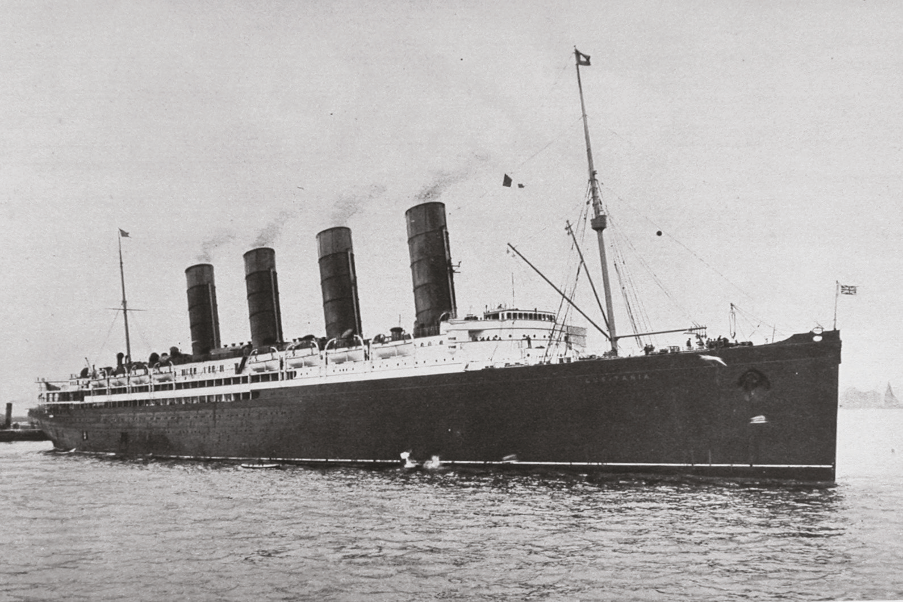
The RMS Lusitania ocean liner
Credit: UK Photo and Film Archive, public domain
Having progressed to the position of second mate on Thunderbolt he got dunked again, this time by a wave washing him overboard while he fished. He was rescued by grabbing a lifebuoy thrown to him, but was forced to punch a worryingly persistent shark before climbing up a rope ladder to safety.
The goal of gaining a Masters Certificate spurred William on, and at the age of 30 he passed the Master of a Square rig ship exam. This was part of his master plan, as it were, to ultimately captain a Cunard Line ship because their applicants must have commanded a square-rigged sailing ship to even be considered.
“He described the first-class passengers as “a load of bloody monkeys who are constantly chattering.”
He was wedded to more than just a passion for ships which took him away from home. Also finding time in his life for a relationship, three years earlier William married Alice Hitching and set up home with her in Sale where they had two sons, Percy and Norman.
But, who knows, perhaps his absences during periods at sea contributed to him and Alice eventually separating after 20 years together.
Now with vital experience of commanding sailing ships, he rejoined Cunard in 1890 as a First Officer, then progressed to Chief Officer. Several more years passed until he received a captainship in 1903. Ironically, reaching the career goal in his late 40s coincided with the marriage breakdown. Though an experienced and respected man of the sea, he lacked the personable demeanour expected by first-class passengers, whom he once described as “a load of bloody monkeys who are constantly chattering”.
Whenever possible, he’d eat on the bridge rather than schmooze them at the Captain’s dining room table. Far from alienating everyone, surprisingly, his distant manner actually attracted people to Cunard in the hope of seeing or meeting this man who did things differently and wouldn’t pander.
We can only wonder if any passengers knew his nickname. Keeping to tradition, he’d bought a bowler hat when made captain of a sailing ship, and always wearing it on official business in port earned him the title of “Bowler Bill”. Life looked good for William. In a prestigious position for a top-class shipping line he also set up a lasting stable home life with his much younger housekeeper-cum-partner, Mabel.
Every in 1908. Five years later, when in command of RMS Mauretania, a promotion to Commodore exalted his career further. Then the First World War loomed. In March 1915 he relieved Captain Daniel Dow, who suffered anxiety about the risk of attack by enemy submarines, of command on RMS Lusitania. It was a concern that didn’t appear to bother Turner.
“Why, it’s the best joke I’ve heard in many days, this talk of torpedoing the Lusitania.”
On the North Atlantic run between New York and Liverpool, the ship might encounter prowling German U-boats trying to throttle Britain’s maritime lifeline. Ocean liners had no way to defend themselves against the underwater menace; only their speed was an advantage since they could easily outrun their stalkers. Known as one of the greyhounds of the sea, Lusitania won the coveted Blue Riband record several times for the highest average speed on a transatlantic crossing.
Not fretting about the German threat, at least publicly, Captain Turner reassured one passenger by remarking, “Why, it’s the best joke I’ve heard in many days, this talk of torpedoing the Lusitania.”
Unfortunately, the talk wasn’t a joke or funny because the Germans were deadly serious in public warnings they issued to would-be liner passengers. On the afternoon of7 May 1915, while passing the southern coast of Ireland, a torpedo struck the liner. Over half the people on board perished. William stayed on the bridge respecting the seafarers custom of a captain going down with his ship, but thanks to his life jacket’s buoyancy he survived. Surging water forced him out of the bridge and popped him into the sea like a cork shot out of a bottle.
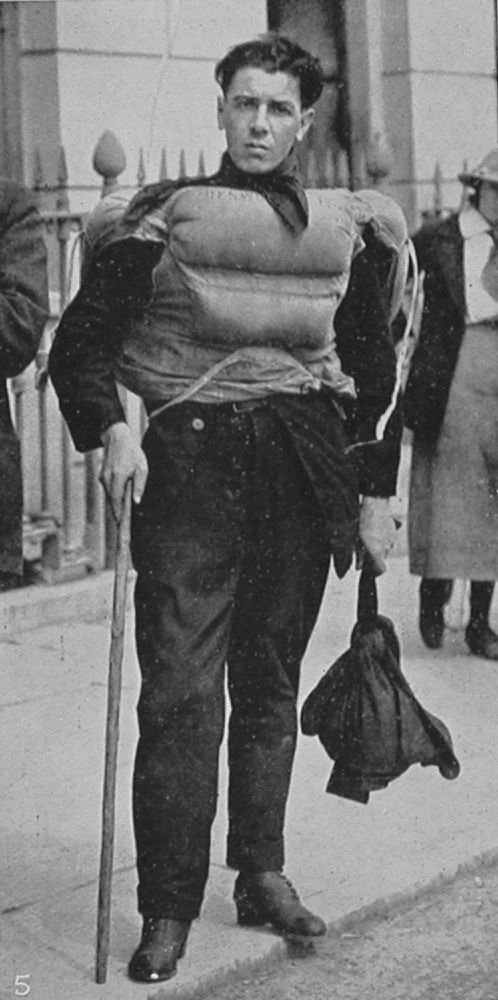
One of the survivors of the sinking, still wearing his life jacket.
Credit: UK Photo and Film Archive, public domain
At a subsequent inquiry the government tried to scapegoat William for the sinking, partly because they needed to deflect attention and possessed intelligence about German U-boat activity, which needed to be kept secret. Finally exonerated, he felt bitter at the shoddy treatment, though Cunard retained enough confidence to keep him working for the company. Tellingly, Lord Mersey, who led the inquiry, found the matter so distasteful that he waived his fee and stated that, “The Lusitania case was a damned, dirty business!”
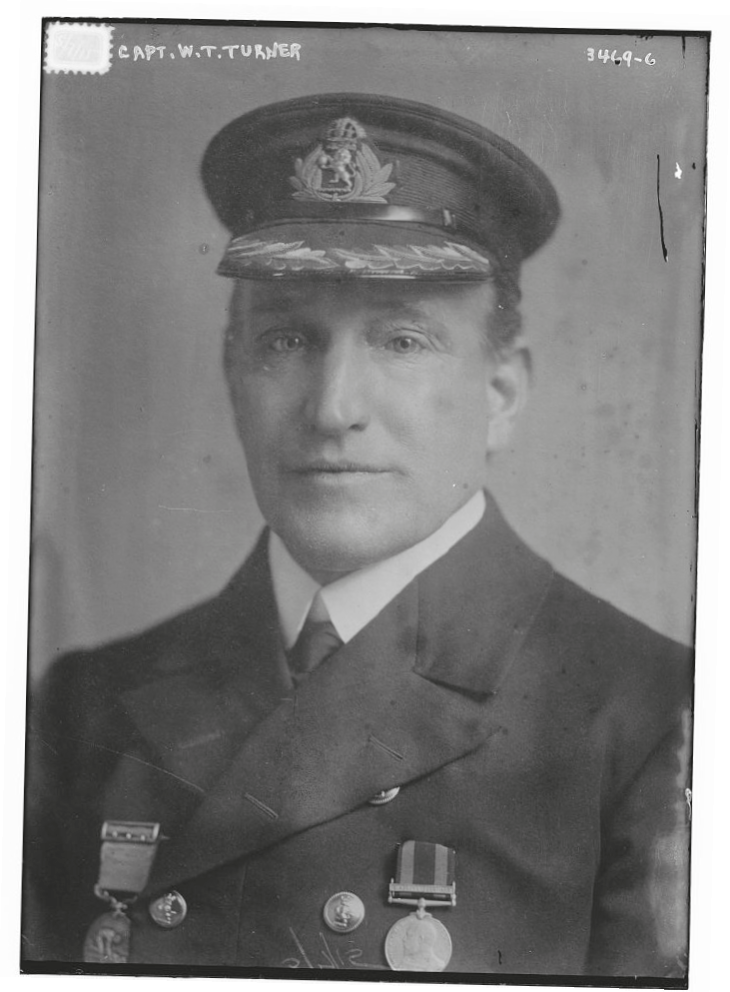
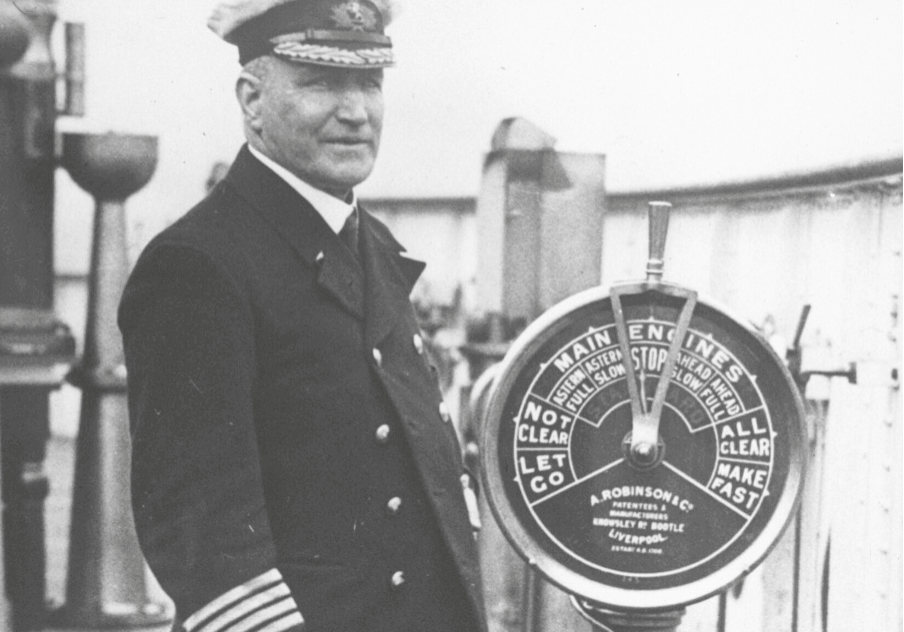
Captain William Turner Credit: Library of Congress, public domain
Following 34 years’ service with Cunard, William Turner retired in 1919 and, wanting a quiet life, moved south to Devon with Mabel. A few months later, his mother died, so the couple decided to return to their home ground and settled in Great Crosby, historically part of Lancashire. Bowler Bill’s remaining years, prior to his death in 1933, brought him some serenity and the chance to enchant local kids by teaching them sea shanties accompanied by his fiddle.
NorthernLife Dec/Jan/Feb 26