

It Started in the Apple Barrel – A Christmas Memory
by John Platten
Share your memories with us.
It started in the apple barrel on the tenth day of Christmas in January 1966. Stars of frost glistened under the moon on the inside of the bedroom window. Central heating was beyond the horizon. A pile of blankets was the antidote. We’d climbed the wooden hill, Mum always called it that, with regret, leaving the warm sitting room, with the roaring coal fire, behind. Anticipation and trepidation met us at the top of the stairs. Was this how Scott felt as he began his journey to the South Pole?
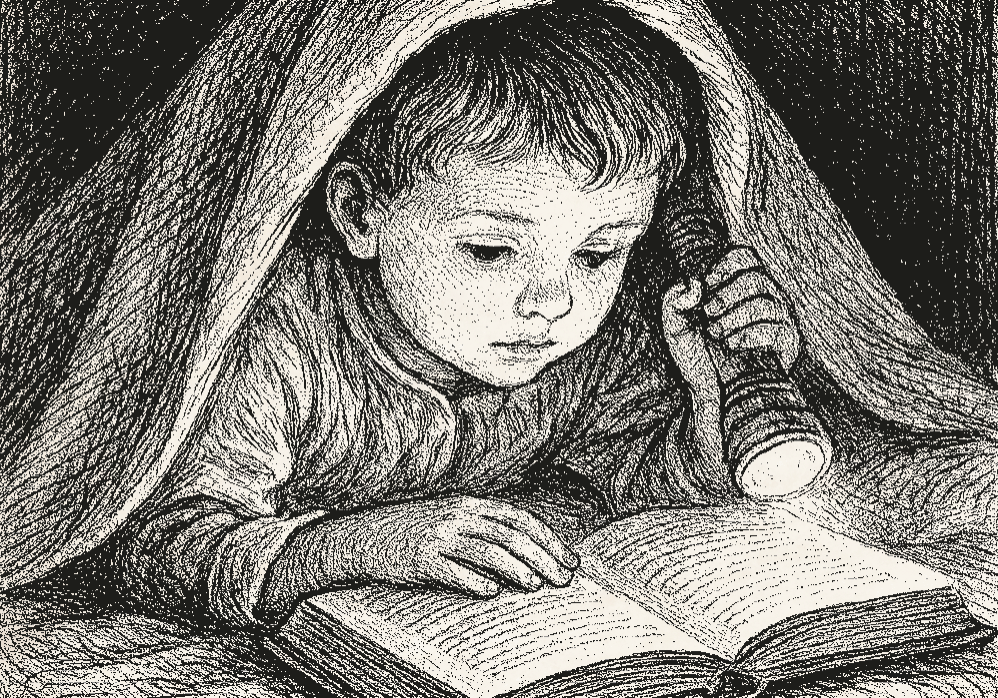
Treasure Island, by Robert Louis Stevenson (RLS) had appeared at the top of my Christmas stocking, blocking access to the tangerine, a few Quality Street and a handful of Monkey Nuts. Those were the days! I started reading Treasure Island on New Year’s Eve 1965. Until then, I had been devouring the two football annuals that had arrived gift-wrapped under our Christmas tree. New batteries in the torch, my younger brother asleep across the room and breath that looked like smoke when it was exhaled – head under the covers was the best place to be.
“Sleep lost in the storm of nerve-jangling, breath-taking, eye-popping treachery.”
The cove, the beach and the cliffs were etched in my mind beside the picture I’d drawn there of the Admiral Benbow inn. Its creaking sign and the deep cut from the captain’s sword as he saw off the fingerless Black Dog. I wondered how Blind Pew had managed to find his way to the inn. I empathised with Jim Hawkins over the impact of the captain’s behaviour on the patrons and trade at the Admiral Benbow. I understood Jim’s concerns for his ailing Father, as my own Grandfather had recently passed away, in bed, downstairs in our front room. The demise of the captain, the previous evening, felt deserved for all the trouble he caused the Hawkins family. The death of Blind Pew had enthralled me after he delivered the piece of paper with its message and the mess left at the Admiral Benbow when Jim and his mother escaped the clutches of Pew and his gang. From that moment on, while practising my handwriting, I looked askance at every blob my new fountain pen made, in black ink, when I dawdled on the page.
When Jim and his adventurous adult friends got to Bristol, I guessed that Long John Silver was the sea-faring man with one leg that Jim had been asked to look out for. Black Dog’s presence in Long John Silver’s hostelry didn’t fool me. But it was the treachery that Jim overheard in the apple barrel, plotted by Long John Silver, that scared the life out of me.
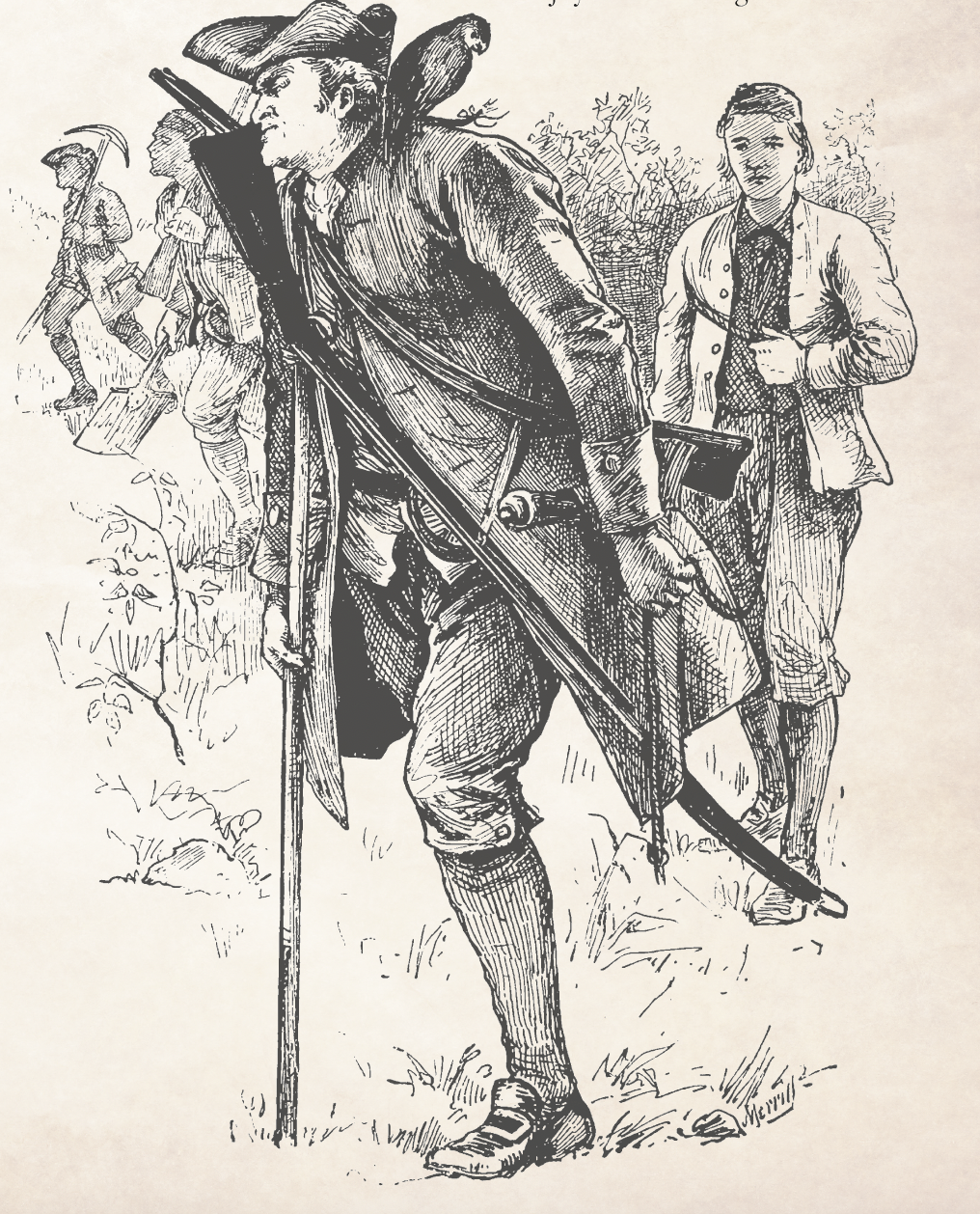
Here with the torchlight following RLS’s pacey narrative, the hairs on the nape of my neck stood on end, goose bumps multiplied on my arms, as my breath came in short gasps. Holding the torch steady became a significant effort as my 9-year-old hands and arms struggled, my brain accelerating away from the story on the page in cyclones of nervous excitement. Sleep lost in the storm of nerve-jangling, breath-taking, eye-popping treachery. All the while, my younger brother slept through the tension, unaware of the contest between good and evil evolving amongst the Russets.
These pages of Treasure Island changed my life. Mum and Dad were big on the three ‘Rs.’ Both had left school early. Dad at 14 for a wartime-interrupted apprenticeship as a plumber, Mum at 15, to work in a factory. Beautiful handwriting – the only legacy of both their times at school. Treasure Island was my introduction to serious literature, and more Christmas novels followed – Oliver Twist, Animal Farm.
Treasure Island was the first novel I read as a child – what a start. It planted a love of Robert Louis Stevenson that has strengthened over 60 years. I still have that original copy of Treasure Island on my shelves, and I reread it every couple of years. It sits alongside a range of other RLS books collected over the years. His other great adventure story, ‘Kidnapped,’ ‘The Strange Case of Dr Jekyll and Mr Hyde’ – that introduced the phrase into common usage. His travel writings, other novels, short stories, non-fiction, his children’s poetry, and his adult poetry. As well as two biographies by Ian Bell and Hunter Davies.
When I shuffle off, which I hope won’t be for some time yet, the last words I won’t hear will be Stevenson’s from Requiem:
“And the hunter home from the hill.”
They won’t be the Pentland Hills, outside Edinburgh, which Stevenson loved and knew so well, and I had enjoyed as a teenager.
To share your memories, email memories@northernlifemedia.co.uk or go to northernlifemagazine.co.uk/contribute
NorthernLife Dec/Jan/Feb 25