How to Build a Cabin in the Woods: Planning, Permissions, and Construction
by Northern Life
Learn how to build a cabin in the woods
Building a cabin in the woods is one of the most rewarding self-build projects a UK landowner can undertake, but it demands careful navigation of planning law, site engineering, and construction decisions before a single post goes in the ground.
The process spans far more than choosing a floor plan. From understanding what Permitted Development Rights actually cover on forestry land, to selecting the right construction method for a shaded, moisture-prone woodland environment, each decision compounds into the next.
This guide covers the full journey: legal requirements, realistic costs, construction methods, off-grid systems, and what solo builders genuinely need to know before starting. For the structural and cladding elements, materials like charred wood cladding offer woodland cabins both a natural aesthetic and a proven resistance to moisture and decay.
Is It Legal to Build a Cabin in the Woods in the UK?
Yes, in many cases you can build a cabin on woodland you own in the UK, but legal status depends entirely on intended use. Planning law does not treat a “woodland cabin” as a single category. Instead, it distinguishes between temporary structures supporting forestry work, occasional-stay leisure shelters, and permanent dwellings, each governed by different rules.
For leisure cabins on privately owned woodland, the 28-night occasional-stay rule is the most relevant threshold. Staying fewer than 28 nights per year typically avoids planning permission, provided the cabin supports legitimate woodland management activity.

Permanent residential use is a different matter. UK planning policy approves it only in exceptional circumstances, most commonly where a full-time forestry worker must live on site to manage the land. For most private buyers, permanent habitation in woodland requires specialist planning support.
Woodland Cabins and Permitted Development Rights
Permitted Development Rights (PDRs) allow woodland owners to erect buildings that support genuine forestry activity under Class B of the Town and Country Planning (General Permitted Development) Order. This covers structures such as storage sheds, tool stores, and basic shelters directly tied to forestry operations.
However, PDRs do not grant automatic permission. In most cases, you must submit a prior approval application to the Local Planning Authority before work begins. The LPA then assesses the siting, design, and whether the proposed use genuinely serves forestry purposes.
Woodland and forestry land falls under different planning classes than agricultural land, with separate thresholds and criteria. Applying agricultural land rules to a woodland plot is a common and costly mistake.
Cabins on land designated as an Area of Outstanding Natural Beauty (AONB), National Park, or Site of Special Scientific Interest (SSSI) face significantly stricter scrutiny. In these areas, even structures that would ordinarily qualify under PDRs may require full planning permission.
Getting Planning Permission for a Permanent Cabin in the Woods
A full planning application is required for any structure intended for regular habitation, tourism use, or purposes beyond direct forestry support. This includes holiday lets, glamping pods, and any cabin where someone sleeps regularly.
The central planning concept here is functional need. Local Planning Authorities require applicants to demonstrate that a permanent on-site presence is essential to the operation of a commercial woodland enterprise. For non-commercial owners, this test is nearly impossible to meet.
Consulting a specialist planning consultant before purchasing woodland is strongly advisable. Errors made at the acquisition stage, such as assuming permission will follow purchase, are costly and often irreversible.
How Much Does It Cost to Build a Cabin in the Woods?
A basic DIY woodland cabin in the UK typically costs £10,000–£30,000. A contractor-built or fully off-grid cabin can reach £60,000–£100,000+, depending on specification.
Cost varies most significantly based on footprint, construction method, site access, and whether off-grid water, sanitation, and heating systems are included. Remote woodland plots with no vehicle access add considerable groundwork expense before a single wall goes up.
Beginners consistently overlook secondary costs: planning fees, topographic land surveys, and structural engineer sign-off. These are non-negotiable for any structure requiring prior approval or full planning permission, and skipping them creates legal and structural risk later.
Key Cost Factors: Land, Materials, Labour, and Planning Fees
The main cost categories for a woodland cabin build include:
- Woodland land purchase: £5,000–£20,000+ per acre depending on region and timber quality
- Foundation and groundwork: concrete slab, ground screws, or timber posts, plus drainage and access
- Structural timber and cladding: frame materials, exterior boarding, and fixings
- Roofing materials: felt, membrane, battens, and covering (tile, metal, or shingle)
- Insulation: PIR board or mineral wool, plus vapour control layers
- Windows, doors, and glazing: often underbudgeted on first builds
- Planning and legal fees: prior approval notifications, surveys, and structural sign-off
- Off-grid systems: water, sanitation, and heating infrastructure
Foundation and groundwork is consistently the most underestimated category. Site access, drainage, and levelling on uneven woodland terrain add significant cost before construction begins.
Labour typically accounts for 40–50% of total build cost when using contractors. Going DIY removes that expense but adds months to the timeline.
How to Build a Cabin in the Woods on a Budget
Choosing a timber frame or prefab kit over a hand-cut log cabin is the single most effective way to reduce costs. Kits arrive pre-engineered and pre-cut, eliminating the skilled labour that traditional log construction demands and shortening the build from months to weeks.
Starting with a footprint of 200–300 sq ft and building in phases keeps initial outlay manageable. A single habitable room with a sleeping loft is far less financially risky than attempting a full multi-room cabin at once.
Woodland cabins face weatherproofing demands that open-site builds simply don’t encounter.
Source structural timber from local sawmills, use reclaimed materials where load-bearing requirements allow, and handle finishing work yourself. Cladding, insulation, and interior fit-out are all realistic DIY tasks.
One principle overrides all others: never cut corners on foundations or weatherproofing. Structural failures cost far more to fix than any aesthetic upgrade saves upfront.
How to Build a Cabin in the Woods from Scratch
Building a woodland cabin follows a consistent sequence: site selection, foundation, structural frame, roof, and weatherproofing. Whether you’re building solo or with a small team, the process is the same. The difference is timeline, not logic.
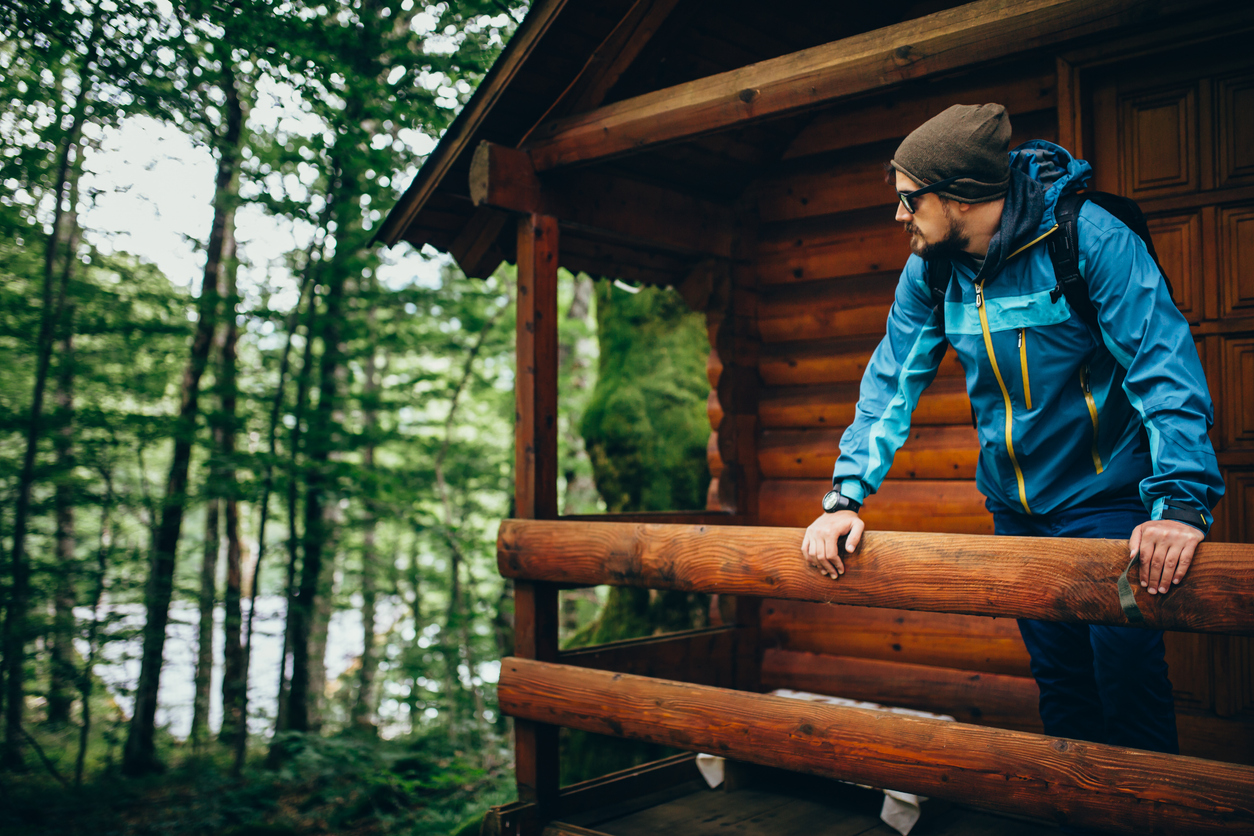
Each stage gates the next, so errors compound forward. Getting the sequence right from the start is the most important decision you’ll make.
Choosing a Site and Preparing the Foundation
Site selection determines almost every other decision in a woodland cabin build. Slope affects drainage and foundation cost; aspect affects passive solar gain; proximity to a water source affects both supply options and flood risk; vehicle access determines whether heavy materials can reach the plot at all.
The three foundation types suited to woodland terrain each carry real trade-offs:
- Concrete slab: most stable and loadbearing, but invasive, costly to excavate, and difficult to correct if levels are wrong
- Ground screws / helical piles: faster to install, cause minimal soil disruption, and perform well on uneven or sloping woodland ground
- Timber post foundations: cheapest upfront, but vulnerable to ground moisture and rot without careful detailing
Foundations are consistently cited as the most underestimated stage of any self-build. Getting them wrong creates structural problems that cost far more to fix than to prevent.
In wet woodland settings, perimeter drainage matters as much as the foundation type itself. Without it, groundwater undermines even a well-built base.
Cabin Construction Methods: Log, Timber Frame, and Post-and-Beam
Each construction method carries distinct trade-offs that directly affect build difficulty, long-term maintenance, and cost.
Traditional log cabins use on-site or locally sourced timber and deliver an authentic aesthetic, but require significant skill to build correctly. Logs settle over time, creating gaps that allow moisture ingress, and untreated timber in a woodland environment deteriorates quickly without consistent maintenance.
Timber frame is faster, more forgiving of beginner-level carpentry, and integrates insulation more cleanly than log construction. For this reason, it remains the most widely used method in UK self-build projects and the sensible default for first-time builders.
Post-and-beam is the most structurally durable option. Well-built post-and-beam structures routinely last over a century, but precision joinery is non-negotiable, making professional involvement almost essential.
Exterior cladding is a separate decision from structural method. Charred wood applied over a timber frame performs exceptionally well in damp woodland settings due to its resistance to moisture, insects, and decay. TimberSol’s shou sugi ban cladding is used by builders in exposed UK locations for exactly this reason.
Prefab kit cabins combine timber frame construction with pre-engineered components, compressing on-site build time from months to weeks.
Roof, Insulation, and Weatherproofing for Woodland Conditions
Woodland cabins face weatherproofing demands that open-site builds simply don’t encounter. Falling branches and leaf debris accumulate on low-pitched roofs, persistent shade creates conditions for lichen and moss growth, and freeze-thaw cycles common in UK winters accelerate deterioration in any weak joint or gap.
Roof pitch is therefore a practical decision, not an aesthetic one. Steeper pitches of 35–45° shed debris more effectively and drain rainfall faster, making them significantly more appropriate for high-rainfall woodland sites across the UK.
For insulation, rigid PIR board delivers the best thermal performance per millimetre, which matters in a small cabin where wall thickness is limited. Mineral wool suits timber frame cavities well and handles irregular framing. Both require a vapour control layer on the warm side to prevent interstitial condensation forming within the wall build-up.
All external timber must be pressure-treated, naturally durable (larch and western red cedar are reliable choices), or charred. Untreated softwood in a damp woodland setting begins deteriorating within 3–5 years.
Off-Grid Systems: Water, Sanitation, and Heating
Off-grid systems are the least glamorous part of a woodland cabin build, but they determine whether the structure is genuinely habitable or simply a shelter. Get them wrong and the cabin becomes unusable; get them right and it functions independently for decades.
Water supply comes down to three realistic options: borehole or well installation (expensive upfront but fully independent), rainwater harvesting (practical for non-potable use, though potable use requires certified filtration), or mains connection if the plot sits within feasible distance of existing infrastructure.
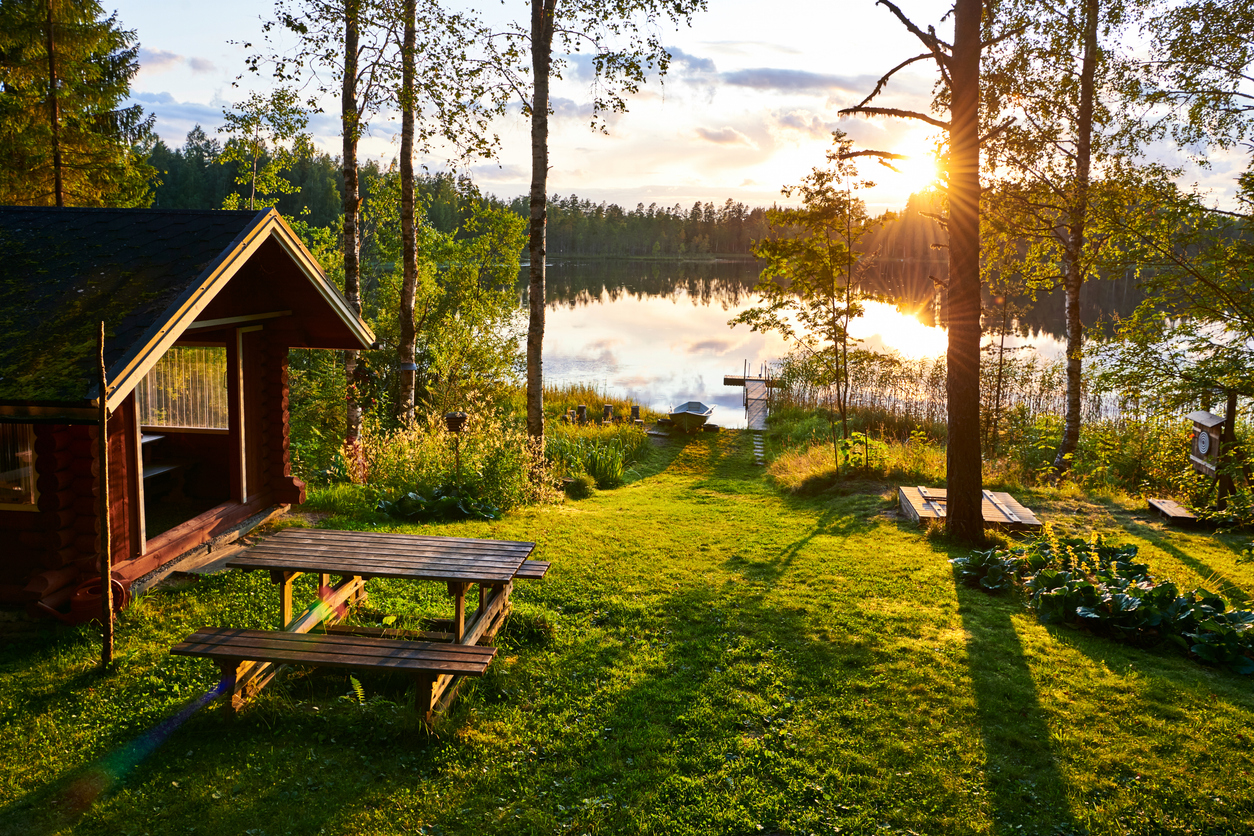
Sanitation in remote woodland typically relies on a composting toilet, which requires no sewage connection and suits off-grid settings well. Grey water from sinks and showers needs separate management, either through a reed bed or a septic tank, depending on local Environment Agency guidance.
Zero carpentry experience is not disqualifying.
For heating, a wood-burning stove is the most practical solution. It uses on-site fuel, needs no mains connection, and performs reliably year-round. Larger cabins can extend this with PEX pipe underfloor heating driven by a back-boiler stove.
All off-grid systems must comply with Building Regulations and Environment Agency standards, even where the structure itself sits under Permitted Development.
Can You Build a Cabin in the Woods by Yourself?
Yes, a solo cabin build is entirely achievable, but most beginners significantly underestimate the time, physical effort, and skill involved. Zero carpentry experience is not disqualifying.
But it does require a structured approach. Attempting a full cabin build without foundational skills leads to costly mistakes, particularly at the framing and weatherproofing stages. Building progressively, starting small and scaling up, is the strategy experienced self-builders consistently recommend.
A Realistic Skills and Timeline Guide for Beginners
Experienced builders consistently recommend the same progression: start with a garden shed or deck to learn framing, fixing, and levelling, then tackle a small outbuilding before committing to a full cabin. Each stage builds the muscle memory and problem-solving instincts that no tutorial can replace.
SketchUp is the most widely recommended free tool for designing cabin floor plans and visualising structural layouts before purchasing any materials. Working through a design digitally exposes conflicts between components early, when changes cost nothing.
Volunteering with a construction charity such as Habitat for Humanity provides supervised, hands-on framing and insulation experience that accelerates skill development far faster than solo practice.
Solo timeline expectations should be realistic. A small cabin of 200–400 sq ft built alone typically takes 6–18 months, depending on available weekends, skill level, and weather. With a small team or pre-cut kit, a weathertight shell is achievable in 2–4 months.
Foundation work and planning notifications routinely consume more time than the structural frame itself, so building both into your project plan from day one prevents serious delays. This is as true for a 2026 build as it was for any previous year, since planning processes in England and Wales have not shortened.
Frequently Asked Questions
Do I Need Planning Permission to Build a Cabin in the Woods in the UK?
Yes, in most cases. Even structures qualifying under Permitted Development require prior notification to the Local Planning Authority. Any cabin intended as a permanent or regular dwelling needs full planning permission. Consulting a specialist planning consultant before purchasing woodland avoids costly mistakes.
What Is the Best Construction Method for a First-Time Cabin Builder?
Timber frame is the most beginner-friendly choice. It tolerates moderate carpentry skill, integrates insulation straightforwardly into stud cavities, and can be sourced as a pre-cut kit to reduce on-site complexity significantly.
Log cabins are appealing but demand precision to build well and require ongoing maintenance against rot and cracking. Post-and-beam is highly durable but relies on precise joinery, making it better suited to experienced builders or those hiring specialist help.
Can I Live Permanently in a Cabin in the Woods in the UK?
Permanent residential use of a woodland cabin is extremely rare to get approved. UK planning policy permits it only in exceptional circumstances, typically where a full-time agricultural or forestry worker must be on site to carry out their role.
Purchasing woodland with the intention of living there permanently, without specialist planning advice, is a high-risk strategy. Consult a rural planning specialist before buying land with residential intentions.
How Long Does It Take to Build a Cabin in the Woods?
A small cabin built solo typically takes 6–18 months, depending on skill level, weather, and available weekends. With a small team or a pre-cut kit, a weathertight shell is realistic in 2–4 months.
Planning notifications, land preparation, and foundation work routinely consume more time than the structural build itself. Factor these stages into the project plan from the start.
Once the structure is up and the walls are taking shape, the finishing materials you choose will define the cabin’s character for decades. Charred wood cladding is a natural fit for woodland builds, offering weather resistance, a low-maintenance surface, and an aesthetic that sits naturally against a forest backdrop.
TimberSol specialises in precision-crafted charred wood products built for exactly these kinds of projects. Whether you need exterior cladding that holds up through wet UK winters or fencing that complements the natural surroundings, their team can advise on the right product for your build. Explore the full range at TimberSol’s charred wood products and give your cabin the finish it deserves.