

A Student’s Pocket Guide to the Dialects of Yorkshire and Lancashire
by Northern Life
Local dialects are one of the most vibrant and defining aspects of the cultural landscape
Attending university in a new region of the UK offers an education that extends far beyond the lecture hall. It’s an immersion into a new culture, complete with its own history, traditions, and, most distinctively, its own way of speaking. For students arriving in the historic counties of Yorkshire and Lancashire, the local dialects are one of the most vibrant and defining aspects of the cultural landscape. Understanding them is not just a novelty; it’s a way to connect more deeply with the place you now call home.
This guide is designed as a primer for navigating this rich linguistic heritage. While your academic work will demand formal, standardised English, and finding a trusted service to write my discussion post for me is a smart way to ensure that standard is met, appreciating the local dialect will enrich your social and cultural experience immeasurably. This is your pocket guide to the lingo, history, and pride behind the voices of Yorkshire and Lancashire.
A Shared Heritage, A Storied Rivalry
The dialects of Yorkshire and Lancashire, while distinct, share ancient roots. Both are descended from the Northumbrian dialect of Old English, with significant influence from the Old Norse spoken by Viking settlers. This shared ancestry means you’ll find many similarities in their core vocabulary and grammar, a linguistic echo of a time before the counties were formally established.
The Pennines, the range of hills running down the spine of Northern England, have long served as a natural geographic barrier between the two regions. This separation allowed for distinct linguistic traits to develop and solidify over centuries. The friendly but fierce rivalry between the two counties, famously symbolised by the War of the Roses (the white rose of York versus the red rose of Lancaster), is still alive today. This regional pride is often expressed through a staunch and affectionate loyalty to one’s own dialect.
The Sound of Yorkshire: Key Features
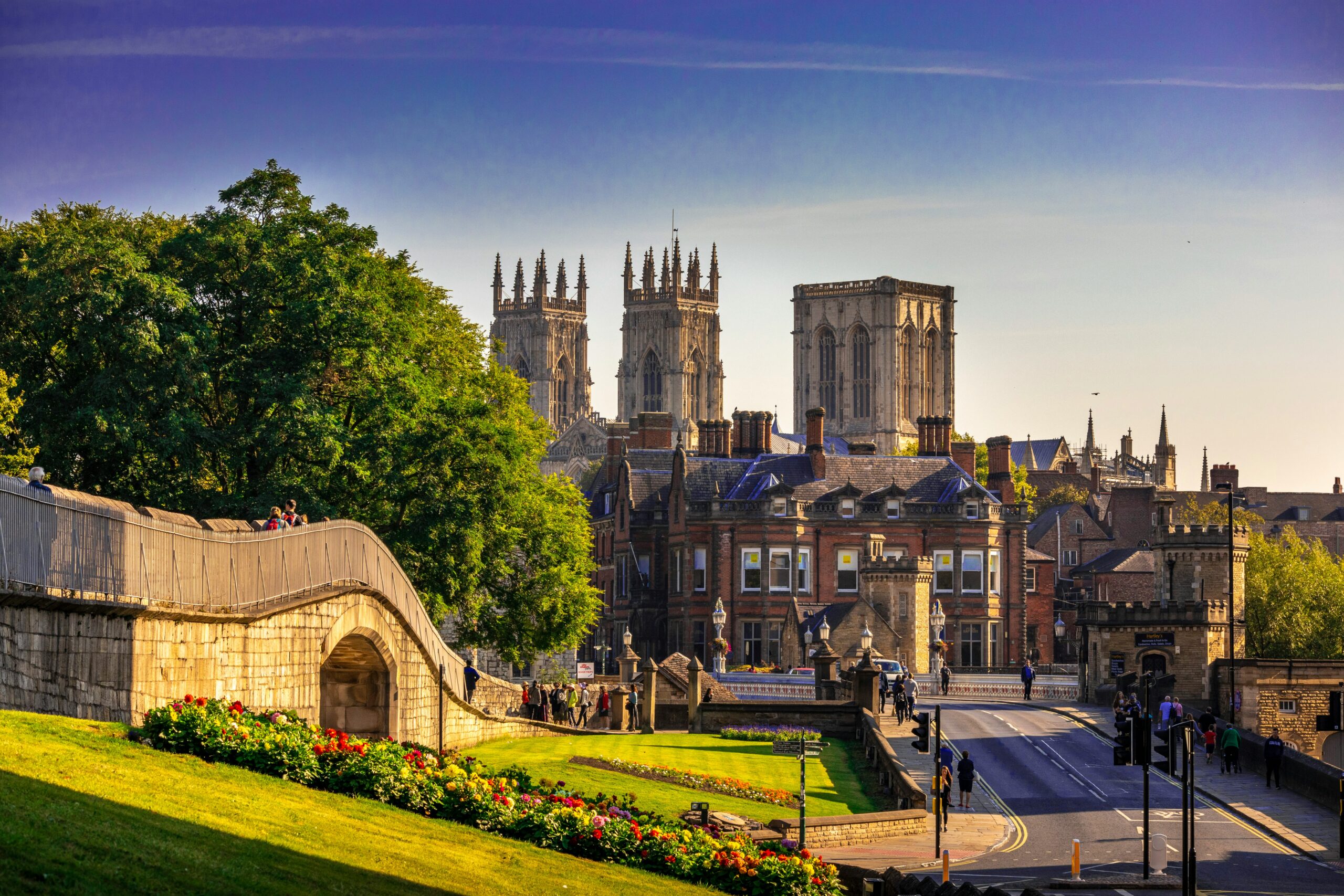
The Yorkshire dialect is one of the most recognisable in the UK, known for its directness and unique phonetic qualities. While it varies from the dales to the cities, a few key features are common.
- Definite Article Reduction – Perhaps the most famous Yorkshire trait is the shortening or complete removal of the word “the.” It’s often reduced to a ‘t’ sound attached to the previous word (e.g., “in t’ pub”) or dropped entirely (“let’s go to pub”).
- The “Ah” Vowel Sound – Yorkshire speech is known for its broad, open vowel sounds. Words like “bath,” “grass,” and “laugh” are typically pronounced with a short “ah” sound, as in “cat,” rather than the longer “ah” sound common in the South.
- ‘Owt’ and ‘Nowt’ – These two words are staples of Yorkshire vocabulary, meaning “anything” and “nothing,” respectively. Hearing a local say, “He knows nowt about it,” is a sure sign you’re in Yorkshire.
- H-Dropping – Like many regional English dialects, H-dropping is common. The ‘h’ at the beginning of words like “happy” or “house” is often silent, leading to pronunciations like “‘appy” and “‘ouse.”
The Voice of Lancashire: Distinctive Traits

The Lancashire dialect, often referred to as “Lanky,” has its own set of distinctive features that set it apart from its neighbour across the Pennines. It is equally rich in history and local character.
- The Short “u” in “Book” – A key phonological marker is the short vowel sound in words like “book,” “cook,” and “look.” This is known as the FOOT-STRUT split, and it’s a classic feature of many northern English dialects, but particularly prominent in Lancashire.
- “Thee” and “Thou” – In some traditional forms of the dialect, the archaic pronouns “thee” and “thou” have survived in colloquial use, long after they disappeared from standard English. This is a direct link to the region’s linguistic past.
- The Hard “g” Sound – In certain areas of Lancashire, the “-ng” sound at the end of words like “singing” or “walking” is pronounced with a hard ‘g’ sound at the end (e.g., “singing-g”).
- “Our” for “My” – A charming and common feature is the use of “our” to mean “my,” particularly when referring to family members. A Lancastrian might talk about “our mam” or “our kid,” a colloquialism that reinforces a sense of shared identity.
Beyond the Accent: Dialect as Cultural Identity
Understanding these dialects is about more than just recognising different sounds or vocabulary. It’s an insight into local history, social identity, and a deep-seated sense of place. These ways of speaking are not “incorrect” forms of English; they are highly evolved, rule-governed linguistic systems that carry the cultural DNA of the region. They are a source of pride and a marker of belonging.
This connection between language and identity is a key area of study in journalism and communication. As Jennifer Lockman, who oversees the blog for the EssayService essay writing service, often notes, “Understanding a dialect is to understand the unwritten history of a place.” Her insight highlights the deep cultural roots of local speech. By listening closely to the lingo around you, you are engaging with a living piece of English heritage, an experience that can be as educational as any textbook.
Conclusion
Your time at university is an opportunity for immersion. While your primary focus will be on your studies, taking the time to appreciate the local culture will make your experience immeasurably richer. The dialects of Yorkshire and Lancashire are a fundamental part of that culture. Listen for them in the local shops, on the bus, and in conversations with lifelong residents. Don’t be afraid to ask about a word you don’t understand. This linguistic exploration is a vital part of your broader education, connecting you to the history and heart of your new home.