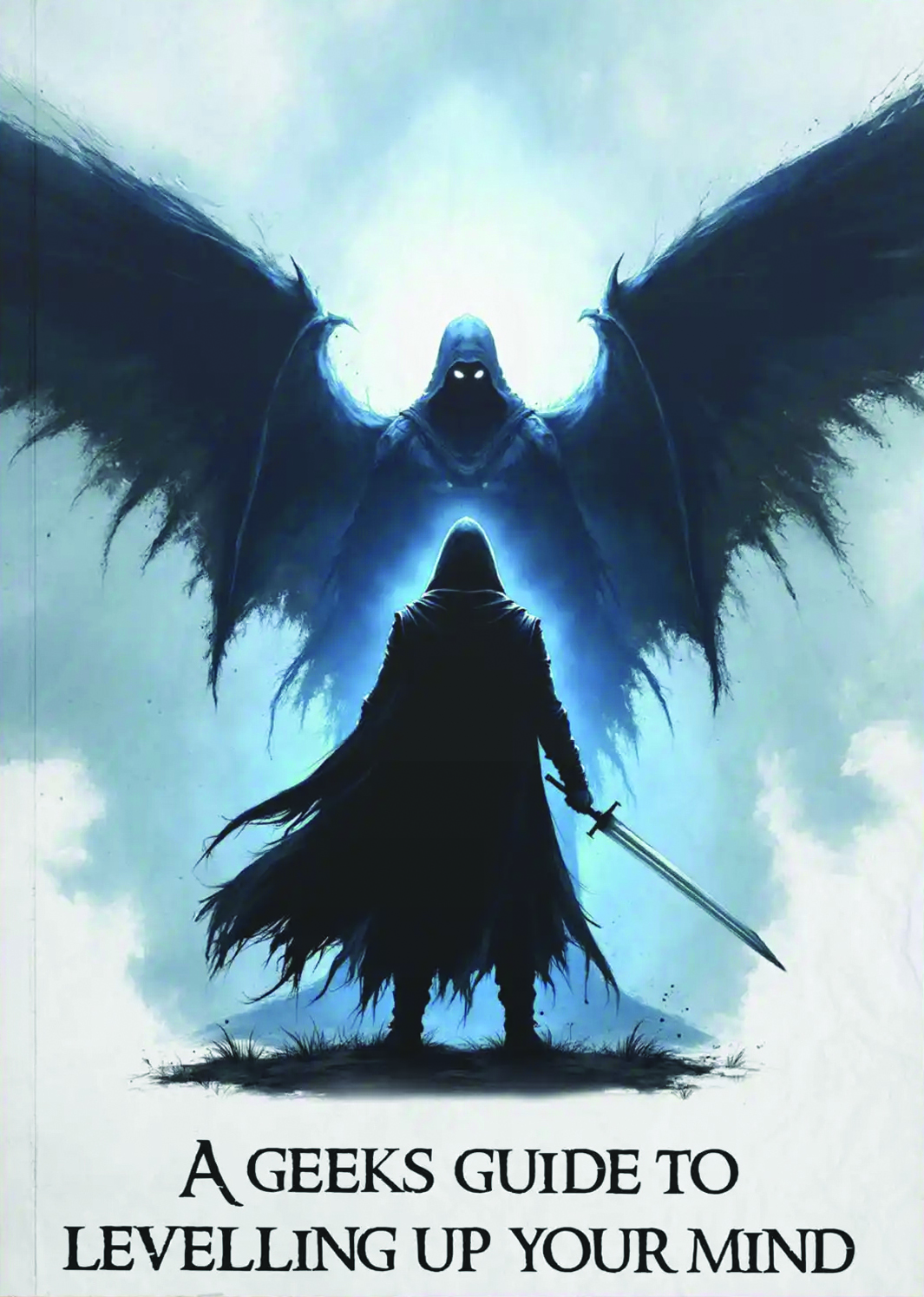


A Geek’s Guide to Levelling Up Your Mind
by Leighton Vermaak
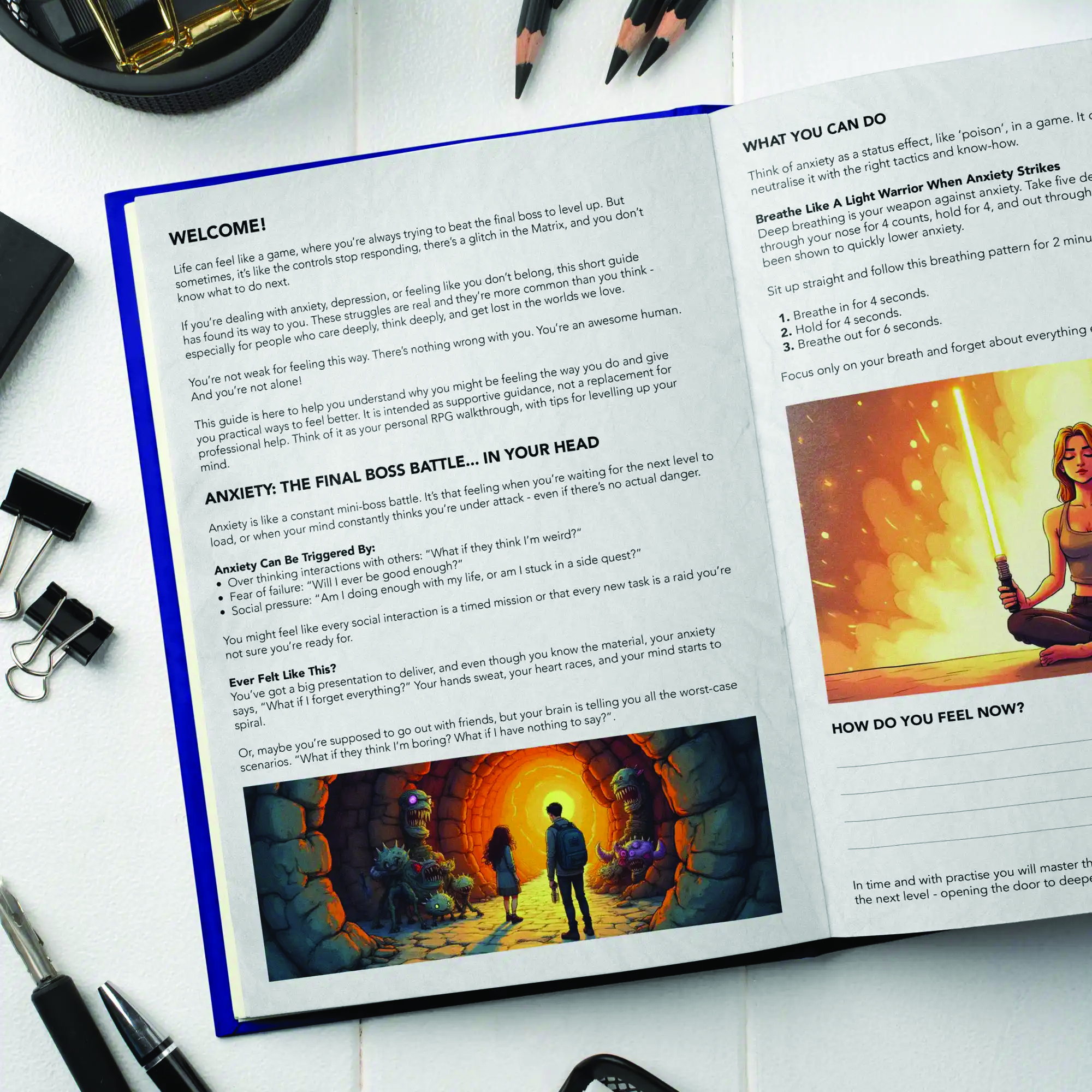
Luke Wetherall is the author of A Geek's Guide to Levelling Up Your Mind, a mindfulness guide that reframes mental health through the lens of gaming and geek culture.
When Luke talks about mental health, he doesn’t lean on clinical language or abstract theory. He talks in levels, mini-bosses, mana bars, and small wins.
Beneath its playful metaphors lies a deeply personal story shaped by Luke’s only journey through anxiety and isolation. A proud Northerner originally from Colne in Lancashire, Luke is a freelance graphic designer and the creator of unique geeky gifts at Craftorb.com.
The idea for the guide came from an unlikely source: Stranger Things. “I’d never watched it before,” Luke admits. “But when I finally did, it took me straight back to being a kid. Playing Dungeons & Dragons with my brother and his friends, imagining worlds, escaping into stories. It brought back a lot of memories and feelings, and I realised how important that stuff was.”
That nostalgia triggered something deeper. Luke began reflecting on how those early geek experiences helped him cope long before he had the skills for mindfulness or access to speech and language therapy.
Growing Up with Anxiety as a Constant Companion
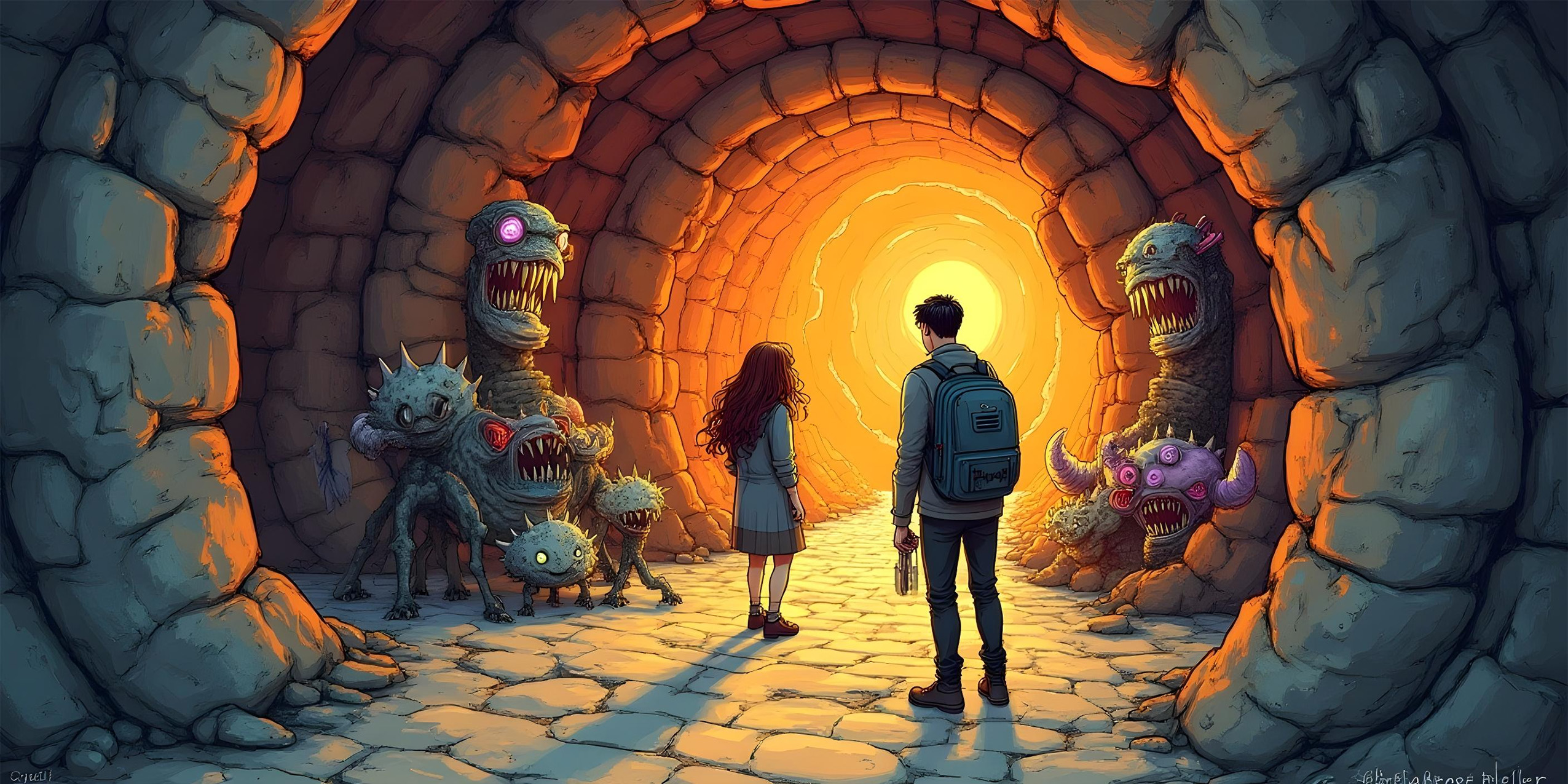
For Luke, anxiety wasn’t something that arrived suddenly in adulthood. It had always been there.
Throughout his childhood and teenage years, he struggled with his speech. Getting words out could feel impossible most of the time.
“Anxiety was just normal for me,” he says. “It was part of my life. A constant battle in my head.”
While many children can express their fears to parents or friends, Luke found this much harder. “When you can’t speak properly, you start believing there’s something seriously wrong with you,” he explains. “You don’t have a way to let it out.”
By the time he was around 16, he’d reached a breaking point. Feeling overwhelmed and desperate for change, he sought speech and language therapy.
It was there that he was introduced to something that would later become a cornerstone of his mental health toolkit.
Breathing.
“At the time, it wasn’t called mindfulness,” he says. “It was just breathing techniques so you could get the next word out. But that was the first moment I realised I might be able to do something about what was happening with my speech and in my head.”
A Moment That Changed Everything
One particular memory stands out.
Luke was a teenager standing in a pub when a girl approached and asked his name. “I just couldn’t say it,” he recalls. “I stuttered so badly I couldn’t get the words out.”
He went home feeling humiliated, convinced he’d been judged and dismissed. But the following day, there was a shift.
“I just thought, ‘I can’t live like this anymore. I need to sort this out”.
That moment marked the beginning of a slow but transformative journey. As his speech improved, Luke began actively exploring mental health resources, reading about mindfulness, and practising what he learned. Over time, the constant noise in his head began to quieten.
“It completely changed my life,” he says. “I realised there was nothing fundamentally wrong with me. I just needed some actionable tools.”
Anxiety as a Mini-Boss That Keeps Respawning
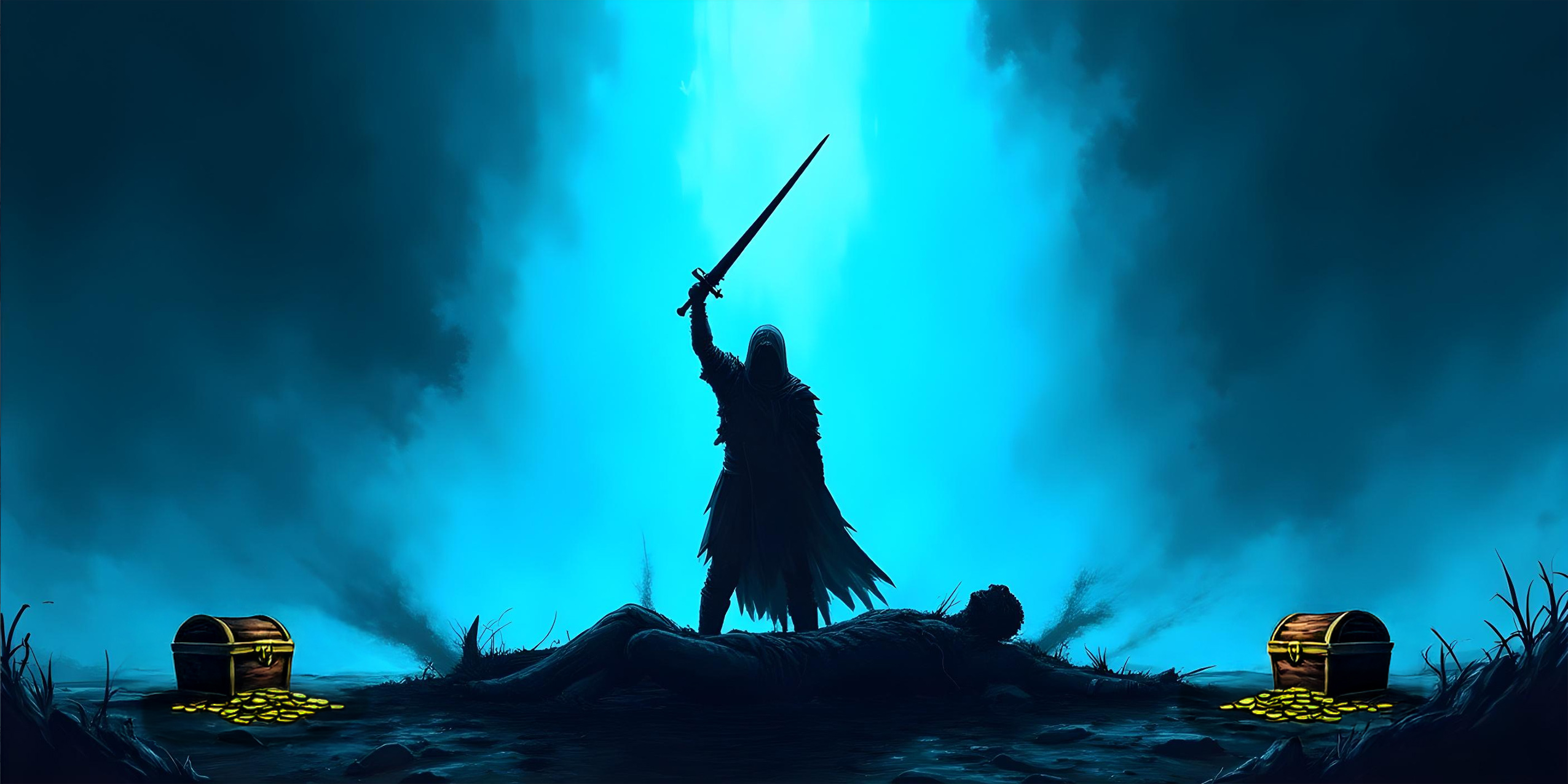
In A Geek’s Guide to Levelling Up Your Mind, Luke describes anxiety as a mini boss that keeps respawning, something never fully defeated, but manageable with the right skills.
“That’s what it feels like,” he explains. “You don’t beat it once, and it’s gone forever. You just get better at fighting it.”
One of the most powerful tools he discovered was conscious breathing, which he likens to an energy blade against anxiety.
“Breathing techniques are huge,” he says. “Every person on the planet could start today and see benefits immediately, but we take it for granted.”
For Luke, learning to control his breathing wasn’t only calming, it was practical. “If I wanted to speak, I had to think about my breathing first. That awareness changed everything.”
Meditation, which he refers to as a “mana recharge,” came later and was initially intimidating.
“There’s a lot of nonsense out there about meditation,” he says. “People think it’s mystical or that you have to completely empty your mind.”
For Luke, it’s far simpler than that. “It’s just sitting with yourself. Being comfortable with your own thoughts. And yeah, that can be scary if you’ve been avoiding them.”
The Power of Small Wins
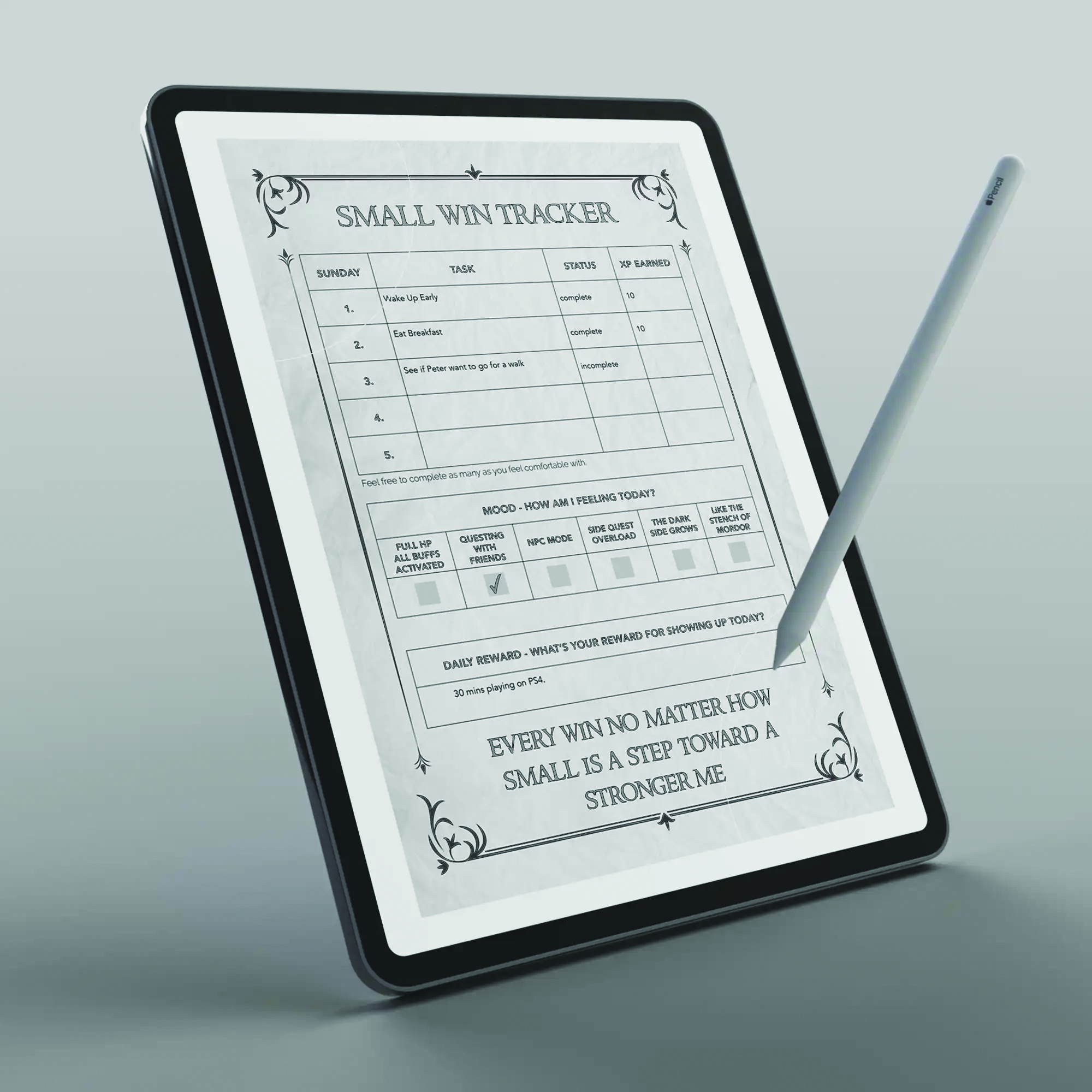
One of the most relatable tools in Luke’s guide is the “small win tracker”, an accessible way of building motivation by acknowledging small successes.
Long before he could speak confidently, Luke was already doing this instinctively. “I used to write things down,” he says. “Stuff like ‘said hi to the shopkeeper today without stammering,’ and then I’d give myself a little tick.”
That practice became a lifeline. “When you’re struggling with mental health, nobody’s cheering you on,” he explains. “Sometimes just getting out of bed is a win. Drinking a glass of water is a win.”
He believes recognising small wins can be genuinely lifesaving. “If you don’t hear anything positive externally, you just spiral deeper. Small wins can stop that.”
Why Geek Culture Matters
Luke believes geek and fandom spaces can be uniquely supportive when it comes to mental health. “Most geeks already feel like they’re on the fringe,” he says. “They see the world differently.”
That difference, he argues, often comes with imagination, empathy, and openness. “There’s less automatic judgement. People understand what it feels like to be an outsider.”
For anyone nervous about joining a new community, Luke’s advice is simple.
“Go for it,” he says. “I spent 16 years thinking that the worst thing imaginable would happen if I tried to speak. And you know what? I’m still here.”
Writing for the Kid He Once Was
When asked who he had in mind while writing the guide, Luke doesn’t hesitate. “Honestly? Myself as a teenager.”
He wanted to reach people who feel alone, who don’t understand their emotions, or who don’t know how to express what they’re going through.
“I know that feeling,” he says. “Feeling completely isolated, even when you’re surrounded by people.”
Feedback has been encouraging. Luke has received messages from readers who downloaded the guide through his website, Craftorb, as well as platforms such as CyberGeekGirl, which published it online.
“I’m not in this for recognition,” he says. “If it helps one person, that’s enough.”
In a space where mental health advice can feel overwhelming or inaccessible, A Geek’s Guide to Levelling Up Your Mind offers something refreshingly human: permission to struggle, practical tools to cope, and the reminder that progress doesn’t have to be dramatic to be real.
Click here to claim your free fillable PDF copy of ‘A Geek’s Guide To Levelling Up Your Mind’