
Into the Black: Embracing the Northern Winter Skies
by Northern Life
The North is arguably the best place in Britain to look up.
Let’s be honest with each other for a minute. January in the North isn’t usually something we shout about from the rooftops. Once the Christmas markets in Manchester have finally packed up their wooden huts for another year, and the last of the Quality Street has been fished out of the tin (usually the Toffee Penny, let’s be real), we’re left with a grey, damp stretch of winter that feels like it lasts about six months.
The instinct is to hibernate. To draw the curtains, turn the thermostat up a notch – energy bills permitting – and wait for the daffodils to show their faces in March. It’s a survival mechanism we’ve all perfected over years of living awhere we do. But this year, we’re proposing a different strategy. Instead of hiding from the dark, we reckon it’s time we drove straight into it.
…the more the streetlights fade, until you are navigating purely by cat’s eyes and the silhouette of the pines.
We live in a part of the world that boasts some of the darkest skies in Europe. While the South is drowning in the orange glow of streetlights and motorway junctions, up here we have true, ink-black darkness. From the vast emptiness of Kielder Forest in Northumberland to the rugged expanses of the Yorkshire Dales and the Forest of Bowland, the North is arguably the best place in Britain to look up.
And with the 2026 Dark Skies Festivals kicking off next month across the North York Moors and the Dales, there’s never been a better excuse to grab a flask of tea, put on your big coat, and head for the hills.
The Greatest Show on Earth (Is in Northumberland)
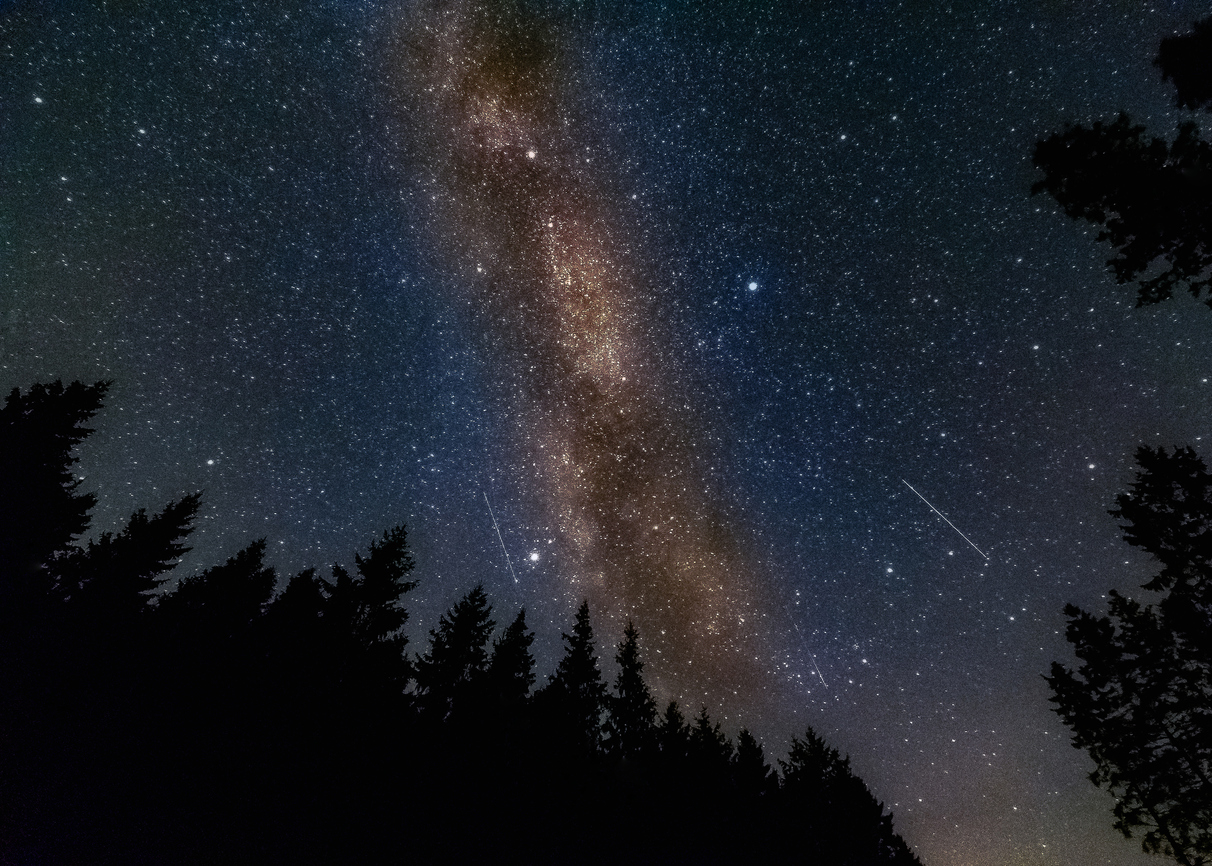
Milky way core over Kielder Forest, Northumberland
If you haven’t been to Kielder Observatory yet, you’re missing a trick. Sitting deep within Northumberland’s Gold Tier Dark Sky Park, it feels less like a tourist attraction and more like a sci-fi outpost at the edge of the world. The journey there itself is part of the ritual; the further you drive away from Newcastle or Carlisle, the more the streetlights fade, until you are navigating purely by cat’s eyes and the silhouette of the pines.
Standing on the deck there on a crisp January night is a humbling experience. When the cloud clears and the Milky Way arches over the forest like a bruised spine, you suddenly realise why our ancestors were so obsessed with the heavens. It’s quiet, it’s freezing, and it’s absolutely magnificent.
The Aurora Gamble
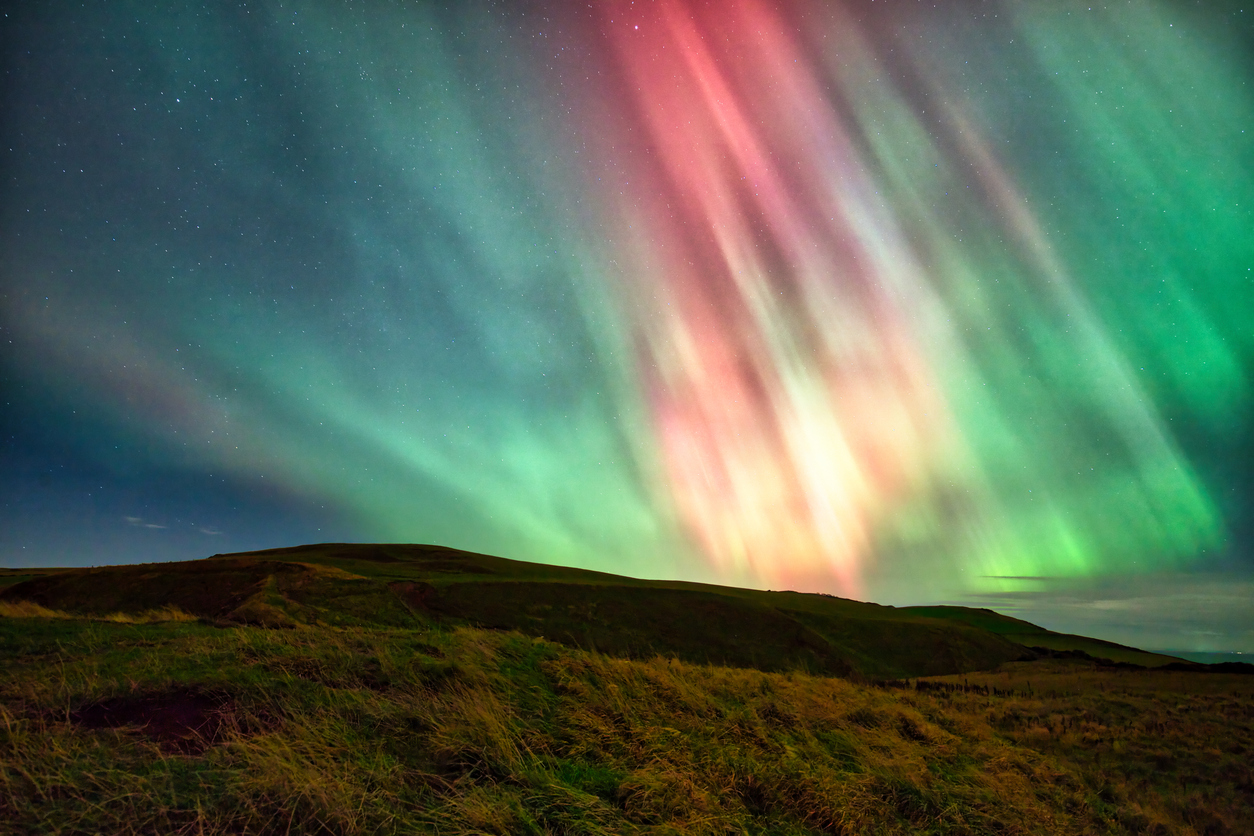
For many of us, the real prize this winter isn’t just the fixed stars; it’s the elusive, shifting magic of the “Northern Lights.”
Chasing the Aurora Borealis in England has become a bit of a national obsession lately. The solar cycle is currently near its peak, meaning the chances of seeing those dancing green curtains over Hadrian’s Wall, the Cumbrian coast, or even as far south as the Ribble Valley are higher than they’ve been in decades. The photos flooding our social media feeds are proof enough that the magic is out there.
It’s a reminder that we don’t need daylight to connect with our landscape.
However, anyone who has actually tried to spot them will tell you: it’s not a science, it’s a game of chance – a gamble with the heavens themselves. You’re betting your time, your petrol money, and your warmth against the House. And let’s be clear – Mother Nature is a ruthless dealer. You can check all the apps, track the solar wind data, and drive three hours to a remote layby in the Cheviots, as convinced you have a winning hand as someone who’s read all of the sister site reviews and fully understood the form guide. You can sit there for hours, watching the percentages on the “AuroraWatch” app fluctuate, feeling that rush of anticipation.
But often, just like at the roulette wheel, the ball doesn’t land where you need it to. The “House” rolls the clouds in at the last second, or the solar storm fizzles out just as twilight fades, wiping you out completely. You go home cold, tired, and empty-handed. But that’s the thrill of it, isn’t it? If the lights appeared every night like clockwork, they’d be boring. It’s the gamble that makes the win so sweet. Standing in the freezing dark, stamping your feet to keep the circulation going, knowing the odds are stacked against you, only to suddenly see that faint grey ribbon turn into a shimmering green wave. That payoff is worth every losing hand you’ve played before.
A Festival of Darkness
If we prefer a bit more certainty with our stargazing, the upcoming Dark Skies Festival (running 13th February – 1st March 2026) is the place to be.
The collaboration between the North York Moors and Yorkshire Dales National Parks is turning ten this year, and it’s matured into a proper calendar highlight. We’re talking night zips at Dalby Forest, canoeing under the stars at Semerwater, and astrophotography workshops that promise to help us take a photo of the moon that doesn’t just look like a blurry streetlamp.
There is something wonderfully “Northern” about these events. They aren’t pretentious. It’s usually just a group of folk in woolly hats, drinking Bovril, sharing binoculars, and marvelling at the universe. It’s community in its rawest form – huddled together against the cold, looking for beauty in the dark. It’s a reminder that we don’t need daylight to connect with our landscape.
The Sound of Silence
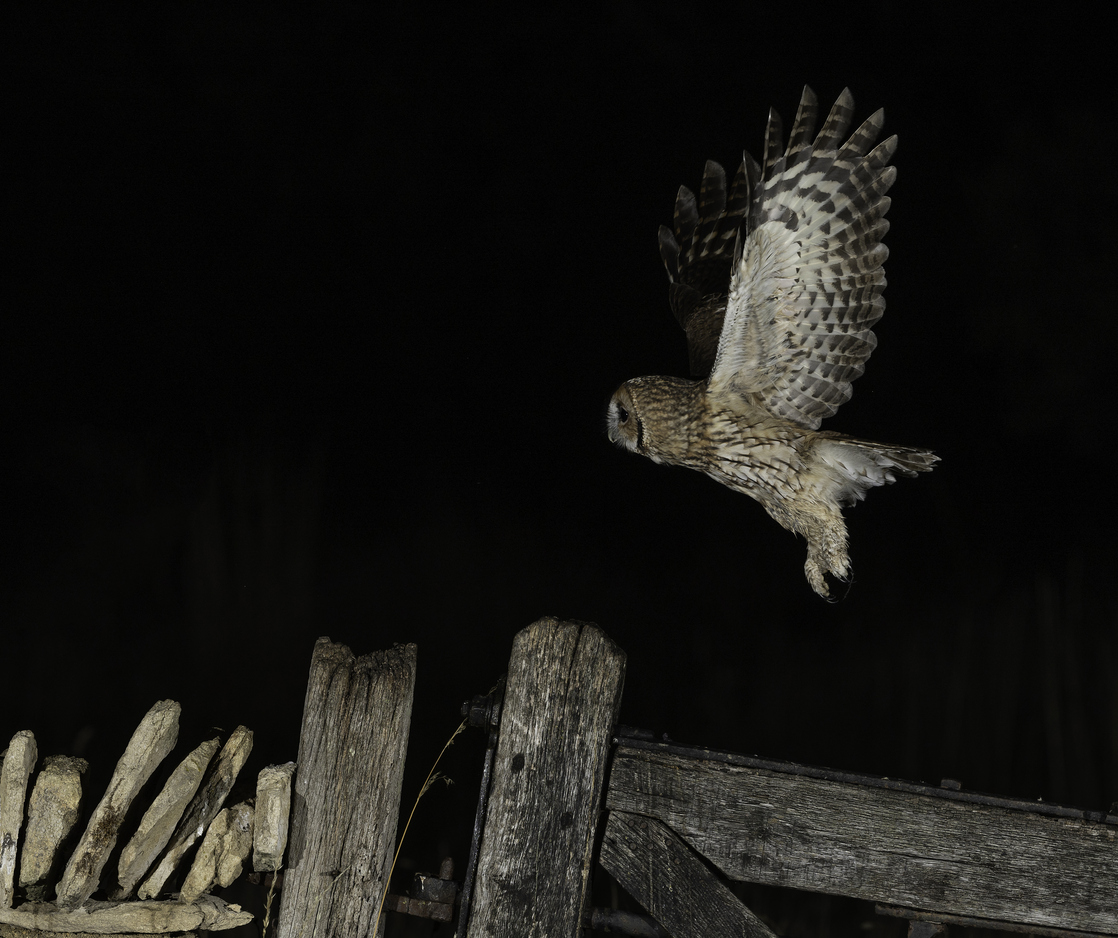
Embracing the dark isn’t just about what we can see; it’s about what we can hear.
One of the most underrated aspects of a Northern winter night is the soundscape. If you head out to the Forest of Bowland or the edges of the Peak District after 9pm, the world changes. The heavy drone of traffic dies away. The visual noise of the day disappears.
In that silence, nature gets louder. This is the best time of year to listen for the tawny owls establishing their territories. The screech of a barn owl hunting over a frosty Lancashire field is a sound that chills the blood but warms the heart. We’ve even heard reports of deer venturing closer to the villages in the safety of the long nights.
Keeping it Local
We don’t have to drive to a National Park to appreciate the night, either. The “Dark Sky Discovery” sites are popping up all over our region. Places like the Bowland Knotts offer incredible views without the need for a telescope. Even in our suburbs, simply turning off the security light in the back garden can reveal wonders if you give your eyes twenty minutes to adjust.
Just remember the golden rules of Northern stargazing that we swear by:
Red Light Only: Turn off the phone torch. Use a red bike light so we don’t ruin everyone’s night vision.
Layers: however many layers we think we need, add two more. The fells in January take no prisoners.
Patience: The universe operates on its own schedule.
So, this winter, let’s not wish away the long nights. Let’s embrace them. The North is beautiful in the sunshine, sure, but it’s spectacular in the dark.