

The Chatterbox Killer
by Northern Life
The woman who talked herself to the gallows
The story of infamous Lancashire housekeeper Louisa Merrifield, the murderer who talked herself into a hanging in Blackpool, 1953.
Of all the murderers who have walked to the scaffold as a consequence of their own implausible testimony, few were more unconvincing than the garrulous Louisa Merrifield. Despite contradictory evidence against her and the strenuous efforts of her defending counsel, the forty-six-year-old housekeeper to an elderly woman managed to convict herself out of her own mouth.
The dumpy, bespectacled mother of four was found guilty of killing a 79-year-old widow, to whom she had been engaged as companion housekeeper scarcely six weeks before the old lady died. Six months later, she was hanged at Strangeways Jail, Manchester, one of the most notorious murderers in criminal history, protesting her innocence to the bitter end.
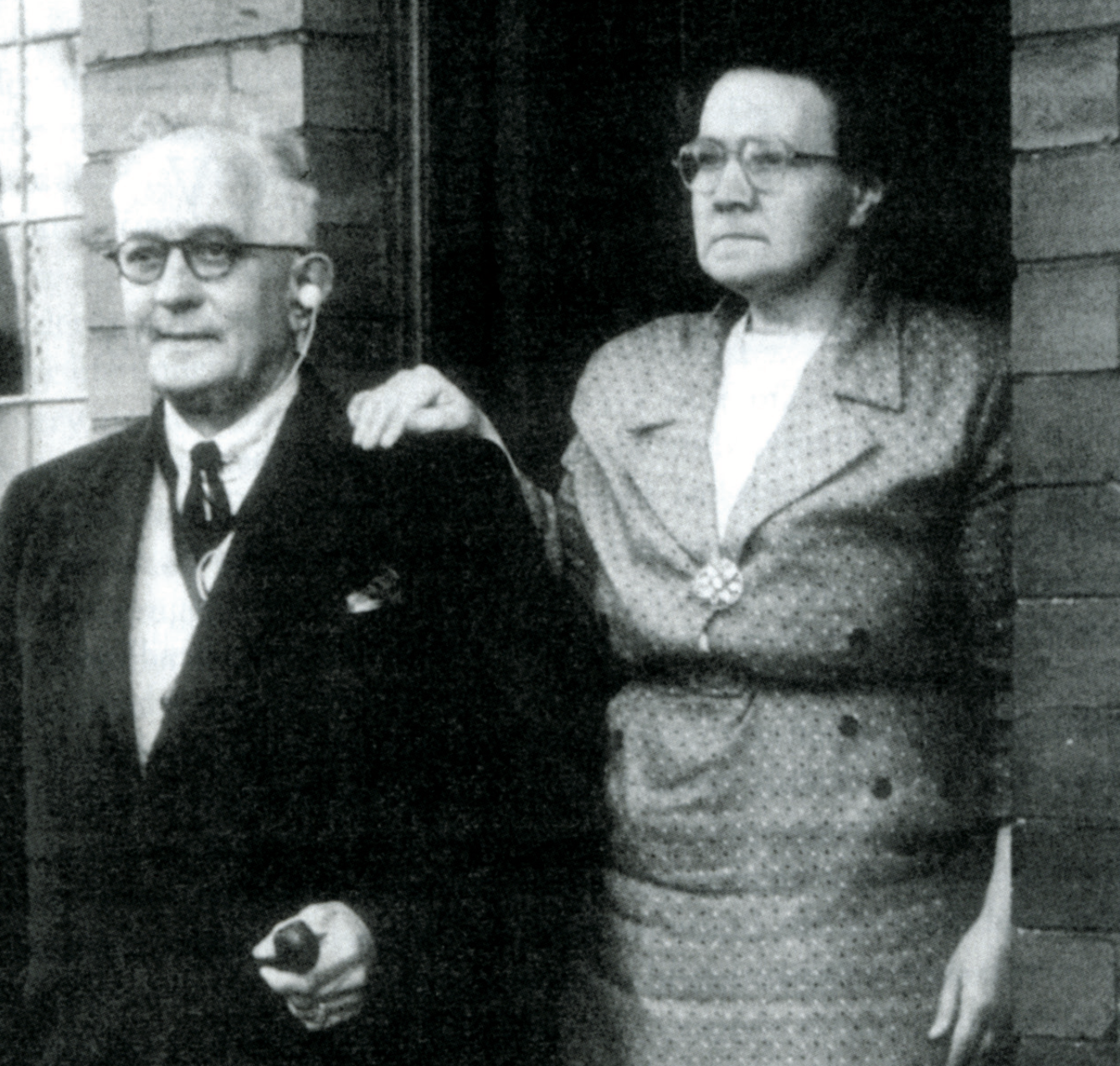
Merrifield with her husband. She protested her innocence to the bitter end. Credit: Eddy Rawlinson
Louisa, one of five daughters of a Wigan miner, had a reputation as a boastful, foul-mouthed gossip who could not stop her tongue running away with her. Despite being married three times – widowed twice – she was no great shakes as a wife or mother, preferring a drink and a knees-up at the pub to household chores. Her children from her first marriage to Joseph Ellison were placed in care more than once by the local authority in Wigan, where the family resided until 1949.
“Even strangers weren’t spared. To a startled woman at a bus queue she blurted that Mrs Ricketts was dead — the day before it actually happened…”
Ellison died that year, and barely three months later, Louisa married 78-year-old Richard Weston, a former pit manager lodging with her. Ten weeks later, Weston was dead.
Suspicion did not fall on Louisa, and within a year, she had married Alfred Merrifield, 24 years her senior. Disappointed yet again in her hopes of financial security, she and Alfred scraped by as domestic servants across Lancashire before ending up in Blackpool in March 1953. Mrs Sarah Ricketts took them on at her bungalow in Devonshire Road. Louisa must have thought she had struck lucky. Mrs Ricketts was ailing and unlikely to live long, but she soon grew dissatisfied with her help. On 13 April, she complained to a deliveryman: “I don’t know what they are doing with my money … they would have to go.” The next day, she was dead.
Despite their employer’s irritation, the Merrifields knew she had recently made a will in their favour. Louisa could not resist boasting. On 25th March, she gleefully told a friend she had had “a bit of luck”: her employer had died and left her a bungalow worth £3,000. She even wrote to a former boss: “I’ve got a nice little job nursing an old lady, and she’s left me a lovely little bungalow. So, you see, love, it all comes right in the end.”
Even strangers weren’t spared. To a startled woman at a bus queue she blurted that Mrs Ricketts was dead – the day before it actually happened – adding lurid details about her husband and employer: “If this goes on, I’ll poison him and the old **** as well … She was leaving the bungalow between me and my husband, but he’s so greedy he wants it all on his own.”
“…it was Louisa’s own gossiping that swayed the jury. She had condemned herself…”
At her trial, Louisa denied speaking to the bus stop witness, although she admitted talking to a different woman in line: “That woman had white hair.”
Two days earlier, she had told Mrs Brewer, “We’re landed. I went to live with an old lady, and she died and left me a bungalow worth £4,000.” When Brewer later saw that Mrs Ricketts died three days after their chat, she “went all funny” and went to the police.
Within days, rumours were rife in Blackpool. Louisa blithely announced she had arranged for the Salvation Army to sing ‘Abide With Me’ outside the bungalow and dismissed talk as jealous tittle-tattle: “I have an enemy in the town. Somebody is deliberately trying to make my life difficult, but I shall remain here and face it out.”
A post-mortem revealed phosphorus, a rat poison ingredient, in Mrs Ricketts’ stomach. Police couldn’t trace it in the house but did find a teaspoon in Louisa’s handbag coated with rum and phosphorus. She was arrested on 30 April, just 16 days after her employer’s death; Alfred soon followed.
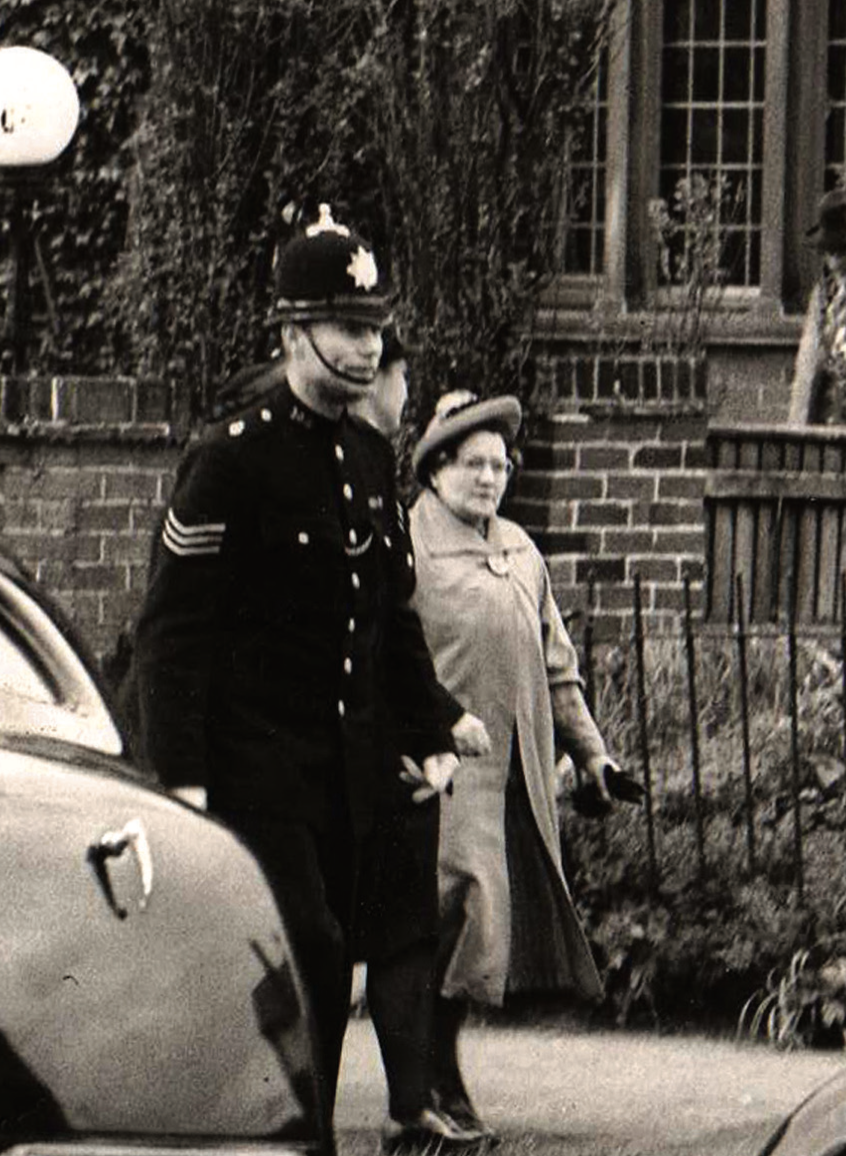
Credit: Eddy Rawlinson
At Manchester Assizes, conflicting expert testimony suggested either cirrhosis or poison. Louisa insisted: “She went to the toilet and cried bitterly, ‘You don’t know how ill I am.’ … She thanked both my husband and me for what we had done. Those were her last words.” Asked why she didn’t summon a doctor, she replied weakly: “It was not a nice time to go out on the streets and call a doctor.”
Defending counsel thundered: “What has happened here is that the long arm of the law and the long arm of coincidence stretched out at the same time to engulf these unfortunate people.” But it was Louisa’s own gossiping that swayed the jury. She had condemned herself out of her own mouth. After six hours, the jury found her guilty but acquitted Alfred, impressed by his quiet demeanour. Louisa, still insisting on her innocence, was hanged on 18th September 1953. Alfred lived on at Devonshire Road, even cashing in on his notoriety at Blackpool sideshows. At last, he could get a word in.
Taken from the book: Infamous Lancashire Women by Issy Shannon
Taking Tea with a Poisoner

By Eddy Rawlinson (Former tabloid picture editor)
It was when Mrs. Merrifield was under suspicion of murdering Mrs. Ricketts, and before she was charged with her murder, that my newspaper sent me to photograph the dumpy middle-aged murderer.
She didn’t want any photographs taken but asked the reporter who I was with, and me, into the bungalow she shared with her husband Alfred. She was enjoying the media publicity and was convinced she was innocent of any crime. The reporter and I sat down in the front room while Alfred went into the kitchen to make cups of tea, then Mrs M got up and left, ‘to help him open a biscuit tin’ she said. When they returned, she said she had cut two slices of homemade cake as a special treat for us.
“Now sentenced to die, she had become like an old friend”
I looked at the reporter with apprehension, thinking, ‘What should we do?’ He just smiled at me, then took one bite of the cake and complimented this woman, who was under suspicion of murder by poisoning, on her baking! When it came to the trial in Manchester, Mrs Merrifield was brought every day from Strangeways by taxi. In those days, there were no hordes of photographers pushing and shoving to get a picture; everything was orderly. She would always sit in the back seat, on the right-hand side of the taxi, and give a wave with her synchronised smile while waiting for the doors into the courtyard to be opened. It was a daily routine while the trial lasted… always the same smile, the same wave, from the woman who thought she would never hang. On the day Mrs Merrifield was found guilty of murder, I couldn’t express the feeling of the photographers waiting outside the court on hearing the guilty verdict other than to say we were shocked.
Some had been to Blackpool, invited into her home like me, and others had watched the dumpy little woman go every day into court. Now sentenced to die, she had become sort of an ‘old friend’. I had been on the case from start to finish and had forgotten about the dear old lady whom she had killed by poisoning. Here was a woman, the age of my mother, going to the gallows. On the day of her execution, the office didn’t send me to Strangeways to cover the early morning crowd scenes and photograph the placing of a notice of execution on the giant doors of the prison. I had told the picture editor my view that the taking of one life didn’t justify the eradication of another, and he kept me off that job.
Had I not met Merrifield, I would probably now be crying shame on former Nelson M.P., Sydney Silverman, for bringing in his abolition of hanging bill and possibly be baying in some cases for capital punishment to be brought back.
NorthernLife Sep/Oct/Nov 25