

The Coal – Stories from Tyldesley
by Simon Waterfield
I have written this in the hope a future family member finds and reads this.
I live in Biggin Hill, Kent, but my family originate in the Tyldesley area of West Manchester. I am writing a series of short stories about their lives during the 1850s to 1940s.
The following piece was found written on school exercise book paper, in between the pages of the Davies Family bible. It is signed Annie Davies and dated 14th April 1922.
Chowbent, or Tyldesley and Atherton in Lancashire is a coal mining town.
“Their boys went down the pit aged 10 to 12. If they survived, their boys in turn followed them into the pit…”
It is my town, and it is my family’s town. We have lived in the area for more than two hundred years.
I am getting married tomorrow morning to Harry Kay. It is this wonderful thing that has prompted this, I do not know what to call it, this essay. We have known each other from school. His family have lived here for the same amount of time.
Both our families have been tied to coal all that time.
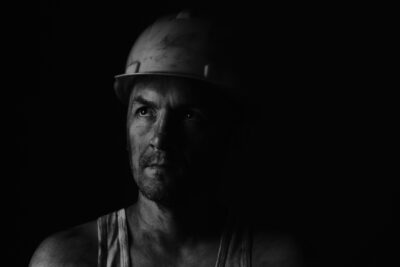
The men worked in the pit, some of the women too. Their boys went down the pit aged 10 to 12. If they survived, their boys in turn followed them into the pit, working with them and sometimes dying deep underground with them. Sometimes, their lives cut short by ailments like black lung and injury, caught down the mines.
That is their life, they have no other alternatives, they have with no other ambitions.
I am writing this now on the eve of my wedding to express my hope that Harry and I are severing our family’s connection with coal. Our dearest wish is that any children and grandchildren we have will be able to go to school, and study enough to go to college. We hope they can get clean and safe jobs, and a real career.
I want to show how generations of families have been ensnared by coal and kept subservient to the owners of the coal mines.
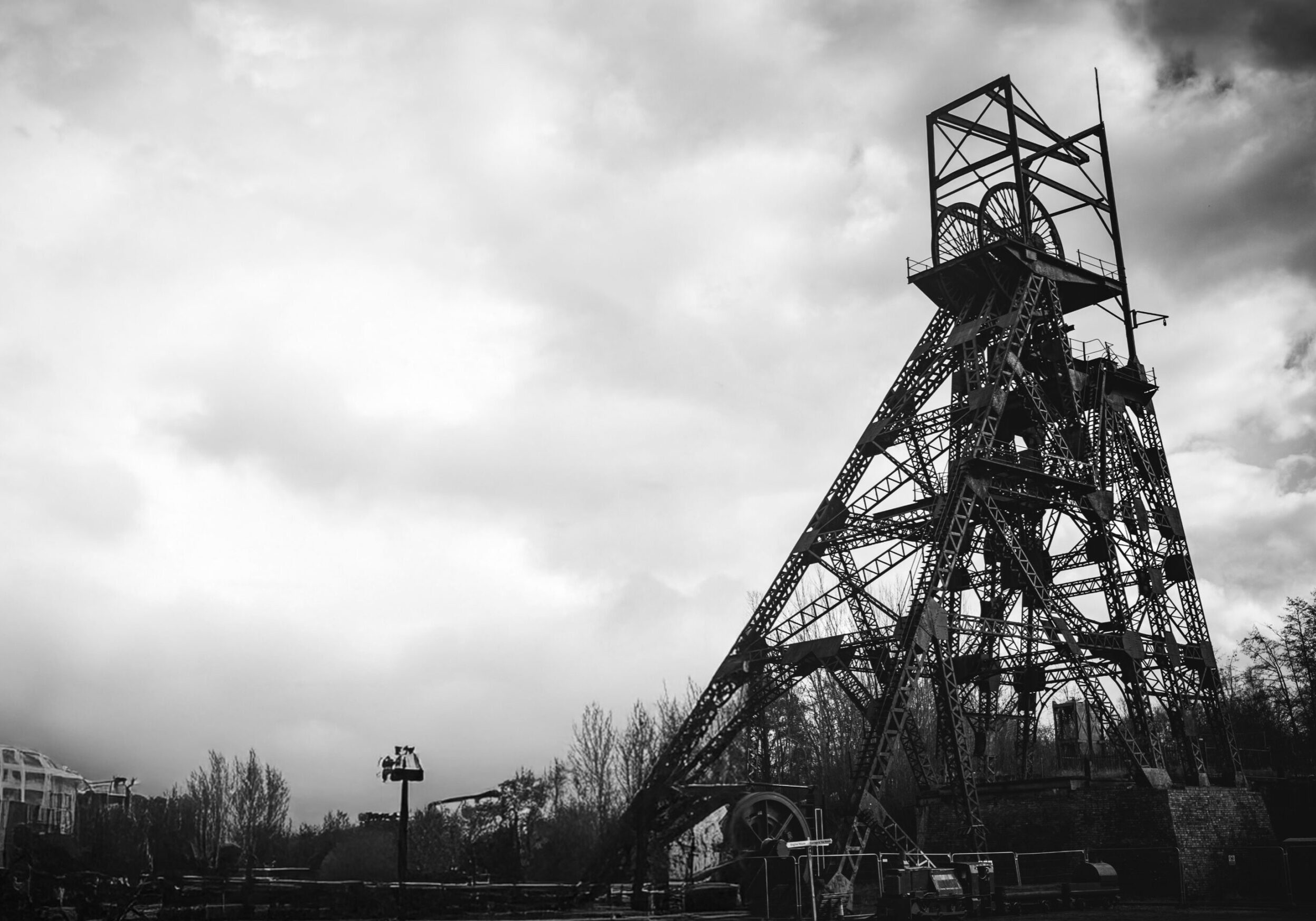
I have come to believe that each coal mine is like the lair of huge spiders who come to the surface and spread their webs over the town, drawing people into the town and pulling them down the mines. Stopping them leaving, stopping them developing, stopping them have a full education, and better jobs.
As a newly qualified teacher, I want to present some facts about this town and coal.
It is just one of hundreds of similar towns all over the country, and indeed the world, which have grown up out of the money brought by coal mining.
Men have been sinking shafts into the coal seams into the ground under our town for at least five hundred years.
Were it not for coal, there might be nothing here but peaceful clean farmland and woodland.
Instead, there is a population of fifteen thousand people living here. There are houses, a hospital, churches, chapels, a mission hall, working men’s clubs, miners’ welfare clubs. pubs, a croquet club, a tennis club, a swimming baths, shops, schools, trams, a canal, railways, roads, cotton mills, gas works, brick fields and a brick factory, ironworks, a dairy, factories, and warehouses.
“We live in a world created and owned by the coal owners…”
And above all are the coal mines, nine of them. Their pit head gear dominates the town.
Impressive though they may be, towering over the town, they are the smaller part of the pits.
The shafts go as deep as 1,200 feet. They extend a mile or more horizontally following the coal seams. This has left huge holes under our town. Certain areas have become unstable.
The town mines 500,000 tons of coal annually.
More than fifteen hundred men work underground, with seven hundred men and women working on the surface in these pits .
Their families, dependant on the coal jobs, number around six thousand.
My father Richard is a miner; my brother Fred is a plumber at the gasworks which is dependent on local coal. Eighty years ago, relatives came from Ireland during the potato famine and worked in the coal mines here.
All of Harry’s male family work in the pits and always had done.
We live in a world created and owned by the coal owners.
The pits provide the money we live on.
The railways are only there to move coal. Our use of them is an afterthought.
The brick factory, and the iron foundry are there again to supply the pits.
The gas works are there that burn the mine’s coal to light our houses.
Factories make things that are used in the collieries.
Shops sell things to keep the colliery workers supplied with food and things for their daily lives.
The roads are paved with cinders from burnt coal.
We live in houses built by the colliery owners and pay the colliery owners rent for that privilege.
We burn the colliery owners’ coal to keep us warm.
Each year, a significant amount of coal soot falls on the town, measured in tons, which we all breathe in and requires cleaning from clothes.
Us women must help scrub our men’s bodies clean of coal dust each evening. We must nurse them when they succumb to black lung, or an injury in the pit. We live waiting for the pit alarm to go off. Us that can have to rush to the pit to help, or to just wait for news. Thirty-five men aged 15 to 66 have died in the last 20 years, with countless other injuries.
The pit owners do pay for the miners’ welfare. They pay for family day trips.
What about Harry and I, I hear you ask.
Well.
Harry left school at 12. By the time he was fourteen he worked in a dairy fetching and carrying.
By the time he was seventeen he had joined up and was fighting in France till 1919.
We wrote often towards the end of the war, planning our future. He wanted more out of life after seeing the waste and destruction. An army councillor over there suggested accountancy. We agreed he would start training as soon as possible after he came back. He is now working as a clerk in an examination board in Manchester and studies in the evenings.
As for me? I took a fancy for teaching when I helped at Sunday school. I trained and am now a primary school teacher at Number 2 British School in Tyldesley.
Our married life is in front of us.
I have written this in the hope a future family member finds and reads this.
If that is you, I wish you a happy, prosperous, and fulfilling life.
I hope you have not had to suffer a Great War as we have. I hope Harry’s suffering in the War did bring an end to such wars.
God speed.
NorthernLife Sep/Oct/Nov 25