

Calderdale Energy Park: Wind Farm Plans Spark Peatland Debate Near Colne
by Northern Life
Wind Farm Plan Sparks Peatland Controversy on Walshaw Moor
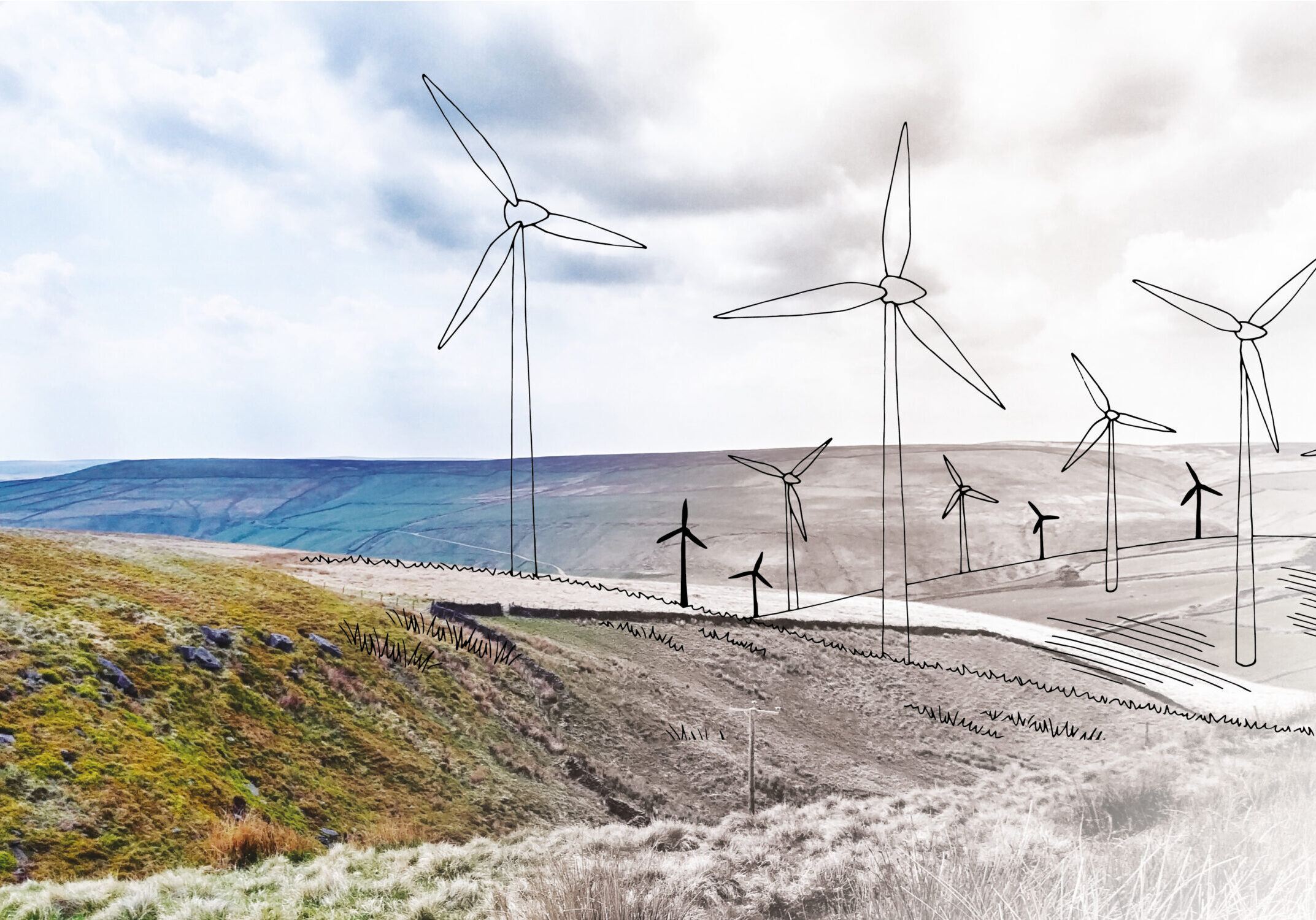
Plans for England’s largest onshore wind farm could see 41 towering turbines built on the protected peatlands of Walshaw Moor — just ten minutes from Colne.
Have you ever driven from Colne to Hebden Bridge? This historic route has connected the two towns since the Middle Ages — a fact echoed by the 17th-century Pack Horse Inn, which sadly closed in March. The inn must have once been a welcome sight to weary travellers crossing this wild, windswept landscape. The moors stretch in all directions, punctuated only by reservoirs. It’s rugged, isolated, and, of course, windy.
What is Calderdale Energy Park proposing?
Calderdale Energy Park Ltd hopes to harness the moors’ blustery potential with up to 41 wind turbines, each reaching 200 metres in height — nearly 50 metres taller than Blackpool Tower. If approved, it would be the largest wind farm in England.
Originally unveiled in 2023, the project initially proposed 65 turbines and solar panels. While the scale has been reduced, the company says the revised scheme could still generate enough electricity to power approximately 250,000 homes each year. With an expected output exceeding 100 megawatts, the project qualifies as a Nationally Significant Infrastructure Project — meaning it bypasses local planning approval and instead requires a Development Consent Order from the Secretary of State for Energy Security and Net Zero.
The project is backed by NextGen Infra, a global investment group and subsidiary of Al Gihaz Holding, a Saudi Arabian company. The land is owned by Richard Bannister, entrepreneur behind Boundary Mill, and his wife Janine. Today, the moor is primarily used for grouse shooting and livestock grazing.
Peatland concerns: environmental risks
Although Calderdale Energy Park Ltd claims the development will support the UK’s Net Zero goals, environmental campaigners argue that disturbing the moorland’s peat bogs could release more carbon than the wind farm would offset.
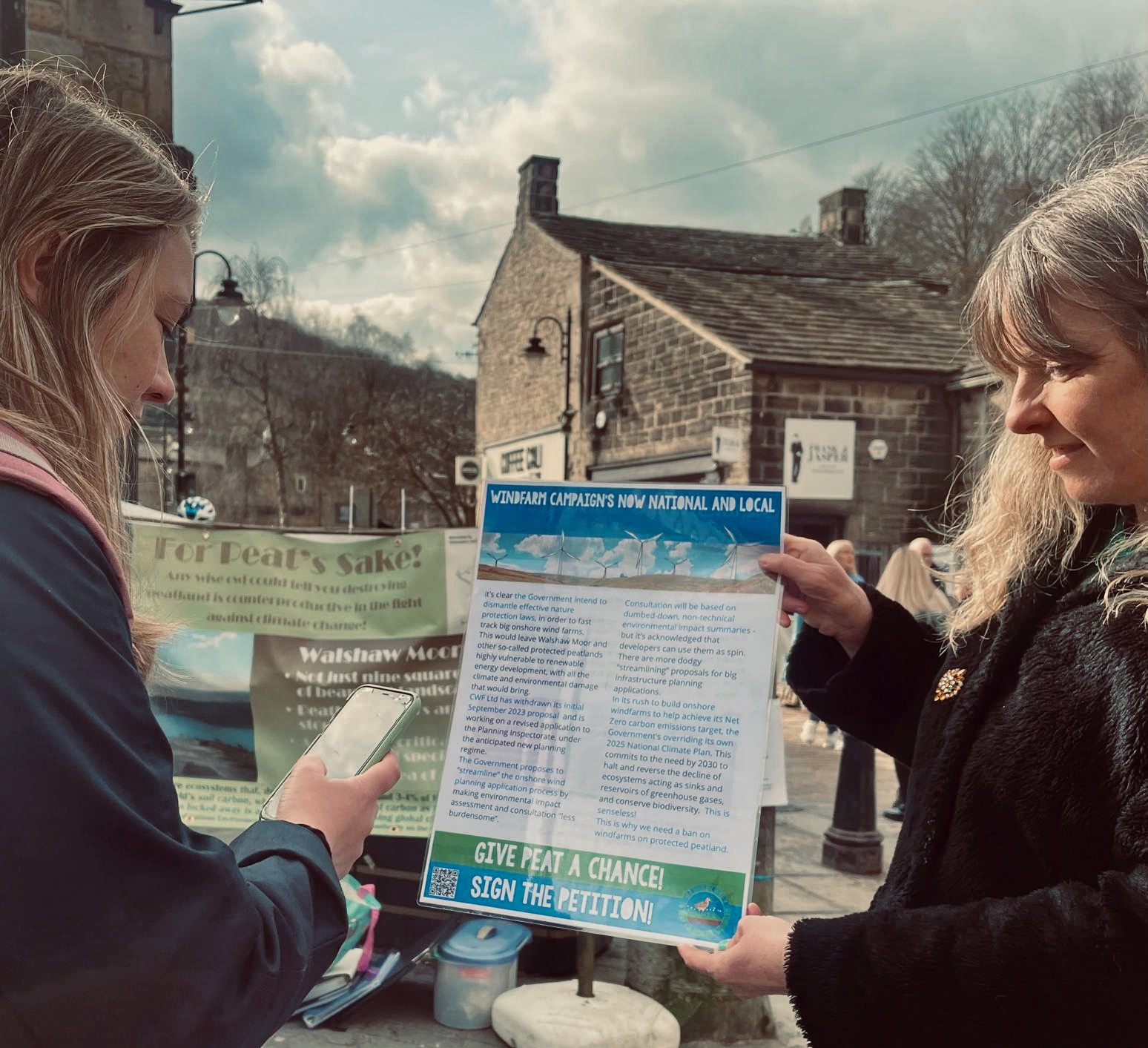
Campaigners from Stop Calderdale Wind Farm in Hebden Bridge
Walshaw Moor is part of the South Pennines Moors Site of Special Scientific Interest, known in part for its blanket peat bogs. These natural carbon sinks also provide unique habitats for wildlife.
Jenny Shepherd is a local environmental campaigner from Hebden Bridge who has been fighting to protect Walshaw Moor since 2012. “There was a conflict at the time between Natural England and Walshaw Moor Estate surrounding the burning of the heather for grouse shooting, which was damaging the peat,” she recalls. “We’ve been campaigning to protect and restore the moor ever since.”
She warns that this proposal is the first of its kind in England to target protected upland peatland. “If this is approved, it’ll open the gates to similar developments across other protected, windy peatland areas,” she says.
Peat disruption, Jenny explains, can have devastating effects — not only releasing the carbon stored within, but also weakening the peat’s ability to absorb carbon in future, and threatening the delicate ecosystems that depend on it.
“The peatland is irreplaceable,” she says. “It forms at the rate of a millimetre a year. The bogs here have taken thousands of years to develop.”
“Even if they try to restore it, the timeframe is meaningless to humans. Restoring shallow peat still takes 300 years. The UK Climate Committee has said restoring peatland is essential to meet our carbon goals. Per hectare, it stores more carbon than a tropical rainforest.”
Peatland doesn’t just store carbon — it also helps mitigate flood risk by acting as a natural sponge, absorbing and slowing water flow. Sitting above flood-prone Hebden Bridge, its disruption is a real concern for residents.
“In 2012, we had a summer of floods in Hebden Bridge,” Jenny explains. “One of them was a pluvial flood where the water just rushed off the tops into the valley.”
Research backs her up. A 2016 study by Durham University found that moorland burning increased peak flow in Hebden Bridge, particularly where peat moss had been burned. That moss also improves water quality by acting as a natural filter.
Impact on wildlife, tourism, and local identity
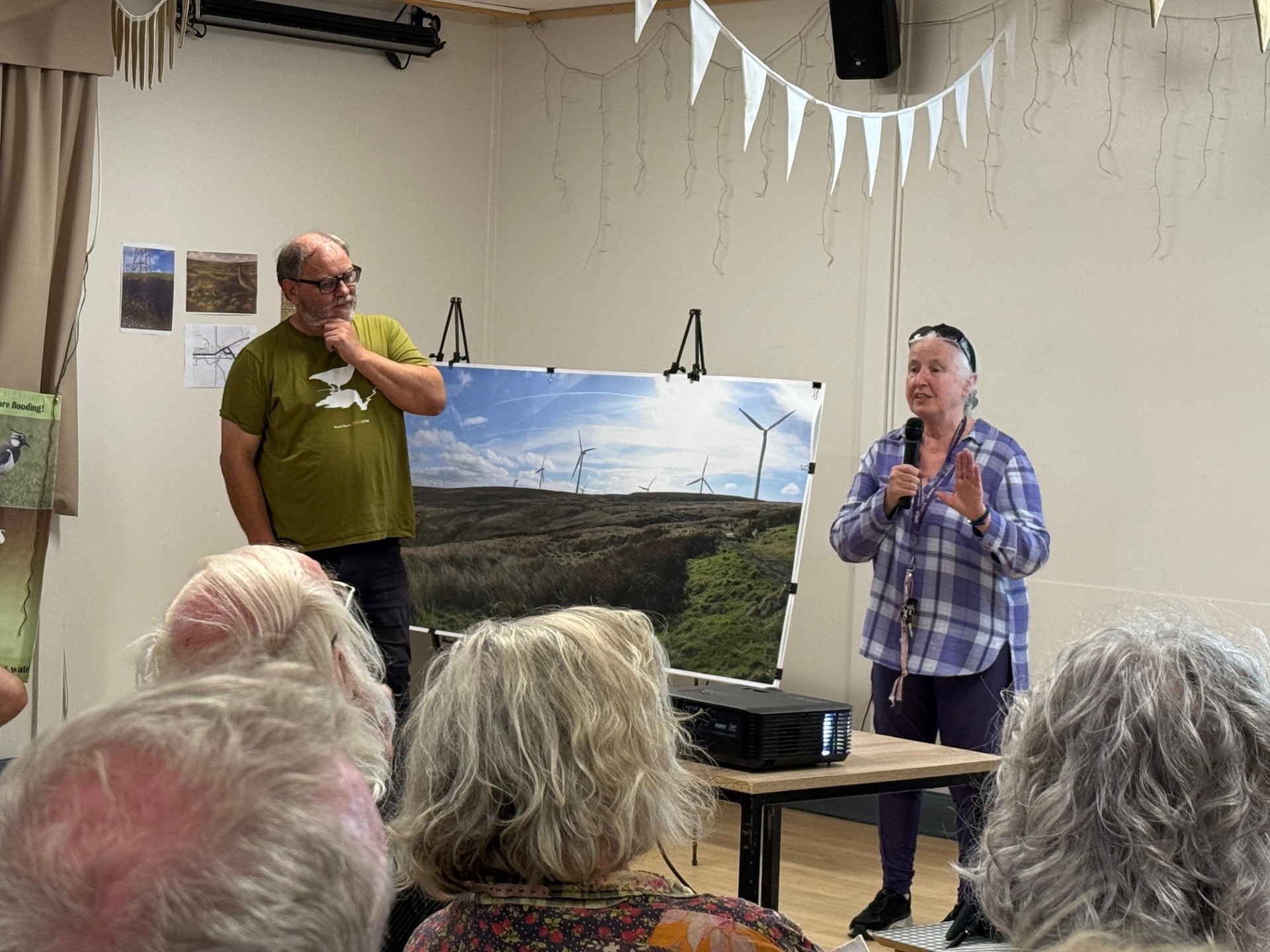
A recent talk in Trawden discussed the impact of the proposed wind farm on Walshaw Moor
The moor is not just a carbon sink or sponge; it’s also a sanctuary. Walshaw Moor is also classified as a Special Protection Area and a Special Area of Conservation. Each spring, endangered ground-nesting birds like curlews, lapwings, and golden plovers return here to breed, along with redshanks, skylarks, and snipe.
“There’s a whole slew of nature, climate and ecosystem reasons why it’s the wrong place. We’re not against green energy,” Jenny explains.
In response to these concerns, Calderdale Energy Park Ltd told us:
“Our design process incorporates extensive peat depth surveys, habitat mapping, and hydrological assessments. We are committed to avoiding deep peat wherever practicable and minimising disturbance through careful siting of infrastructure and the use of low-impact construction techniques.
“We are engaging with Natural England to review the potential impacts on sensitive habitats and the associated mitigation and compensation requirements.
“Furthermore, we are developing a comprehensive Peat Management Plan. Our goal is to ensure that the project delivers a net positive environmental outcome, supporting the UK’s Net Zero targets without compromising sensitive habitats.”
Despite this, the proposal remains controversial, with many concerned about the beauty and history the moors might lose in the process. Any avid walker knows the feeling of crossing these moors, dodging the blanket bogs that lurk just beneath the surface. Just ten minutes from both Colne and Hebden Bridge, a walk across Widdop feels like stepping into the wilderness — into a place that inspired the Brontës, and one many believe should remain untouched.
“All the wilderness and the romance of those literary associations will be lost,” says Sarah Cockburn-Price, councillor for Boulsworth and Foulridge. “We are quite a poor area, but the moors draw in tourists and that would be taken away. The attractiveness of the area is very much a secondary concern compared to the disruption of the peatland and the habitat loss — but it is a strong reason. We are seriously industrialising, in essence, the huge wilderness that’s between us and Bradford.”
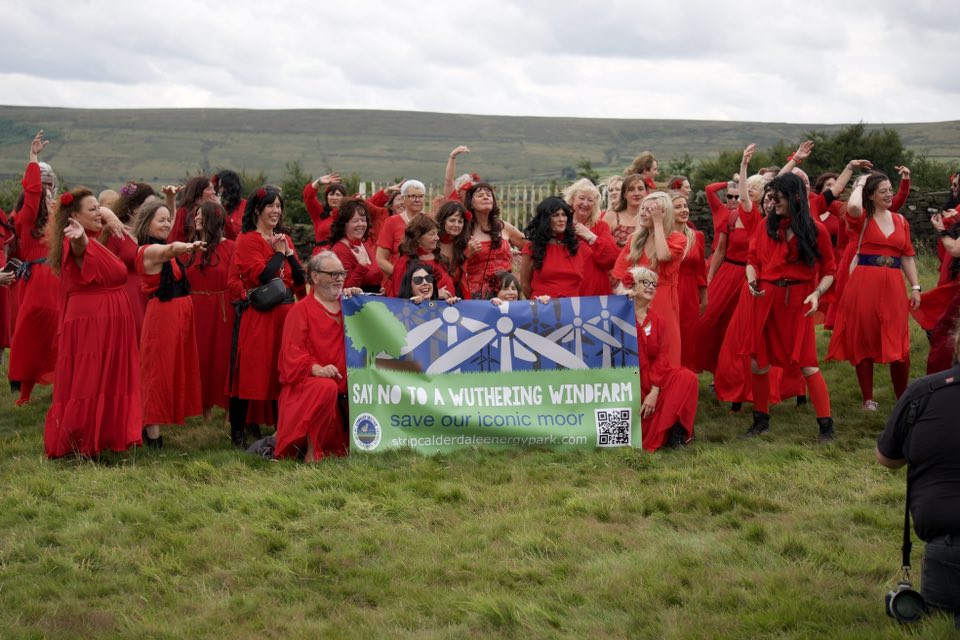
The creative connection to the moor was highlighted at this year’s Most Wuthering Heights Day Ever, held annually on July 27. Around 500 fans of Kate Bush gathered on the moors near Top Withens — believed to be the inspiration for Wuthering Heights — dressed in the singer’s iconic red dress to recreate the 1978 music video. Organiser Clare Shaw said she hoped the event would raise awareness of the campaign to protect the moors.
Transport and construction challenges
Access is another major concern. Many of the local roads are narrow, winding, and often challenging for vehicles — let alone turbine components measuring nearly 200 metres. Two potential access routes are being considered: one from Halifax and another from the A6068 near Laneshaw Bridge.
“We are working closely with local authorities and transport specialists to ensure that abnormal loads, such as turbine components, can be delivered safely and with minimal disruption,” a spokesperson for Calderdale Energy Park Ltd said. “Measures include designated delivery windows, highway and road safety upgrades, and a dedicated community safety officer to address concerns during construction.”
Developer response and proposed benefits
Despite the criticism, the company continues to argue that the project will offer real benefits to the region — both environmentally and economically. These include:
- Generating enough renewable electricity to power around 250,000 homes and cutting CO₂ emissions by an estimated 350,000 tonnes each year.
- Creating jobs during construction and operation, with an emphasis on local employment and supply chains.
- Establishing a Community Benefit Fund to support local projects.
- Providing green skills training and development opportunities.
“We remain committed to engaging openly with the community and stakeholders as the project progresses,” the spokesperson added.
For many opponents, the question isn’t whether green energy is necessary — but whether Walshaw Moor, with its protected status and fragile ecosystems, is the right place for it.
Learn more:
NorthernLife Sep/Oct/Nov 25