

Who is the Ford Fiesta Suitable For? All About the Compact Car, Its Versions, and Capabilities
by Northern Life
The Ford Fiesta's legacy is built on its remarkable ability to be many things to many people
What is the Ford Fiesta and Who is it Made For?
For nearly half a century, the Ford Fiesta has been more than just a car; it has been a cultural icon and a defining feature of roads across the globe, particularly in the UK and Europe. Since its debut in 1976, the Fiesta has consistently been celebrated for its brilliant combination of fun-to-drive handling, practicality, and affordability. It’s the quintessential supermini, a car designed to navigate the complexities of modern life with ease and a touch of flair.
Ford has been adept at creating a Fiesta for almost every taste and budget, moving far beyond a one-size-fits-all approach.
At its core, the Ford Fiesta was created for everyone. It’s the ideal first car for a new driver, offering confidence-inspiring controls and low running costs. It’s the perfect vehicle for city dwellers, with its compact dimensions making light work of tight parking spaces and congested streets. It’s also a surprisingly capable small family car, offering enough space for daily errands and school runs. The Fiesta’s enduring success lies in this universal appeal. It has masterfully evolved through multiple generations, adapting to new technologies and customer expectations while never losing the spirited character that made it a legend. This article will explore the diverse range of Fiesta models, delve into the importance of its design components, and reaffirm why it remains a top choice for so many.
Overview of Ford Fiesta Models and Versions
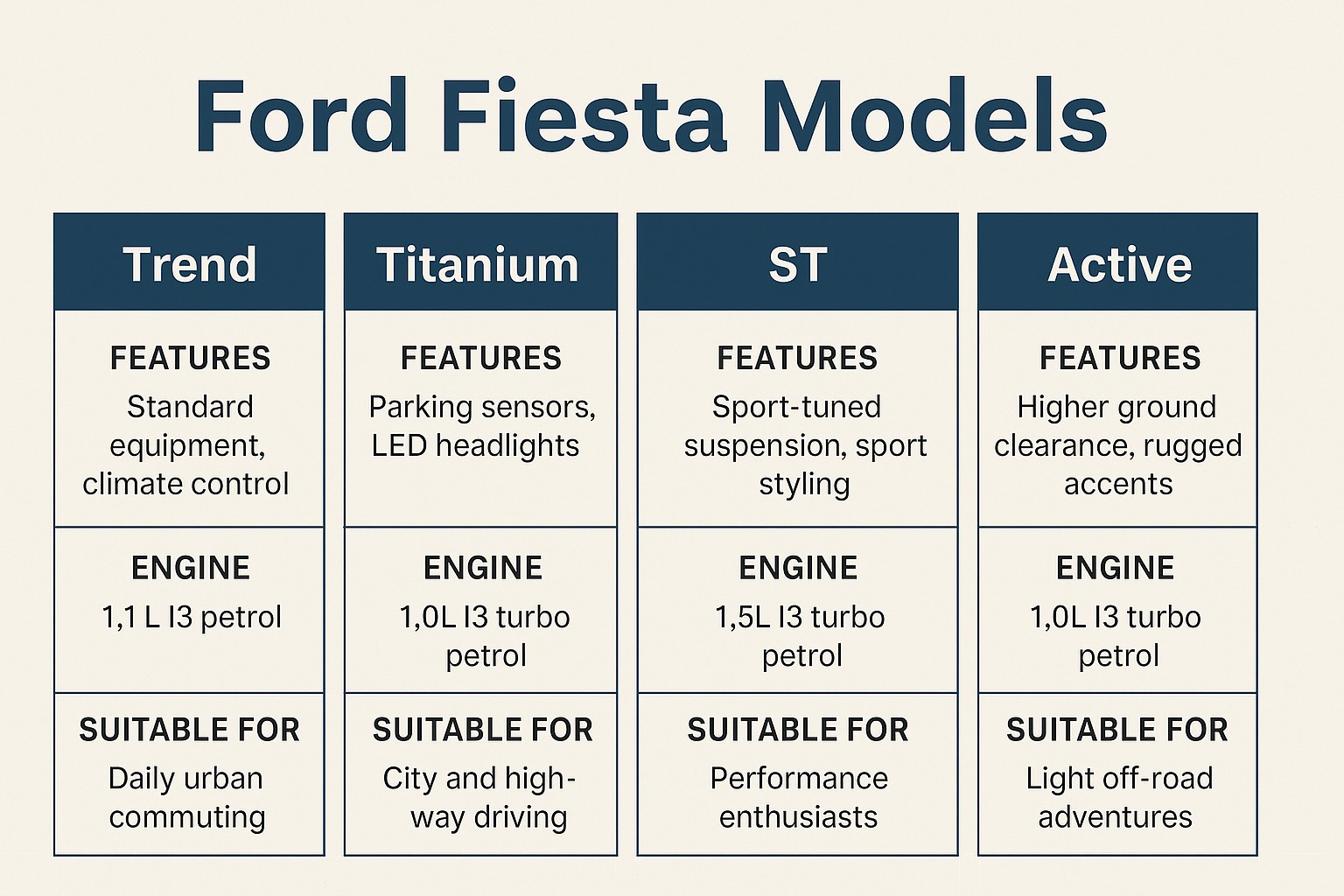
One of the key reasons for the Fiesta’s broad appeal is the sheer variety within its range. Ford has been adept at creating a Fiesta for almost every taste and budget, moving far beyond a one-size-fits-all approach.
- The Standard Models (Style, Zetec, Trend): These form the backbone of the Fiesta lineup. They are the practical, efficient, and well-equipped workhorses perfect for daily driving. Aimed at budget-conscious buyers, new drivers, and those seeking reliable, no-fuss transportation, these versions offer a comfortable ride, excellent fuel economy, and all the essential modern conveniences without a hefty price tag.
- The Sporty Trims (ST-Line and ST-Line X): For drivers who crave a sportier look and feel without the running costs of a full-blown performance model, the ST-Line is the perfect compromise. It features sports-tuned suspension, a muscular body kit with more aggressive bumpers and a rear spoiler, larger alloy wheels, and a driver-focused interior with sports seats. It offers the aesthetic appeal of the high-performance ST model while retaining the efficient engines of the standard range.
- The High-Performance ST: The Ford Fiesta ST is a titan in the hot hatch world. Engineered by Ford Performance, the ST is aimed squarely at driving enthusiasts. With a powerful turbocharged engine, a finely-tuned chassis for exceptional cornering, performance brakes, and distinctive styling, the ST delivers a thrilling driving experience that can challenge much more expensive sports cars. It’s for the driver who values performance and engagement above all else.
- The Luxurious Trims (Titanium and Vignale): At the other end of the spectrum, the Titanium and the now-discontinued top-tier Vignale models cater to those who desire luxury and comfort in a compact package. These versions come loaded with premium features like advanced infotainment systems, high-quality interior materials, climate control, and a suite of driver-assistance technologies. They are for the discerning buyer who wants big-car features in a small, city-friendly vehicle.
The Importance of the Bumper in the Design of the Ford Fiesta
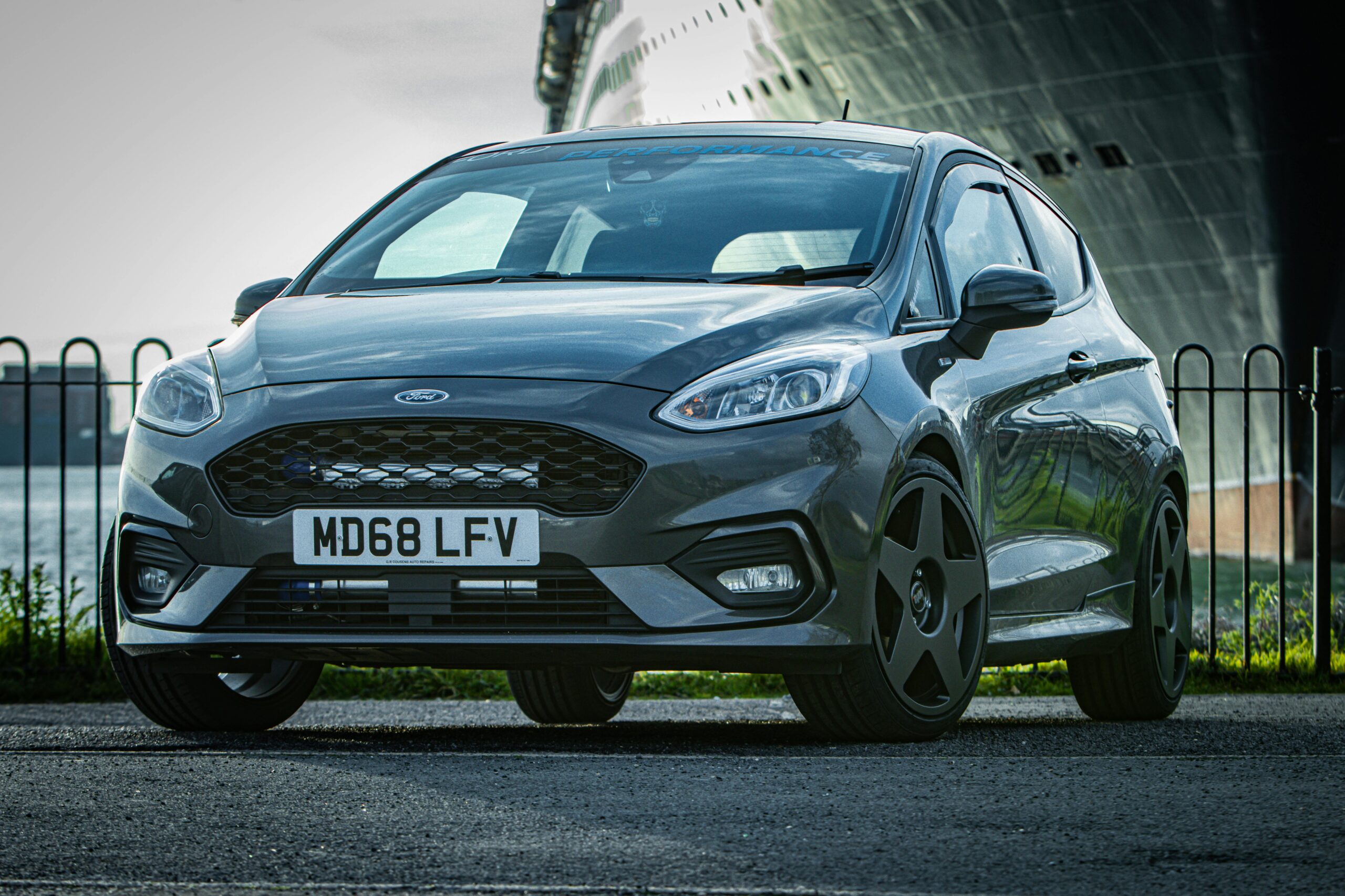
While engines and interiors often get the most attention, external components like the bumper play a crucial dual role in both the aesthetics and the safety of the Ford Fiesta. Aesthetically, the bumper is a key differentiator across the model range. The sleek, body-coloured design on a Titanium model conveys a sense of sophistication, while the aggressive, sculpted Ford Fiesta bumper shown by experts from AUTODOC on an ST-Line or ST model immediately signals its sporty intentions. It’s a fundamental part of the car’s visual identity.
For anyone seeking a used vehicle that is affordable to run, a joy to drive, and offers reliable protection for urban adventures and beyond, the Ford Fiesta remains an unparalleled choice.
More importantly, the bumper is a critical safety component. Designed as the first point of contact in a low-speed collision, its primary function is to absorb impact energy, protecting more critical and expensive components like the radiator, headlights, and the vehicle’s frame. It minimises damage in minor incidents and helps to reduce repair costs. Modern bumpers are complex assemblies, often incorporating sensors for parking assist systems and grilles for engine cooling. Given their importance, using high-quality, correctly fitting replacement parts in the event of damage is essential to maintain the car’s safety integrity and aesthetic appeal.
For any owner, knowing how to perform basic checks under the bonnet is essential, whether it’s to top up washer fluid or inspect the engine oil.
We asked AUTODOC how to open the hood: “Opening your car’s bonnet is a simple process. From the driver’s seat, locate the interior release lever, which is usually located under the dashboard on the left-hand side or in the footwell. This lever is usually marked with a pictogram of an open bonnet car, or simply the word bonnet or hood, depending on the make and model. Once you’ve found it, pull the interior release lever to release the primary latch. Exit the Fiesta and walk to the front of the car. There you’ll find the secondary latch, usually located in the middle just above the Ford emblem. You can now press the latch to release and lift the bonnet carefully. Once you have successfully opened the bonnet of your Ford Fiesta, securing it is an important step in ensuring safety and easy access to the engine compartment. In order to secure it, locate the support bar, a metal rod typically found near the front of the engine compartment. Now lift it slightly and insert one end of the support bar into the slot or hole provided, ensuring that the other end is securely attached to the underside of the bonnet. This support bar, which acts like a prop, will hold the bonnet in the open position. In addition, some Ford Fiesta models may be fitted with bonnet struts – hydraulic components that help in supporting and controlling the movement of the bonnet. Your Ford Fiesta bonnet struts will assist in holding it open without the need for a support bar”.
This simple procedure is the gateway to routine maintenance that keeps a car running reliably.
Ford Fiesta is the Ideal Choice for the City with Reliable Protection

The Ford Fiesta’s legacy is built on its remarkable ability to be many things to many people. It’s a nimble and economical city car, a fun and engaging driver’s car, and a comfortable and feature-packed compact vehicle. Its thoughtful design, evident in everything from its engaging driving dynamics to the protective function of its bumpers, showcases Ford’s deep understanding of what drivers need. For those who want to add a personal touch to their Fiesta, custom accessories like keychains can be a fun and functional option—design your own here.
While its production has sadly come to an end, the Fiesta’s presence on our roads will continue for many years to come, a testament to its durable build and timeless appeal. For anyone seeking a used vehicle that is affordable to run, a joy to drive, and offers reliable protection for urban adventures and beyond, the Ford Fiesta remains an unparalleled choice. It is a true automotive great, proving that a small car can have a very big impact.