


7 Packaging Mistakes Companies Make and How to Avoid Them
by Northern Life
Let's look at the specific traps companies fall into
You are losing money in the packing room right now, and you probably don’t even know it. Most businesses treat packaging as a boring necessity or a line item to be squeezed, but the reality is that poor packaging choices lead to damaged stock, inflated shipping costs, and customers who never come back. If you want to stop the bleeding, you need to look at your dimensional weight, stop shipping air, and realise that moisture damage inside a container is a silent profit killer. Fixing these errors isn’t just about making things look pretty; it is about protecting your bottom line.
I have spent years looking at supply chains, and it is honestly baffling how often I see the same errors repeated. Smart people making silly choices.
It usually comes down to a lack of attention. Or maybe just following what was done before.
We need to change that mindset. Let’s look at the specific traps companies fall into and how you can actually fix them without tearing your hair out.
1. Using the Wrong Size Box and Shipping Air

I ordered a USB stick last week. It arrived in a box big enough to hold a pair of boots. This is the classic “shipping air” problem, and it drives me crazy.
When you use a standard, oversized box for a small item, you are getting hit twice. First, you are paying for the dimensional weight, which carriers love to charge you for. They don’t just care how heavy it is; they care how much space it takes up in the van. Second, you have to fill that empty space.
Bubble wrap. Paper. Peanuts.
It costs money to buy that void, and it takes time for your packer to stuff it in there. Plus, the product inside is more likely to rattle around and break if the filler compresses during the journey.
The fix here is surprisingly simple but requires a bit of effort upfront. You should use custom-sized packaging or adjustable box solutions. If you have high volume regarding specific SKUs, get a box made that fits them like a glove. It saves on freight and void fill. It looks better, too.
2. Overlooking Moisture and Humidity Control
This is the invisible killer. I see companies spend a fortune on impact protection but completely ignore the air inside the box. They assume that because a box is taped shut, it is safe from the elements. It is not.
When goods travel across different climate zones, temperatures fluctuate wildly. This causes “container rain.” The air inside the shipping container cools, and moisture condenses into water droplets that drip onto your cargo. It leads to mould, corrosion, and warped cardboard.
You might think a silica packet from a shoe box is enough. It usually isn’t.
You need a strategy that matches the journey. This is where a specialist desiccant and packaging consultancy proves its worth by calculating the exact moisture adsorption required for your specific transit time. Integrating the correct desiccant strategy, whether it is clay or molecular sieves, prevents the product from arriving smelling like a damp basement. It is a small cost to prevent a total loss.
3. Choosing Price Over Protection
We all want to save a buck. I get it. Margins are tight.
But buying the cheapest possible corrugated board is a false economy. I call it “stepping over dollars to pick up pennies.” If your box collapses under stacking weight because you chose a single-wall board instead of a double-wall, you haven’t saved anything. You have just bought yourself a return.
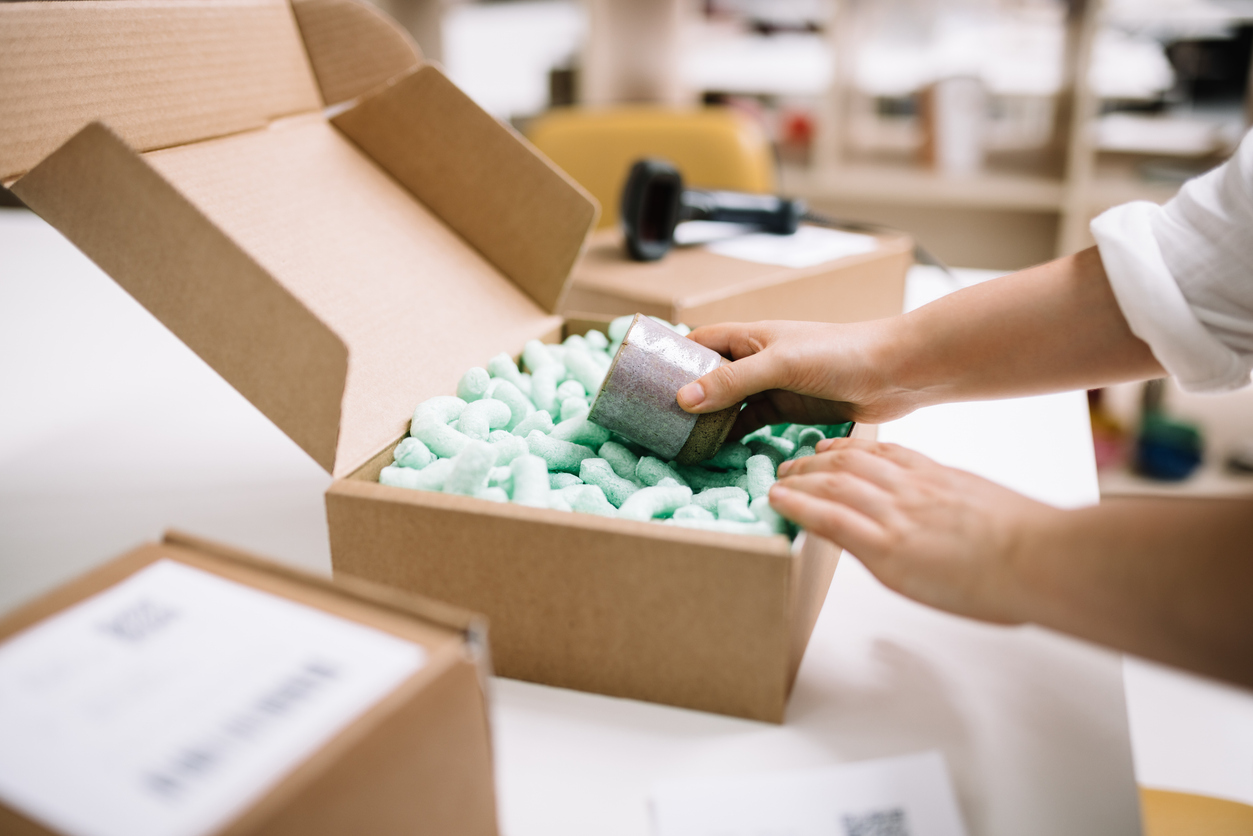
The cost of replacing a damaged product is huge. You have the cost of the item itself, plus the shipping to return it, plus the shipping to send a new one, plus the admin time.
And the customer is annoyed.
Invest in quality materials. Perform crush tests. Drop a packed box from waist height and see what happens. If it breaks in your warehouse, it will definitely break in the courier’s van. Reduce shipping damage by spending a tiny bit more on the box itself.
4. Ignoring Sustainability and Recyclability
In today’s market, if you still package your product in Styrofoam peanuts, you will upset people. Consumers hate dealing with packaging that they can’t easily recycle.
I have seen customers leave 1-star reviews purely because the box was filled with plastic waste. It feels lazy. In markets like the UK and EU, you are also looking at plastic taxes that can hurt your profitability if you aren’t careful.
You should look at paper-based void fills or biodegradable loose fill. Mono-material designs are great too. That means the box and the tape and the filler are all made of the same stuff, so the customer can just chuck the whole thing in the recycling bin without separating it.
It is better for the environment and for your brand image. Yes, I know it can be a hassle to switch suppliers, but sustainable packaging solutions are not just a trend; they are the new standard.
5. Overcomplicating the Unboxing Experience
Have you ever suffered from “wrap rage”? That feeling when you need a knife and scissors, and maybe a chainsaw, to get into a plastic clamshell package.
It is a terrible way to start a relationship with a customer. If I have to fight to get to my new gadget, I am already annoyed before I even turn it on.
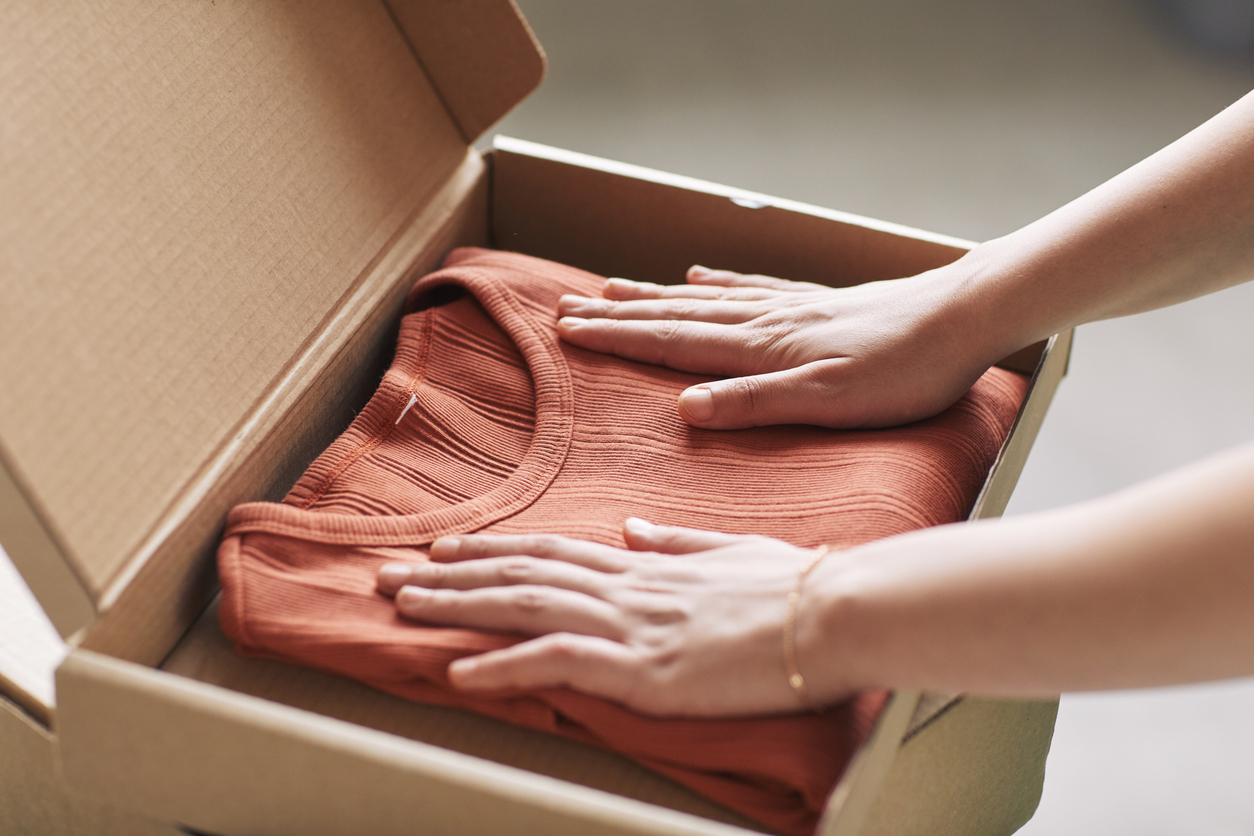
Complex packaging also slows down your warehouse. If it takes your packer five minutes to fold and assemble a complicated insert, that is a massive bottleneck. You want speed and efficiency.
Focus on frustration-free design. Use tear strips. Make it obvious how to open the box. Simple is usually better. It speeds up the packing line, and it makes the customer happy.
6. Neglecting Brand Identity on the Outer Layer
A plain brown box is a missed opportunity. It is just boring.
For an e-commerce business, the package is the only physical touchpoint you have with the customer. It is the moment of truth. When that delivery driver walks up the path carrying your box, it should say something about who you are.
You don’t need to print full-colour graphics over every inch of cardboard. That gets expensive fast. But branded tape? A custom sticker? A simple logo printed on the side?
These things stick in the mind. It turns a delivery into an experience. It signals that you care about the details. I think a lot of companies are scared of the cost, but even a rubber stamp can look cool if it fits your vibe.
7. Failing to Test for Real-World Conditions
Designing packaging in a quiet, air-conditioned office is dangerous. The real world is messy and violent.
Your package will be thrown. Dropped. Vibrated for hours on a truck. Stacked under heavy boxes. Left in the rain.

Companies often design something that looks great on a meeting room table but falls apart in the supply chain. You have to test for reality. This is where supply chain efficiency really gets tested.
Conduct transit trials. Send a package to yourself or a colleague across the country, and ask them to photograph it before opening it. Better yet, use a lab that can simulate vibration and shock. If you don’t test it, the courier network will test it for you, and you won’t like the results.
The Bottom Line
Packaging feels like one of those things you can just set and forget, but it really isn’t. It is a living part of your business that eats into your margins if you ignore it. I have seen small tweaks in box size or a switch in desiccant type save companies thousands a year.
You don’t have to fix everything overnight. Just pick one of these areas. Maybe check your return rates for damage or look at how much air you are shipping. Start there.
It is worth the effort.